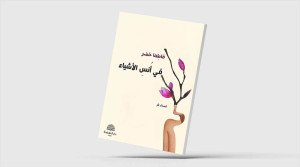

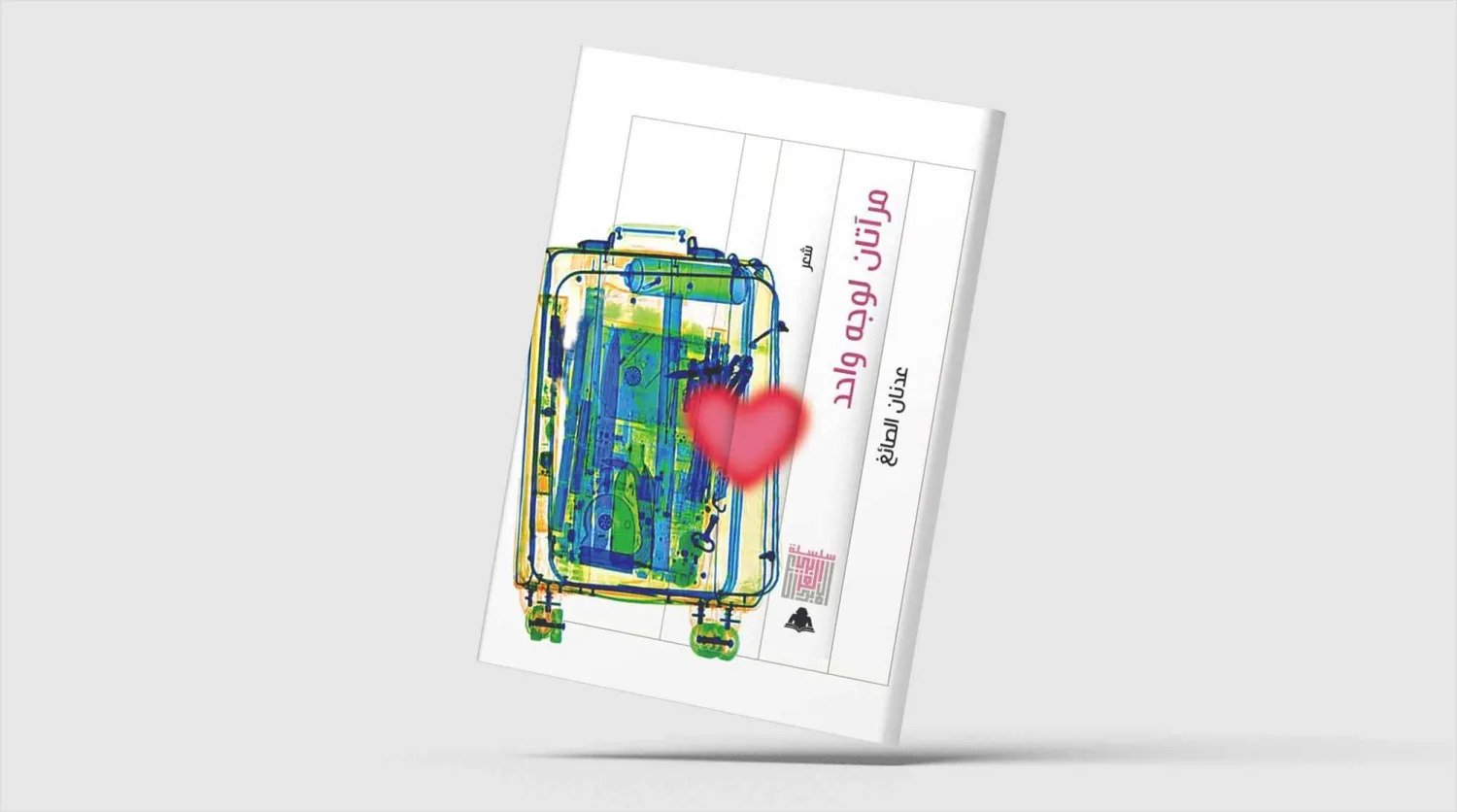
The poetry collection Two Mirrors for One Face by Iraqi poet Adnan Al-Sayegh has recently been published in Cairo by the Egyptian General Book Authority as part of its “Arab Creativity” series. The collection marks a new chapter in a poetic journey long preoccupied with human suffering, the memory of war, the tragedies of exile, and the deep emotional scars left by political and social upheavals.
The poems move between themes of longing and loss, fear and anger, love and heartbreak, revolution and futility, offering a poetic exploration of the Iraqi and Arab experience across decades of turmoil and conflict. Through these recurring themes, Al-Sayegh examines the complex relationship between the self and its memories, and between individuals and their history, in a world where personal losses intertwine with national and collective wounds.
The title goes beyond the visual metaphor of mirrors, establishing a dialogue between two images of the same self, separated by time and place yet united by human suffering. In the first mirror, Al-Sayegh revisits the Iraqi landscape from the distance imposed by exile and estrangement, drawing on the insight and reflection gained through years of displacement. This distance enables him to reconsider his memories and examine the human and national devastation with greater depth, without severing his emotional connection to a homeland that remains deeply rooted in his consciousness.
The second mirror, by contrast, returns to the earliest moments of pain, particularly the years of the Iran–Iraq War, when death was woven into everyday life and wounds were still fresh. Here, the poetic self confronts fear and loss directly, yet refuses to surrender hope or the desire for change. Instead, it holds on to a spark of defiance and the aspiration for a future defined by greater justice and freedom.
Between the two mirrors, a poetic space emerges in which past and present, exile and homeland, and individual memory and collective experience intersect. Through this interplay, Al-Sayegh presents poems that oscillate between the bitterness of remembrance and the search for understanding. He brings the human being into focus at moments of vulnerability and defeat, as well as in persistent attempts to resist ugliness and devastation and reclaim meaning.
This poetic approach is closely connected to Adnan Al-Sayegh’s broader literary career, which includes several collections, among them Mirrors for Her Long Hair, Under a Strange Sky, The Hymn of Uruk, and The Dice of the Text. These works reflect a poetic world committed to humanity and deeply engaged with questions of homeland, memory, and freedom.
One passage from the collection reveals the poet’s ability to transform drawing into an act of resistance and remembrance. Images of war, homeland, language, and childhood converge in a scene where irony mingles with pain and memory with hope, before culminating in an intimate, open-ended question shaped by absence and the search for the self:
“I draw a tank and aim it at the general’s balcony
I draw a cloud and say: That is my homeland
I draw a landmine and place it in the language cabinet
I draw a spider and embalm it on the door of sorrows
I draw my father and ask him: Why did you leave me alone before the vile?
I draw a table and invite my childhood to sit at it
I draw a flute and slip through its holes to distant villages
I draw a street and wander along it with my dreams
I draw my heart…
… and ask it: Where are you?!”
In Two Mirrors for One Face, writing is not merely an act of revisiting a past burdened by war; it is an attempt to understand its enduring impact on the present and to question the relationship between individuals and their homeland, between memory and the dreams that survive. The two mirrors thus become a poetic space in which the poet confronts both his own reflection and the image of the world, searching for meaning amid loss and for a window of hope in a time when the causes of despair continue to multiply.
Most read