The Return of Geopolitics to the Arctic: Greenland between Climate Change and Great Power Competition

Executive Summary
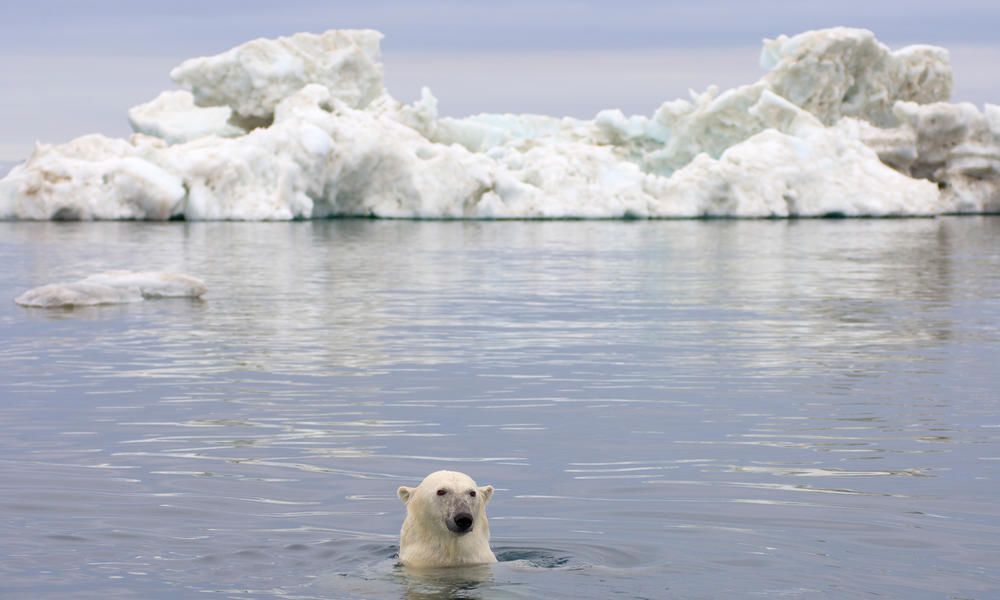
In recent decades, the Arctic has undergone rapid transformations that have brought it back to the forefront of global geopolitical attention. As the impacts of climate change accelerate and ice cover continues to decline, the region has begun to reveal significant economic and strategic potential, both in terms of natural resources and emerging maritime shipping routes. Consequently, major powers—most notably the United States, Russia, and China—have increasingly focused their attention on the Arctic as an area of growing importance in international competition.
This study examines the transformation of the Arctic from a region characterized by relatively strong international cooperation after the Cold War into a space where geopolitical competition is becoming increasingly visible. Although the establishment of the Arctic Council in 1996 helped consolidate a cooperative framework based on scientific coordination, environmental protection, and sustainable development, shifts in the international system combined with accelerating climate change have prompted many states to reassess the region’s strategic importance.
Greenland stands at the center of these transformations as one of the most geopolitically significant locations in the Arctic. The island’s strategic position between North America and Europe, together with its potential reserves of oil, gas, and strategic minerals, has made it an increasing focus of attention among major powers. Moreover, internal debates regarding Greenland’s future economic and political independence add an additional layer of importance to the island within regional and global strategic calculations.
The study also highlights the role of climate change in reshaping the region’s economic geography, particularly through the potential opening of new maritime routes that could shorten distances between major global economic centers and provide alternatives to traditional shipping corridors. At the same time, these developments present both opportunities and challenges. While they may enable the exploitation of natural resources, they also pose significant environmental risks in one of the world’s most fragile ecosystems.
The study concludes that the future of the Arctic will largely depend on the ability of key actors to strike a balance between economic development and environmental protection, as well as between international cooperation and the pressures of geopolitical competition. In this context, Greenland represents a critical case for understanding how climatic, economic, and strategic factors intersect in reshaping the geopolitics of the Arctic in the coming decades.
Introduction
In recent decades, the Arctic has ceased to be merely a peripheral geographic space or a remote region outside the strategic calculations of major powers. Instead, it has gradually emerged as one of the rising arenas of global geopolitics. As environmental transformations driven by climate change accelerate and ice cover continues to melt, the region has begun to reveal economic and strategic opportunities that had long been inaccessible due to harsh natural conditions. This has led to the reintroduction of the Arctic into the strategic maps of major powers, within a broader context marked by the resurgence of geopolitical competition in the international system.
During the post–Cold War period, the Arctic was widely viewed as a unique model of international cooperation. Arctic states were able to manage their differences within an institutional framework based on dialogue, scientific collaboration, and environmental coordination. This approach was institutionalized with the creation of the Arctic Council in 1996, which reinforced the idea that the region could remain relatively insulated from broader geopolitical tensions. This perception was often summarized in the well-known phrase associated with Arctic policy: “High North, Low Tension.”
However, this cooperative model has come under increasing pressure over the past two decades. Accelerating climate change has opened new possibilities for maritime navigation and resource exploitation, while transformations in the global economy—particularly the growing demand for strategic minerals essential to advanced technologies and the energy transition—have encouraged many states to reassess the region’s importance. At the same time, the resurgence of competition among major powers, particularly the United States, Russia, and China, has increasingly drawn the Arctic into their strategic and security calculations.
In this context, the Arctic is no longer viewed solely as a domain of scientific and environmental cooperation but increasingly as a potential arena for geopolitical competition where national security considerations intersect with long-term economic and strategic interests. Greenland lies at the heart of this equation due to its strategic location between North America and Europe and its potential reserves of natural resources and critical minerals.
The island’s unique political status—as a self-governing territory within the Kingdom of Denmark, coupled with ongoing debates regarding its future independence—also makes it a space where local dynamics intersect with regional and global geopolitical developments. This has been clearly reflected in the growing interest of major powers in Greenland, whether in military, economic, or technological terms.
Against this background, this study seeks to analyze the transformations that have brought the Arctic back to the center of international politics. It focuses on the environmental, economic, and strategic factors driving these changes while highlighting Greenland’s growing role in the dynamics of international competition in the region. In doing so, Greenland serves as a case study illustrating the increasing intersection between climate change, geopolitical interests, and economic considerations in shaping the future of the Arctic.
I. The Arctic: From a Space of Cooperation to an Arena of Competition
For a long time, the Arctic was associated in political and strategic literature with a unique model of international cooperation, particularly during the post–Cold War period. The end of ideological rivalry between the United States and the Soviet Union reduced the region’s immediate military importance, allowing Arctic states to develop a cooperative framework focused on environmental protection, scientific research, and sustainable development.
In this context, the Arctic Council was established in 1996 as an institutional platform bringing together eight Arctic states— the United States, Russia, Canada, Denmark, Norway, Sweden, Finland, and Iceland—along with representatives of Indigenous peoples. The council was designed as a forum for coordination and consultation on environmental issues, scientific research, and sustainable development, while deliberately excluding military and security matters from its mandate.
This institutional arrangement helped reinforce the perception of the Arctic as a region characterized by relatively low political tensions compared to other parts of the world.
However, over the past two decades this cooperative model has gradually come under increasing strain. Structural changes in the international system, including the resurgence of strategic competition among major powers and the growing global presence of China, have contributed to a reassessment of the Arctic’s importance. Simultaneously, accelerating climate change has revealed new economic opportunities related to maritime shipping and natural resource exploitation.
As a result, many states have begun to view the Arctic not only as a space for environmental and scientific cooperation but also as an emerging arena for geopolitical and economic competition.
Most read



Read also