
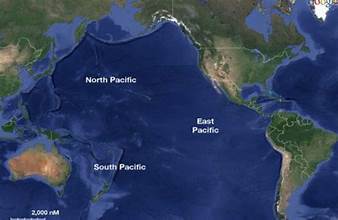
On July 6, the Chinese military announced that it had test-fired a ballistic missile carrying a dummy warhead toward the high seas in the Pacific Ocean, where it landed accurately in its designated area.
It is rare for the Chinese military to publicly announce tests of this kind, raising an obvious question: What was different this time? And was the test intended to convey an explicit message?
The episode appeared almost like a Chinese display of military power — demonstrating, on the one hand, the future trajectory of China’s nuclear capabilities and, on the other, responding to shifts in U.S. strategy toward the Indo-Pacific.
The world appears to be deeply mired in two major conflicts, both centered in Asia: the Russia-Ukraine war is entering what might be described as a bruising phase of attrition, while confrontation with Iran is once again intensifying.
Yet it is the Indo-Pacific region that may hold the most consequential geopolitical contest of the twenty-first century.
Indeed, the region today increasingly resembles Western Europe during the Cold War: the principal strategic theater in which the balance of power for the decades ahead may ultimately be determined.
For precisely this reason, both American and Chinese strategic thinking repeatedly focuses on this vast expanse of ocean as a decisive arena in shaping the future of the emerging global order.
China’s missile test was therefore no random event. It was an unmistakable signal about the future trajectory of the Chinese armed forces, which will mark the 99th anniversary of their founding on August 1.
It was as though Beijing were putting the world on notice that the rules governing the international order are already changing — and that China’s emergence as a central power in an inevitably multipolar system can no longer be ignored.
China’s neighbors, bound to it by geography — from Australia to Japan and the Philippines, and onward to Taiwan and the other Pacific islands — naturally interpreted the development as another indication of China’s steadily expanding military reach. All expressed concern and condemnation over the move.
What is striking, however, is that Moscow appeared almost alone among the major powers in viewing the test as posing no threat to any country in the Asia-Pacific region or elsewhere in the world.
Kremlin spokesman Dmitry Peskov described the missile test as a matter falling within China’s sovereign rights.
Here, another dimension of Russian-Chinese cooperation comes into view.
The relationship is moving beyond Beijing’s support for Moscow in its war against Ukraine — cautious though that support may be — toward the early contours of a broader confrontation between competing poles of power in a region that has become a fundamental pillar of a new world order still taking shape.
Recent developments in the Pacific have not been limited to China’s missile test.
They have also included joint Russian-Chinese naval exercises in the waters and airspace off the Chinese city of Qingdao, with the declared objective of jointly addressing security challenges and preserving peace and stability in the region.
What, then, has so deeply unsettled China and Russia in recent months that they have intensified their activities specifically in Pacific waters?
One possible explanation is a growing perception in Beijing and Moscow that a new strategic alignment is emerging among Pacific island nations such as the Solomon Islands and Fiji, with the regional balance increasingly shifting toward countries friendly to — or allied with — Washington, London and the broader Western bloc.
This shift has already become apparent in the Solomon Islands, where a new prime minister, Matthew Wale, has begun scaling back security cooperation with China and restructuring relations in favor of Australia and New Zealand, both close partners and allies of the United States.
Yet the development Beijing may regard as more consequential came on June 16, when the Pentagon announced that the U.S. Indo-Pacific Command would revert to the name it held in 1947: the U.S. Pacific Command.
The change signals a new American strategy aimed at constraining China’s influence through closer cooperation with Australia and the Philippines.
More significantly, the strategy assigns far greater importance to the Pacific island chains, envisioning them as forward positions for the U.S. military from which Chinese strategic assets and strongholds could potentially be reached at any time.
Washington is now focused on pressing allies and partners to grant the U.S. military greater access to their ports and facilities, increase their defense spending and, most importantly, invest in capabilities designed to deter any potential Chinese aggression.
Is this, then, a new Cold War unfolding in increasingly hot waters?
Control of the Pacific means influence over global trade routes, the ability to contain China, and greater security over technology and critical supply chains.
China, for its part, seeks through its expanding presence in the region to secure its place in the architecture of the international system — a position that would give it a leading role in shaping that system rather than merely adapting to rules established by others.
What we are witnessing, then, is a new balance-of-power contest taking shape not primarily on land, but across the world’s oceans.
And this may be only the first birth pang of the new global order.
Originally published on:
Most read