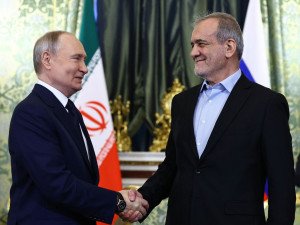

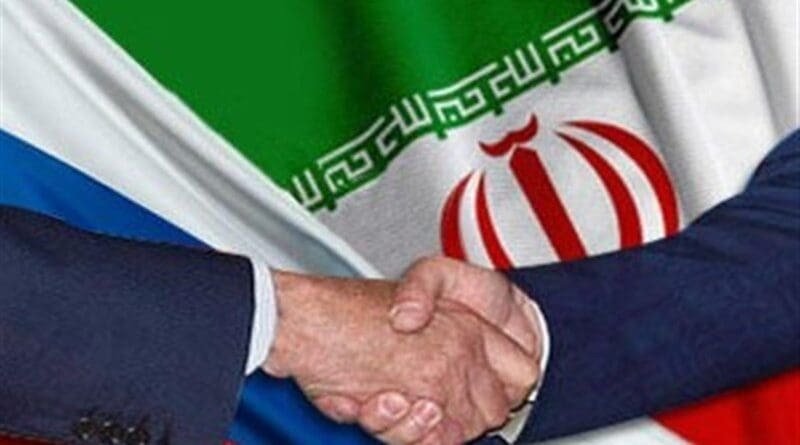
From settling payments in national currencies to developing alternative trade corridors, Moscow and Tehran are seeking to expand economic cooperation in an effort to reduce their dependence on Western financial systems. Yet despite its growing significance, this rapprochement remains constrained by geopolitical considerations, logistical bottlenecks, and a clear disparity in the two countries’ economic weight.
Economic relations between Russia and Iran illustrate how international sanctions can push targeted states to reorganize their commercial and financial relationships and seek alternative routes that reduce their dependence on markets and institutions dominated by Western powers. Moscow and Tehran, both facing extensive international restrictions, are developing mechanisms for trade, financial settlement, and transportation. Their objective is not merely to sustain economic activity, but also to expand their strategic autonomy from the Western-led system.
The Caspian Sea has emerged as an important arena for this shift. Shipping activity between the two countries has increased amid disruptions to traditional trade routes and mounting regional tensions. This development reflects not only expanding commerce, but also a mutual effort to reshape the economic geography of Russian-Iranian trade while keeping some commercial flows away from maritime and financial channels more exposed to Western restrictions.
1. Sanctions as a Catalyst for Reshaping Economic Relations
According to data from risk-analysis firm Castellum, Russia ranks first among countries targeted by international sanctions and restrictive measures, with more than 5,000 actions, followed by Iran with approximately 3,600. The scale of these restrictions illustrates the pressure facing both countries, although it does not mean that sanctions affect them in identical ways or that they possess equal capacities to adapt.
Russia has a broad industrial and economic base, as well as substantial commercial ties with major economic powers, particularly China. Iran, meanwhile, continues to face extensive restrictions affecting its financial, oil, and trade sectors. The rapprochement between Moscow and Tehran therefore reflects a shared interest in mitigating the impact of sanctions, but it does not eliminate differences in economic resources, productive capacity, or the strategic options available to each country.
This relationship reveals an important paradox: sanctions designed to restrict access to international markets, technology, and financing may also encourage targeted states to develop alternative networks, expand the use of national currencies, strengthen bilateral banking links, and establish transport corridors that do not depend entirely on traditional infrastructure. However, the creation of these alternatives does not necessarily enable them to replace all the advantages offered by the existing global economic system.
2. Expanding Bilateral Trade and Broader Areas of Cooperation
Figures cited in the report indicate that bilateral trade between Russia and Iran reached approximately $5.8 billion in 2025, an increase of 21 percent over the previous year, according to a statement by Russia’s ambassador to Iran in June.
Officially recorded trade between the two countries is heavily concentrated in agricultural and food products. Russia exports grain and vegetable oils to Iran, while Iran supplies fruits and vegetables to the Russian market. Russian exports also include industrial goods such as metals, timber, and machinery.
The Russian grain consultancy ProZerno reported that Iran imported 1.7 million tonnes of Russian wheat between July 2025 and January 2026, compared with approximately 565,000 tonnes during the corresponding period of the previous agricultural year, according to figures cited in the report.
These indicators point to a tangible expansion in certain areas of bilateral trade, but they are not sufficient on their own to demonstrate a comprehensive transformation of either economy or prove that the two countries have overcome the effects of sanctions. Despite its growth, bilateral trade remains relatively limited when compared with Russia’s trade with China, while restrictions on transportation, finance, and technology continue to pose significant challenges.
3. The Caspian Sea and the Reshaping of Trade Geography
The Caspian Sea is becoming increasingly important in Russian-Iranian relations as a route that can facilitate the movement of goods between the two countries and provide a maritime alternative to some traditional trade channels. A report by Lloyd’s List Intelligence indicated that the number of active Russian- and Iranian-flagged vessels operating in the Caspian increased by 21 percent year on year in August.
According to the same report, the number of general cargo vessels operating along this route rose from 105 in February to 215 in August, while carrying capacity in this segment increased by 36 percent year on year. These figures indicate growing maritime activity, although they do not necessarily mean that all of the increase is directly associated with sanctions evasion or the transportation of military cargo.
The Caspian should therefore be viewed as one component of a broader network of alternative trade and logistics routes, rather than as a corridor capable of independently replacing major international maritime routes. Navigation in the region faces constraints related to water depth and declining water levels, limited port capacity, railway bottlenecks, and restrictions imposed by the Volga-Don river system on shipping and connections to other corridors.
The strategic value of the Caspian is thus measured not only by the volume of goods it can carry, but also by its ability to provide a degree of flexibility during periods of geopolitical disruption. That flexibility, however, depends on infrastructure investment, improved transportation and storage capacity, and the resolution of bottlenecks that constrain sustainable trade expansion.
4. Shadow Fleets and the Problem of Transparency
Russian-Iranian cooperation also extends into a more sensitive area involving maritime transportation and activities that are difficult to monitor fully. The report points to growing attention surrounding so-called “shadow fleets”: networks of vessels that, in some cases, use complex ownership, operational, and service arrangements to reduce the visibility of their activities to regulators and sanctions-enforcement authorities.
Estimates cited in the report from regional analyst Nitya Labh suggest that the global shadow fleet comprises more than 1,300 vessels, representing at least one-fifth of the world’s oil tankers. However, estimates vary depending on how shadow fleets are defined and on the methodology used to identify the vessels included in these networks.
The phenomenon is particularly significant in the context of sanctions against Russia and Iran, as complex shipping arrangements or concealed movement data can make it more difficult to establish the nature of cargoes and identify their ultimate beneficiaries. Lloyd’s List reported that some tankers observed in the Caspian switched off their Automatic Identification System (AIS) signals as they approached Russian and Iranian ports before reappearing during transit.
Nevertheless, switching off tracking signals does not, by itself, establish that a violation has occurred or that a vessel is carrying illicit cargo. AIS is not required to remain operational in every circumstance without exception. Assessments of suspicious maritime activity should therefore draw on multiple forms of evidence, including ownership and operational records, cargo characteristics, vessel movements, commercial documentation, and available intelligence.
This distinction becomes particularly important when considering allegations that military equipment, drone components, or ammunition have been transported through the Caspian. Ukraine has accused Russia of using the route to move military equipment, while the Institute for the Study of War has referred to assessments concerning the movements of sanctioned vessels. The report also notes, however, that these allegations have not been independently confirmed and that neither the Russian nor the Iranian government has officially acknowledged the reported transfers.
Accordingly, a shared strategic interest in mitigating the effects of sanctions should not automatically be treated as proof that every commercial movement between the two countries involves illicit activity. A rigorous analysis must distinguish between observed facts, indicators warranting further scrutiny, and allegations that still require independent corroboration.
5. Alternative Payments and the International North-South Transport Corridor
Russian-Iranian rapprochement is not confined to trade and maritime transportation. It also includes efforts to reduce dependence on Western financial infrastructure. The two countries have expanded the settlement of transactions in Russian rubles and Iranian rials and strengthened links between their interbank financial messaging systems, enabling banks to exchange financial messages without relying directly on the international SWIFT network.
This approach reflects a desire to reduce exposure to financial sanctions, but it does not necessarily mean that the countries can dispense entirely with the global financial system. International commerce still depends on access to convertible currencies, banking confidence, markets, and transportation, insurance, and other commercial services.
On the logistics front, the International North-South Transport Corridor has emerged as a central element of the Russian-Iranian vision for greater trade integration. The project aims to connect Russia with Iran and extend links toward the Persian Gulf and India through road, rail, and maritime routes crossing the South Caucasus and Central Asia.
Turning this project into an effective commercial corridor, however, requires more than political agreements. Challenges include completing infrastructure, coordinating customs procedures, improving connections between transport networks, and overcoming geopolitical and administrative obstacles. The corridor therefore represents a long-term strategic opportunity, but it does not currently provide a comprehensive replacement for existing global transport networks.
6. Military Cooperation and the Limits of the Russian-Iranian Partnership
The military dimension remains one of the most sensitive aspects of the relationship. According to the report, Iran supplied Russia with attack drones during the early stages of the full-scale war in Ukraine, after which Russia developed its domestic production capabilities in this field. The report also refers to accounts of drone components being transported from Russia to Iran through the Caspian Sea.
These developments indicate that the relationship extends beyond civilian trade to include defense and industrial requirements, as well as efforts to use geographic proximity and logistical links to secure certain supplies. Nevertheless, assessing the scale and nature of this cooperation requires a distinction between confirmed information and reports that have not been independently verified.
At the same time, Iran’s ability to compensate Russia for the effects of Western sanctions should not be overstated. Analyses by the Center for Strategic and International Studies have emphasized that Russia’s cooperation with China remains more important than its relationship with Iran in several key respects, given the scale of Russian-Chinese trade, China’s purchases of Russian energy, and its supply of certain components used in Russia’s defense sector.
Russian-Chinese trade exceeds $200 billion annually, according to the source cited in the report. This illustrates the substantial difference in the economic weight of Russia’s two partners. Russian-Iranian relations are therefore better understood as a selective strategic partnership based on mutual interests than as an economically balanced alliance capable of providing a comprehensive alternative to Russia’s relations with major global economic powers.
7. Sanctions Enforcement, Deterrence, and the Risk of Escalation
Efforts to enforce sanctions at sea present challenges that extend beyond legal and commercial issues. Intercepting or detaining vessels can become a direct source of military tension. The report refers to warnings about the risks associated with physically intervening against commercial vessels suspected of involvement in sanctions-evasion networks. It cites previous incidents and tensions in the Baltic region, as well as Russian threats to retaliate against seizures of commercial vessels.
These risks highlight a dilemma for Western countries. Weak enforcement may undermine the effectiveness of sanctions, while aggressive enforcement in certain maritime environments can trigger unintended escalation. This makes intelligence cooperation, financial oversight, transparency in shipping chains, and the development of evidence-based legal mechanisms particularly important. Such measures may help reduce sanctions evasion without unnecessarily increasing the risk of direct confrontation.
The effectiveness of sanctions also depends on more than the number of restrictive measures imposed. It is shaped by the degree of international coordination in their implementation, regulators’ ability to identify beneficial ownership, the verification of cargo origins and destinations, and efforts to limit the use of intermediaries and complex commercial structures.
Conclusion: An Important Partnership, but Not an Alternative to the Global Economic System
Russian-Iranian relations demonstrate that sanctions do not necessarily result in the complete economic isolation of targeted states. Instead, they may encourage them to redirect trade and develop alternative financial and logistical mechanisms. The Caspian Sea is playing an increasingly important role in this process, alongside settlements in national currencies and the International North-South Transport Corridor, as Moscow and Tehran seek to reduce their exposure to Western restrictions.
Nevertheless, the capacity of these alternatives to produce a far-reaching economic transformation remains constrained by several factors, including inadequate infrastructure along some routes, geographic limitations, differences in economic capacity, and Russia’s continued reliance on broader commercial relationships, particularly with China.
The most sensitive issue concerns the difficulty of distinguishing legitimate trade from activities intended to circumvent sanctions, especially when cargo visibility declines or ownership and operational structures become more complex. A vessel’s route or the interruption of its tracking signals is not sufficient, on its own, to prove a violation. A sound assessment requires comprehensive evidence and independent verification.
Ultimately, the Russian-Iranian rapprochement does not appear capable, by itself, of creating a fully integrated parallel economic system. It does, however, represent a practical effort to expand the two countries’ room for maneuver under sanctions and redistribute geopolitical risks. Its long-term significance will depend on their ability to turn political agreements and alternative corridors into sustainable commercial infrastructure, as well as on the costs imposed by international restrictions, logistical bottlenecks, and competition among major powers.
Most read