The Amur-1650 Submarine: Can Russia Regain Its Influence in Asia’s Arms Market?

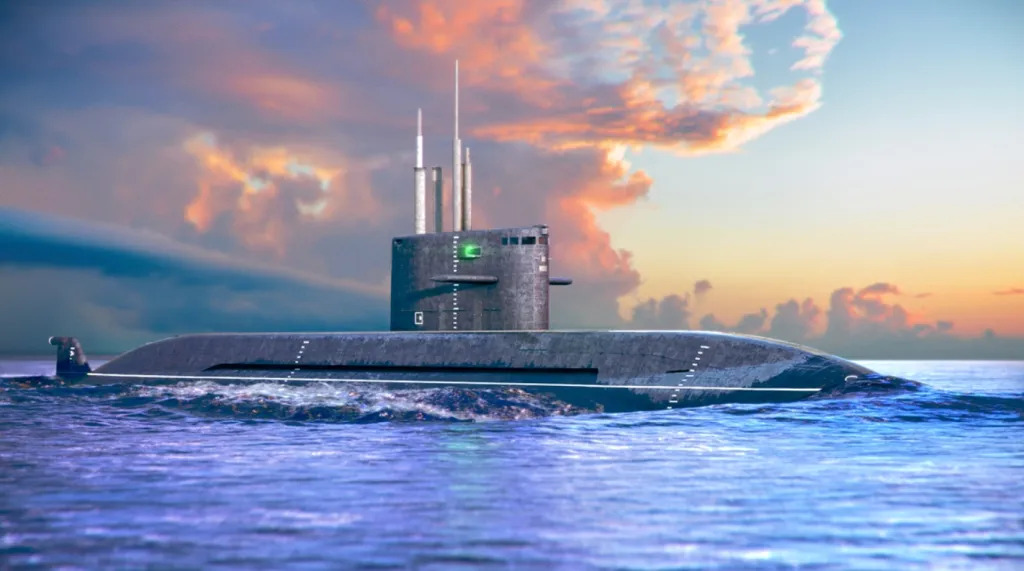
At a time when military competition across the Indo-Pacific is accelerating, Russia is seeking to reassert its position in one of the world’s fastest-growing defense markets through the launch of its new Amur-1650 submarine. Moscow is betting that the platform’s combination of stealth technology, long-range missile capabilities, and air-independent propulsion systems will help expand its footprint in South and Southeast Asia, where demand for advanced naval capabilities continues to rise amid intensifying regional tensions.
Yet the key question facing Russia today is not merely how advanced the submarine is, but whether Moscow can build and deliver it on schedule while its defense industry remains under pressure from the war in Ukraine, Western sanctions, and mounting international competition.
A Rapidly Changing Market
The unveiling of the Amur-1650 comes at a time when Asia’s security environment is undergoing profound transformation. Intensifying US-China rivalry, tensions in the South China Sea, and recurring crises over Taiwan have prompted many Asian states to reassess their defense strategies.
Within this context, modern conventional submarines have emerged as one of the most sought-after military assets for medium-sized and smaller powers. They offer effective deterrence at a fraction of the cost of nuclear-powered fleets.
Countries such as India, Vietnam, Indonesia, the Philippines, and Malaysia are expanding their undersea capabilities as part of broader anti-access/area-denial (A2/AD) strategies designed to prevent major powers from dominating critical maritime corridors.
Moscow recognizes that the future of its naval exports may largely depend on its ability to capture a share of this growing demand.
India: The Natural Customer or a Hesitant Partner?
India remains the most logical candidate for Russia’s new submarine.
Defense ties between Moscow and New Delhi span decades, and Russia continues to be one of India’s largest military suppliers, despite a gradual decline in its market share in recent years.
At the same time, the Indian Navy faces a genuine capability gap. The retirement of aging submarines and delays in replacement programs have reduced the size of India’s conventional submarine fleet at a time when regional maritime competition is intensifying.
Pressure is mounting further as China rapidly modernizes its naval forces and Pakistan introduces new Chinese-built submarines equipped with air-independent propulsion systems.
The Amur-1650 offers an additional advantage for India: compatibility with the BrahMos supersonic cruise missile, one of the flagship products of Indo-Russian defense cooperation.
However, these factors do not guarantee a deal. Over the past decade, India has pursued a deliberate strategy of diversifying its defense suppliers, expanding cooperation with France, the United States, and Israel while simultaneously strengthening indigenous defense manufacturing.
Moreover, repeated delays in the delivery of Russian military systems since the outbreak of the Ukraine war have raised concerns within India’s defense establishment regarding the long-term reliability of Russian supply chains.
Southeast Asia: Military Demand Meets Strategic Calculations
The picture in Southeast Asia is even more complex.
States bordering the South China Sea increasingly view submarines as an essential tool for strengthening deterrence against superior naval forces.
Russia maintains a historical presence in some of these markets, particularly Vietnam, which has long relied on Russian military equipment.
Yet Hanoi, much like New Delhi, has gradually pursued supplier diversification to reduce the risks associated with excessive dependence on a single defense partner.
This trend has gained additional momentum as Western sanctions on Russia have affected maintenance, modernization programs, and supply chains connected to Russian-made systems.
At the same time, Moscow’s growing strategic alignment with Beijing has generated questions in several Southeast Asian capitals about Russia’s future ability to serve as a balancing force against China.
Western Sanctions and Russia’s Defense Industrial Challenge
Perhaps the greatest obstacle facing the Amur-1650 program lies beyond the submarine’s technical specifications.
The war in Ukraine has placed unprecedented strain on Russia’s defense industrial base. A significant share of industrial capacity has been redirected toward meeting domestic wartime requirements, reducing the resources available for export-oriented production.
Western sanctions have further restricted Russia’s access to advanced technologies and electronic components, creating additional challenges for military manufacturers.
Industry reports suggest that some Russian shipyards face financial difficulties, labor shortages, and supply chain disruptions—factors that could undermine production capacity over the medium and long term.
This is where the real challenge emerges. Potential buyers are not purchasing a submarine alone; they are investing in decades of maintenance, upgrades, spare parts, and technical support. Reliability matters as much as performance.
Intensifying International Competition
Russia is not entering this market unopposed.
France has strengthened its position through the Scorpène-class submarine, Germany continues to market its advanced conventional submarine designs, and South Korea has emerged as one of the most dynamic new players in the global submarine industry.
These competitors enjoy advantages that increasingly matter to prospective buyers: industrial stability, dependable delivery schedules, and varying degrees of technology transfer.
Russia, by contrast, continues to rely heavily on the historical reputation of its military systems, proven combat performance, and competitive pricing.
Beyond the Submarine
The Amur-1650 highlights a broader question concerning Russia’s future position in the global arms market.
For decades, Russia ranked among the world’s leading arms exporters. Today, however, it faces a combination of sanctions, wartime pressures, shifting customer preferences, and the rise of new competitors.
Consequently, the success of the Amur-1650 will not be measured solely by the number of contracts it secures. It will also depend on Russia’s ability to demonstrate that its defense industry remains capable of fulfilling long-term commitments in an increasingly challenging international environment.
Conclusion
The Amur-1650 represents a clear Russian attempt to regain momentum in the market for advanced conventional submarines by capitalizing on Asia’s growing demand for sophisticated naval capabilities. Yet the success of this effort will depend on factors that extend far beyond the submarine’s technical features.
In today’s defense market, possessing an advanced platform is no longer sufficient. Success requires a resilient industrial base, reliable supply chains, and the ability to deliver on time.
Ultimately, Moscow’s real challenge is not merely persuading potential customers that the Amur-1650 is a capable submarine. It is convincing them that Russia remains a dependable defense partner in a rapidly changing strategic landscape.
Most read



Read also