
The American Candidate
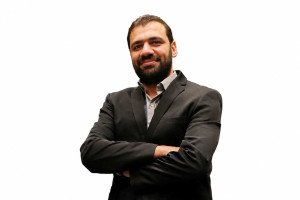
The worst aspect of some of the commentary surrounding the victory of the Egyptian-American candidate, Abdulrahman El-Sayed, was the way it portrayed him as an Egyptian citizen who traveled to the United States as a young man, achieved success there, and then abandoned his origins or nationality in order to acquire the citizenship of his new country.
The truth is that, as Professor Abdullah Abdel-Salam pointed out in his column last Friday, the man is an American citizen born in the United States. He belongs to the same category as members of the second generation of Arabs, Muslims, Africans, Asians, South Americans, and others in the United States. Around the world, such individuals are regarded as citizens of the countries in which they were born and raised, while the challenges of integrating them into society are discussed in terms of citizenship—not immigration.
Accordingly, claims that he abandoned his roots or “sold out his country” simply do not apply to him, nor to millions of others like him. He is, in the first place, not Egyptian, and there is certainly no reason for him to concern himself with what people in Egypt say about him. His priority is to win the approval of American citizens and voters, even if some of his supporters are of Arab or Muslim origin. Ultimately, however, they are American citizens living in his state of Michigan, not in Egypt.
That said, this does not mean that his political discourse should be beyond criticism simply because his name is Abdulrahman—a fact that led some people to assume that he should speak or calculate his positions as we do.
The central question, rather, is where we stand in relation to the broader struggle taking place in the West between a current that advocates equality and human rights for all citizens regardless of their ethnic origins, and other far-right currents that fundamentally reject equality among citizens, favor the white man in his colonial conception, and regard Israel as the first line of defense for their culture and civilization.
The reality is that Abdulrahman is confronting this current fiercely. Indeed, his victory represented a genuine blow to the pro-Israel lobby within the Democratic Party and to AIPAC, the principal funder of his defeated opponent’s campaign. Yet some among us, consciously or unconsciously, chose to side with currents of extremism and racism.
It is true that some people objected to his remark that, had his father not immigrated to the United States, he might have become a taxi driver in Egypt. It was an unfortunate statement, and it contained more flattering praise of his adopted country, America, than an insult to Egypt.
Nevertheless, the statement remains problematic even by American standards, because he would hardly be able to claim that his professional success represented an alternative to becoming a taxi driver in Michigan.
Despite that, the bigger picture tells us that the experience of a man like Abdulrahman—who has achieved significant and inspiring successes in the fields of healthcare and public health insurance, and who has taken principled positions, at a very high political cost in the United States, in confronting the genocidal policies being carried out by the occupying state—should remain at the forefront of our assessment.
That broader picture should not be forgotten, even if we disagree with some, or even all, of what he says about Egypt.
Originally published in Al-Masry Al-Youm.
Most read