The Movement of History: Circular or Spiral?
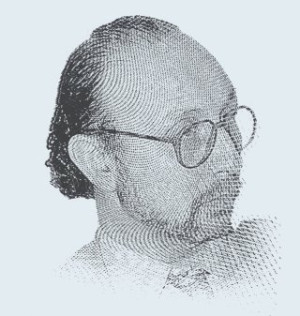
In recent weeks, the press and research centres have been filled with discussions about the prospects of war, from Europe to the Middle East, and about a world that appears less stable than at any time in decades. In an article that prompted more than a few questions in my mind, military historian Quentin Drummond Anderson compared the current international tensions with the atmosphere of 1939, on the eve of the Second World War.
The point, of course, is not that history repeats itself exactly in a circle. Russia today is not the Soviet Union, China is not Japan in the 1930s, and the United States is not Roosevelt’s America. What deserves reflection, however, is the disquieting familiarity of the behaviour of the great powers.
Drummond Anderson argues that scientific and technological progress has far outpaced the psychological and emotional maturity of human beings. Weapons have changed, he suggests, but human instincts have remained the same: fear, group belonging, the search for an enemy, the desire for protection, and the pursuit of territory and influence.
This brought to mind the philosopher George Santayana’s famous observation: “Those who cannot remember the past are condemned to repeat it.” Yet perhaps the problem runs deeper. We may study history carefully and understand the mistakes of those who came before us, only to convince ourselves that this time we can turn the old rules to our advantage without suffering the same fate.
For this reason, I do not believe history moves in a straight line, nor does it revolve in a perfect circle. Perhaps it follows an ascending spiral: we return to the same instincts and conflicts, but with each cycle we carry more sophisticated tools—and therefore a greater capacity for destruction.
A tribal mindset in politics continues to prevail in modern societies, albeit in new forms. Britain, for example, has traditionally been accustomed to political competition between the Conservative and Labour parties. Yet multiple identities now shape the political contest: Brexit, with its opposing camps of Remainers and Leavers; geographical nationalism, as reflected in the Scottish and Welsh movements; immigration; the war in Ukraine; and the debate over climate change.
External events, however, can rearrange these political camps in ways that few would have anticipated. The war in Gaza, for instance, has brought demonstrations and political activism together across otherwise disparate—and sometimes openly antagonistic—movements on social and cultural issues. These range from the left, the Greens and certain liberal currents to conservative and hard-line Islamist movements. They may agree on a particular cause while holding radically different visions of the kind of society they wish to create.
The picture becomes more dangerous, however, when this tribal approach to strategic thinking moves beyond domestic politics and shapes relations among the great powers.
When I read George Orwell’s 1984 as a schoolboy in the 1950s, what struck me most was its dystopian portrayal of the Leader—the “Big Brother” whom no one had actually seen—along with the surveillance of citizens and the control of language. Revisiting the novel recently, I found myself more drawn to Orwell’s vision of a world divided into three major blocs: Oceania, Eurasia and Eastasia. These powers fight one another and shift their alliances, while Britain becomes “Airstrip One”, the principal air base of the Oceanian bloc.
Orwell was not predicting the conflicts of 2026, but the resemblance is worth considering.
Russia views its neighbourhood as an essential sphere of security and influence, while China has become a global power that can no longer be ignored. Europe, despite its economic strength, continues to struggle to translate that strength into a unified political and military position. With Donald Trump back on the international stage, a familiar question has resurfaced: why does he sometimes appear closer to Vladimir Putin’s position on Ukraine? Perhaps the question needs to be reframed. Trump may not see his approach as siding with Putin, but rather as a return to the idea of dividing the world into spheres of influence.
The United States has its sphere in the Western Hemisphere, Russia seeks one in its immediate neighbourhood, and China sees Asia as its own strategic sphere. From this perspective, Trump’s interest in Venezuela and Greenland, his pressure across the Americas, and his approach to international alliances as arrangements open to renegotiation rather than sacred commitments become easier to understand.
The problem, however, is that the world is not an empty chessboard. Within every “sphere of influence” are countries and peoples with their own aspirations, interests and identities.
Poland learned this in 1939. Ukraine is learning it today. Perhaps, then, the greatest danger in the return of sphere-of-influence politics lies not in the rivalry among the great powers themselves, but in the fate of the smaller countries caught between them.
History, therefore, may not move in a circle. It may follow an ascending spiral.
We return to the same fears, the same ambitions and the same struggles for influence. But each time, we carry more powerful weapons, faster means of communication, and a greater capacity to shape minds before armies even reach national borders.
Perhaps humanity’s tragedy is not that it has failed to learn from history, but that it has learned its lessons well—and then persuaded itself that this time will be different.
Source: Asharq Al-Awsat (Saudi Arabia).
Most read