Syria’s Stability Test: A Decline in Violence — or Its Transformation?

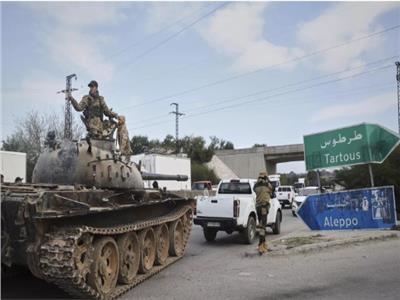
Developments in Syria during 2025 reflect a complex reality shaped by a clear paradox: a noticeable decline in overall levels of violence, alongside a worrying rise in sectarian and localized forms of conflict.
The transitional authorities succeeded in reducing the number of security incidents compared to the previous year — a significant achievement in a country exhausted by more than a decade of war. Yet a closer reading of the violence map reveals that this improvement has been uneven. New waves of unrest have concentrated in specific areas, indicating that the current stability remains fragile and imbalanced.
The new leadership adopted a security strategy centered on restructuring military institutions and integrating armed formations into a unified command structure. This approach helped impose a degree of order in major population and political centers such as Aleppo, Idlib, Hama, and Raqqa.
However, the model proved far less effective in socially sensitive environments — particularly in minority regions. In Sweida and along Syria’s coastal areas, resistance to new security arrangements escalated into bloody confrontations, some of which took on sharp sectarian overtones. These clashes exposed the transitional state’s limited ability to control affiliated factions and monopolize the use of force, weakening its narrative of restored order.
The Persistent ISIS Threat
At the same time, although the military activity of Islamic State declined over the year, the threat it poses has not disappeared.
The group maintained a flexible presence in Syria’s desert regions and the northeast, exploiting vulnerabilities in areas controlled by the Syrian Democratic Forces.
More dangerous than the attacks themselves is ISIS’s strategy of leveraging administrative gaps, mismanaged detention centers, and fragile camp governance. This ties the group’s resurgence risk as much to weak local governance as to battlefield capabilities.
Any deterioration in security coordination between Damascus and the SDF — or a potential reduction in the United States presence — could open the door to high-impact operations.
External Pressures and Competing Agendas
This evolving landscape cannot be understood without accounting for foreign intervention. Syria remains an open arena for intersecting regional and international interests.
Israel has continued airstrikes and ground incursions, particularly in southern Syria and the Golan region, effectively bypassing long-standing disengagement arrangements dating back to the 1970s.
In the north, Turkey intensified military pressure on SDF-controlled areas while advancing field arrangements aligned with its security priorities.
These interventions not only undermine Syria’s emerging sovereignty but also deepen internal fractures, encouraging local actors to seek external protection.
Diplomatic Openings — and New Risks
In parallel, Syria’s diplomatic trajectory points to notable shifts: the removal of senior figures from terrorism lists, expanding security cooperation with Washington against ISIS, and growing discussion of economic support from the European Union and international financial institutions.
Yet this opening carries risks alongside opportunities. Resource inflows in the absence of transparency and accountability may strengthen patronage networks rather than institutional capacity — potentially fueling new elite competition.
The Unresolved Sectarian Fault Line
The most dangerous challenge remains unaddressed sectarian violence.
The lack of accountability for abuses against Druze and Alawite civilians — and efforts to downplay their sectarian nature — has eroded trust in the transitional authorities.
Without serious reconciliation pathways, troubling scenarios emerge: the formation of self-defense militias, growing dependence on external patrons, and rising demands for autonomy — all of which threaten Syria’s unity and medium-term stability.
Conclusion
The relative calm in some regions does not necessarily mean Syria is safer.
Current stability is largely administrative and security-driven, not rooted in a new social contract that addresses the conflict’s underlying causes.
The year 2026 thus appears pivotal:
Either the transitional authorities succeed in converting de-escalation into sustainable stability through deep security reform, genuine social reconciliation, and transparent governance —
or the underlying fragility is exposed, and violence returns in more complex and dangerous forms.
Most read