
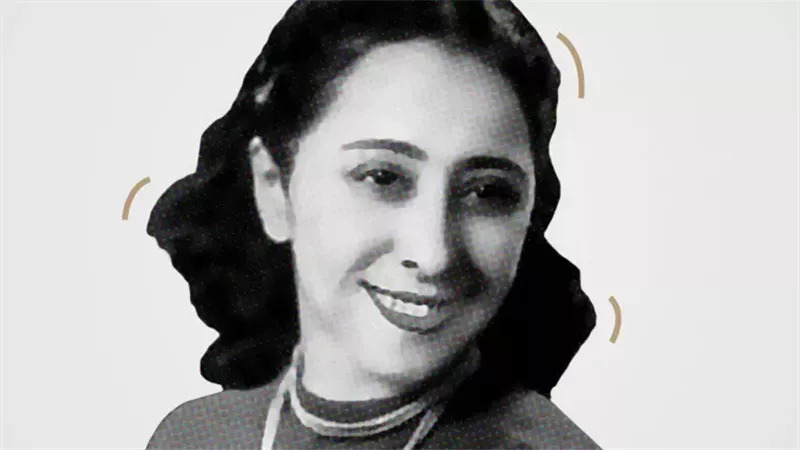
Nazik Al-Malaika, the renowned Iraqi Arab poet, was one of the leading pioneers of free verse in modern Arabic poetry. She emerged during the same literary period as fellow Iraqi poets Badr Shakir al-Sayyab and Abdul Wahhab al-Bayati. Among her most celebrated works is the poem Cholera (Al-Kūlīrā), which became a landmark in the development of modern Arabic poetry. Following the Gulf War, she moved to Egypt, where she spent her final years. She passed away in Cairo on this day in 2007, leaving behind a rich literary legacy and one son, Al-Buraq Abdul Hadi Mahbouba.
Nazik Al-Malaika was born in Baghdad in 1923 into a highly cultured family. Her mother, Salma Al-Malaika, was herself a poet who published her works in Iraqi newspapers and magazines under the pen name Umm Nizar Al-Malaika. She nurtured her daughter’s love for poetry from an early age and taught her the principles of Arabic poetic meter. Her father, Sadiq Al-Malaika, was a distinguished scholar and author of encyclopedic works, most notably the twenty-volume Dā’irat Ma‘ārif al-Nās (Encyclopedia of Human Knowledge). Her maternal grandmother, Hidaya Kubba, was also a poet and the daughter of the scholar and poet Hajj Muhammad Hassan Kubba. Her maternal uncles, Jamil and Abdul Sahib Al-Malaika, were likewise poets.
Inspired by the Syrian Revolutionary Nazik Al-Abid
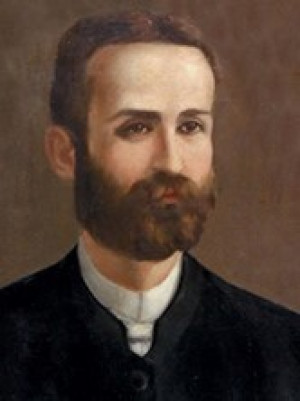
Her father named her Nazik in honor of the Syrian nationalist and revolutionary Nazik Al-Abid, who led Syrian resistance fighters against French occupation forces in the year the Iraqi poet was born. As for the family name Al-Malaika (“The Angels”), it originated as a nickname given by neighbors because of the tranquility and serenity that characterized the family household. Over time, the nickname became widely associated with the family and was eventually adopted by successive generations.
Master’s Degree in Comparative Literature
Nazik Al-Malaika graduated from the Higher Teachers’ Training College in Baghdad in 1944. She also studied at the Institute of Fine Arts, graduating from its Music Department in 1949. Later, she pursued studies in Latin, English, and French languages in the United States. In 1959, she earned a Master’s degree in Comparative Literature. She subsequently taught at the Universities of Baghdad and Basra, and later at Kuwait University.
The Birth of Free Verse
Al-Malaika published several poetry collections and critical studies. Her first collection, Lover of the Night (Āshiqat al-Layl), appeared in Baghdad in 1947. In the same year, she wrote her famous poem Cholera, in which she broke away from the traditional monorhyme structure that had dominated Arabic poetry for centuries. The poem established her reputation as one of the foremost innovators of modern Arabic poetry.
Her subsequent collections included Fragments and Ashes (1949), The Bottom of the Wave (1957), The Moon Tree (1968), The Sea Changes Its Colors (1977), The Tragedy of Life and the Song of Man, Prayer and Revolution, and The Martyr’s Poem (1978).
“Cholera”: Poetry Born from an Egyptian Tragedy
Nazik Al-Malaika composed Cholera in response to the devastating cholera epidemic that swept through Egypt in 1947, claiming thousands of lives. Reflecting on the poem years later, she said:
“I embarked on the path of free verse after hearing about the spread of the cholera epidemic in Egypt. I wrote a poem about death entitled Cholera. Everyone mocked me, but I was certain that the poem would change the map of Arabic poetry. Since then, although I never went so far as to completely reject traditional meter and rhyme—as some of my enthusiastic contemporaries later did—I remained convinced of the necessity of renewal.”
The poem is widely regarded as one of the foundational texts of the free verse movement in Arabic literature.
Literary and Critical Contributions
Beyond poetry, Al-Malaika authored numerous critical and intellectual works, including Issues of Contemporary Poetry, Fragmentation in Arab Society (a sociological study), The Psychology of Poetry, The Hermitage and the Red Balcony, and Social Critiques of the Life of Arab Women. Her final published work was a collection of short stories titled The Sun Beyond the Summit, released in 1997.
Life in Egypt
Nazik Al-Malaika met Egyptian President Gamal Abdel Nasser, who gifted her an apartment in the Cairo district of Hada’iq al-Qubba, where she lived until her death.
Following the Gulf War and Iraq’s invasion of Kuwait in 1990, Al-Malaika left Iraq and settled permanently in Egypt.
In 1996, she received the prestigious Al-Babtain Prize. Three years later, in 1999, the Egyptian Opera House organized a special celebration marking the fiftieth anniversary of the birth of free verse in the Arab world and honoring Al-Malaika’s pioneering role. Owing to illness, she was unable to attend, and her husband, Dr. Abdul Hadi Mahbouba, accepted the honor on her behalf.
Challenging Social Hypocrisy and Patriarchal Authority
Commenting on Al-Malaika’s legacy, Dr. Ferial Ghazoul, Professor of English and Comparative Literature at the American University in Cairo, observed that openness to the world does not require the erasure of one’s identity. She noted that Al-Malaika’s intellectual horizons extended far beyond English literature to encompass world literature as a whole.
According to Ghazoul, Al-Malaika’s poetic revolution was fundamentally a rebellion against the dominance of a single literary model. She sought to promote marginalized voices and liberate society from entrenched constraints. Through her poetry, she condemned social hypocrisy and challenged patriarchal structures of authority. Her works frequently drew upon mythology and folklore, while her engagement with women’s experiences in history and tradition enabled her to articulate female perspectives with unusual depth and sensitivity.
Many of her poems were dedicated to women who shaped her life, including her mother, aunts, cousins, sisters, and close friends.
Today, Nazik Al-Malaika remains one of the most influential figures in modern Arabic literature—a pioneering poet whose bold experimentation transformed the course of Arabic poetry and whose intellectual legacy continues to inspire generations of writers, critics, and readers throughout the Arab world.
Most read