Israel Between War Abroad and Internal Conflict:

Israel’s upcoming elections, according to the dynamics outlined in this analysis, appear to be more than a conventional contest between political parties seeking to form the next government. They are taking place amid a prolonged war, deep political polarization, and growing disagreement over the nature of the state, the future of its institutions, its relations with the Palestinians, and questions surrounding political and security responsibility for the failures of October 7, 2023.
For this reason, it is difficult to separate the electoral contest from the transformations Israel has undergone in recent years. The struggle is no longer solely about Benjamin Netanyahu or his prospects of remaining in power. It is also about a broader set of issues: the limits of military power, the relationship between the government and the security and judicial institutions, the nature of the political system, the role of religious and nationalist parties, and the future of the Palestinian issue.
From this perspective, the most important question posed by the election is not simply: Will Netanyahu remain in power? It is also: What kind of Israel will emerge from these elections?
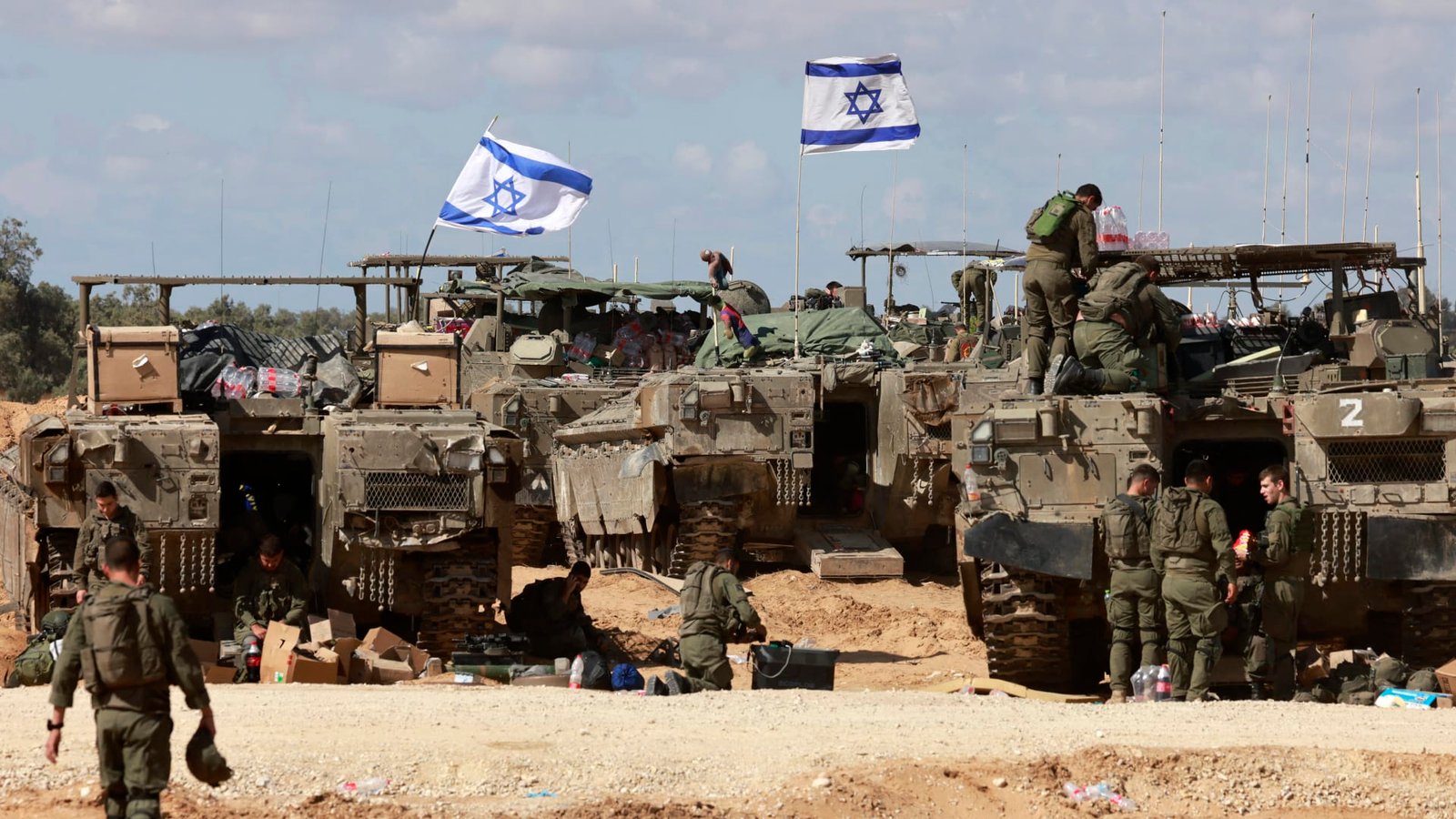
Wars often have the ability to reorder political priorities. In Israel’s case, the war that began with Hamas’s October 7, 2023 attack has become part of the political environment in which the electoral contest is unfolding.
The opposition views the failures of that day as evidence of the government’s and the prime minister’s failure, while Netanyahu’s camp has sought to reinterpret responsibility for those failures by pointing to the roles played by the military and intelligence and security agencies.
This confrontation is not merely an exchange of accusations. It reflects a struggle over the political narrative of the war: Who bears responsibility for what happened? Who has the authority to explain its causes? And was the failure primarily the result of political decisions, or a broader failure within the security establishment?
The answers to these questions are naturally relevant to the election. Voters who view the war as the result of political leadership failures may see the election as an opportunity for accountability. Others may believe that Israel’s security circumstances require continuity and experience in government.
War thus becomes both an instrument of political calculation and an object of electoral judgment.
Much of the discussion surrounding the election has focused on Netanyahu’s political future. Yet reducing the contest to his personal fate may obscure deeper transformations within Israeli society and politics.
The material suggests that Netanyahu has relied heavily on consolidating the right-wing camp and portraying his opponents as part of a left-wing bloc or as willing to cooperate with Arab parties. At the same time, some of his principal opponents, including Naftali Bennett and Avigdor Lieberman, themselves come from the political right.
This apparent contradiction reveals an important feature of Israel’s current political landscape: the central divide is no longer necessarily between left and right in the traditional sense, but increasingly within the right itself over the nature of the state, the future of the conflict, the limits of military power, and the relationship between religion and politics.
The potential departure of Netanyahu, therefore, would not necessarily mean a shift toward the political left. His successor could lead a government that is more centrist on certain domestic issues while remaining firmly right-wing on security and foreign policy.
The deeper competition may consequently be over the future of the Israeli right itself—and who has the authority to define and represent it.
The material also raises the possibility that political polarization has become an important mechanism in the struggle for political survival. It draws on statements and positions attributed to figures close to Netanyahu and members of his political camp.
It would be difficult, however, to conclude with certainty that polarization represents a fully coherent and deliberate strategy in every respect. What is clear is that Israeli society has become deeply politically divided, and that the election could intensify these divisions rather than resolve them.
This is particularly sensitive when political competition turns into challenges to the legitimacy of political opponents, or when cooperation with Arab parties is portrayed as a threat to national security.
The debate over the participation of Arab citizens and their political parties in Israeli political life is not new. But it acquires a different dimension when it becomes part of an electoral struggle over whether a particular government should survive or be replaced.
In such an environment, the greatest risk is that democratic competition may shift from disagreement over policies to a struggle over the legitimacy of the political opponent itself.
Netanyahu’s current political position cannot be understood without considering the coalition he has built with religious and nationalist parties over recent years.
Ultra-Orthodox parties have sought, among other things, special arrangements concerning military service, education, and public funding. Religious Zionist parties, meanwhile, have adopted more hard-line positions on the West Bank, settlement expansion, and the future of a Palestinian state.
This alliance has placed Netanyahu in a delicate position. He depends on these forces to maintain his coalition, while simultaneously operating within a political and social system that is considerably more diverse than the positions of his most hard-line partners.
The significance of this dynamic goes beyond their participation in government. Religious and nationalist parties increasingly influence the definition of issues that have become central to the debate over Israel’s future.
The election has therefore become, indirectly, a referendum on how much influence these forces should have over public policy.
One of the most contentious issues highlighted in the material is what has become known as the “Decisive Plan,” associated with the religious Zionist camp and Bezalel Smotrich.
According to the material, the vision goes beyond managing the Israeli-Palestinian conflict and seeks to fundamentally alter its conditions, including through settlement expansion, rejection of Palestinian statehood, and the extension of Israeli sovereignty over significant parts of the West Bank.
The more consequential political question, however, is the extent to which some of these ideas have moved from the realm of ideology into government policy and institutions.
The material points to settlement expansion, Smotrich’s influential role in settlement affairs, and what it describes as a transformation in the way Palestinian land is being handled. It links these developments to efforts to alter the geographical reality of the West Bank in ways that could make any future political settlement more difficult.
This raises one of the most important questions concerning the future of the conflict: Is what is happening on the ground simply an expansion of settlements under a right-wing government, or is it part of a longer-term project to reshape the political and geographical reality before a different government comes to power?
If the latter is the case, the impact of the election would extend beyond a change of government. A future administration could inherit a substantially altered reality that may be difficult to reverse.
One of the most revealing aspects of the material concerns archaeological sites in the West Bank.
According to a report by Haaretz cited in the material, recent months have witnessed an expansion in the activities of the Civil Administration’s archaeology unit, accompanied by a substantial increase in the budget and resources allocated to archaeological sites.
The material suggests that some settler groups view archaeological sites as a means of reinforcing claims to the land and strengthening their presence, while the activities of relevant institutions have gradually expanded from a relatively limited administrative role toward development and improved access to archaeological sites.
The issue therefore extends beyond archaeology itself.
In contested territories, archaeology is not always merely a cultural matter. It can become part of a struggle over narrative, identity, and sovereignty. When historical sites are incorporated into a political narrative about the land, the dispute is no longer solely over who controls territory, but also over how its history is interpreted and presented.
This helps explain why archaeological policy can become part of a broader effort to establish new “facts on the ground.”
The central paradox of Israel’s current political landscape is that domestic and foreign-policy issues have become increasingly intertwined.
The war affects the election, while the election affects calculations surrounding the war. Coalition politics influence policy toward the Palestinians, while developments in Gaza and the West Bank reshape voters’ political attitudes. At the same time, the military, security agencies, judiciary, and media have all become involved, to varying degrees, in the country’s internal political struggle.
This interconnectedness raises a question that goes beyond Netanyahu himself: Can Israel return to the rules of political competition that prevailed before the war?
If polarization persists, if public institutions themselves become objects of partisan conflict, and if the influence of religious and nationalist forces continues to grow, the election could mark a transition into a new political era.
If, on the other hand, the opposition succeeds in building a broad alternative around a coherent program, the election could provide an opportunity to rebalance the relationship between political authority and state institutions and redefine Israel’s priorities after years of war.
The opposition faces a challenge that may be no less significant than Netanyahu’s political strength: its ability to present a credible and unified alternative.
The material points to disagreements among Netanyahu’s opponents over who should lead the next government, despite broad agreement among them on the desire to end his tenure.
This is a recurring problem in elections centered largely on opposition to a particular leader or coalition: removing the existing government does not necessarily mean possessing the ability to build a viable alternative.
Parties opposing Netanyahu could win enough seats while remaining divided over leadership, policy, and coalition arrangements. They could then face the challenge of forming a government that is even more fragile than the coalition they sought to replace.
Netanyahu’s camp, by contrast, has an important advantage: relatively clear leadership, even amid internal disagreements.
The election may therefore be less a simple referendum on Netanyahu’s popularity than a test of whether his opponents can transform opposition to him into a coherent political alternative.
Perhaps the most sensitive issue in the period ahead will be the relationship between security considerations and political life.
Israel has lived for decades in an exceptionally complex security environment, making it impossible to separate politics entirely from national security. The difficulty arises when a permanent state of emergency becomes a standing justification for postponing questions of governance, accountability, and institutional oversight.
This is why the election matters beyond its numerical outcome.
Israeli voters will not simply be choosing a government to manage security and war. They will also be voting on how the state should address questions concerning institutional independence, political responsibility, the role of the military, the future of the Palestinian territories, the influence of religious parties, and the limits of executive power.
As these issues become increasingly interconnected, it becomes harder to view the election as merely a contest between political parties.
Israel appears, according to the picture presented in the material, to be facing a significant political crossroads.
One path would involve continuing the current approach in various forms, maintaining the right-wing coalition, strengthening the influence of religious and nationalist forces, and pursuing a hard-line policy toward the Palestinians.
The other would involve forming a new coalition seeking to restore greater balance between security considerations and political institutions, while attempting to rebuild internal cohesion and address some of the issues that have intensified during the years of war.
Neither path would be easy.
Israel is emerging from a period defined by prolonged war and deep internal polarization, and an election alone is unlikely to erase the effects of that period.
The significance of the election therefore lies not only in the identity of the next prime minister, but in the limits Israeli society places on the policies the next government will be able to pursue.
The coming election can be viewed as a dual test: a test of Netanyahu and his political camp, and a test of the Israeli political system’s ability to restore a degree of balance after years of war and polarization.
If the contest remains dominated by political demonization and security-based polarization, the election could change the faces in government without resolving the underlying political crisis.
If, however, it becomes a substantive debate over government responsibility, the nature of the state, the future of the Israeli-Palestinian conflict, institutional relations, and the limits of political and religious power, it could mark the beginning of a broader restructuring of Israel’s political landscape.
Ultimately, the most important question may not be whether Netanyahu remains or leaves office, but whether Israel emerges from this period better able to achieve political consensus—or more deeply divided over the meaning of its security, identity, and future.
That is the test that will remain even after the ballot boxes close.
Most read