How Does the Governing Coalition’s Legislative Agenda Reveal the Structural Crisis of Israel’s Political System?

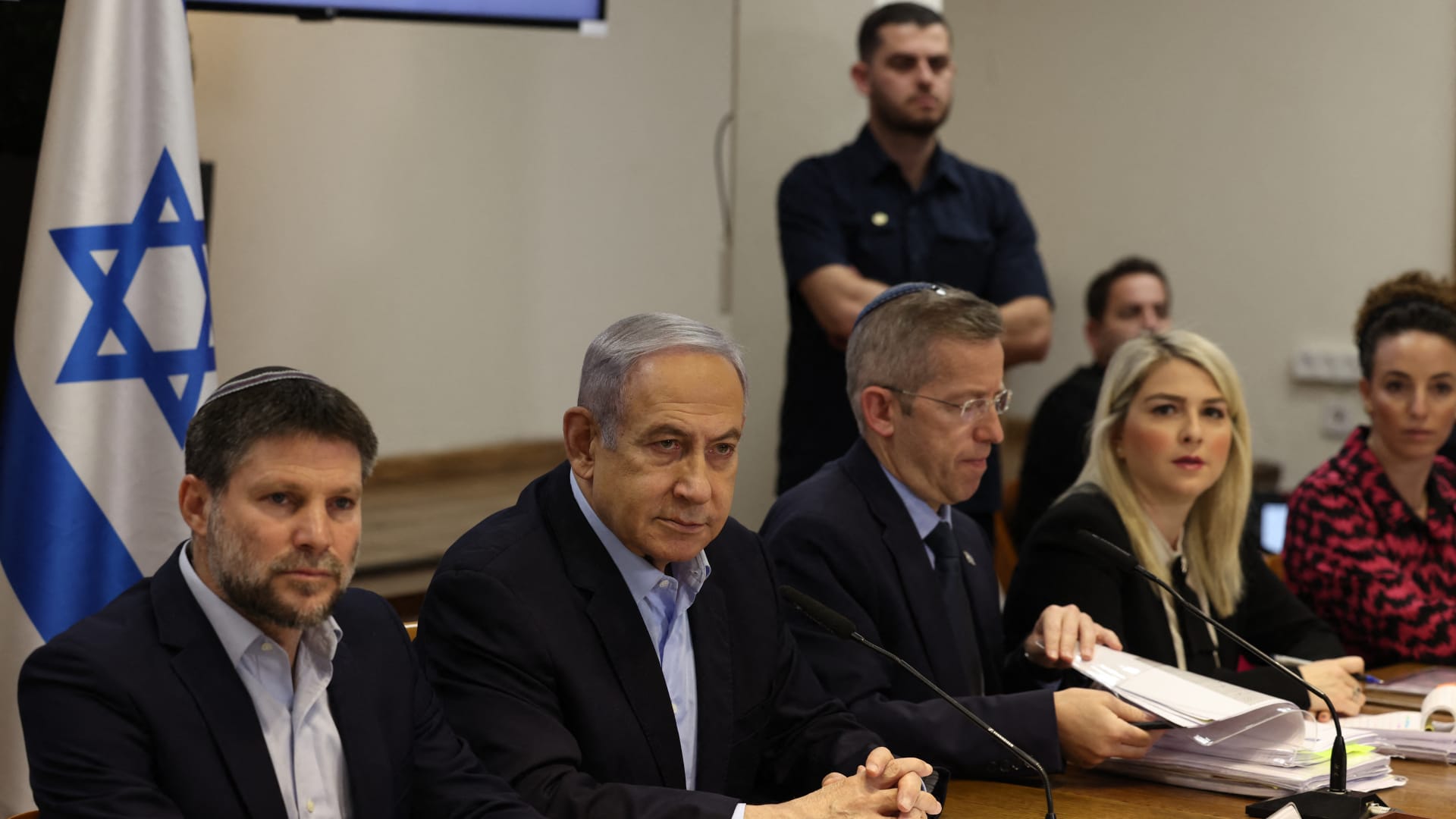
Israel’s governing coalition, led by Benjamin Netanyahu, has recently intensified its efforts to pass a controversial package of legislation. The proposed measures include curtailing the powers of the government's legal adviser by eliminating the binding nature of her legal opinions on the executive branch, granting the government broader authority over the regulation of the media sector, expanding gender segregation in higher education institutions, and advancing legislation designed to satisfy the strategic demands of the Haredi parties. These demands include strengthening the status of Torah study, broadening exemptions from compulsory military service, and repealing a number of reforms enacted by previous governments. These initiatives followed a political understanding that brought the religious parties back into full support of the coalition, giving Netanyahu’s government what may be its final opportunity to advance its legislative agenda before the country enters the next electoral cycle.
From a political perspective, although these developments appear to consist of a series of separate laws addressing the judiciary, the media, and education, they in fact represent interconnected components of a broader project aimed at repairing the fractures within Israel’s political system. The issue is no longer merely about modifying the authority of a judicial institution or reorganizing the media sector; rather, it concerns redefining the nature of the political system itself and redistributing the centers of power within the state in a manner that reflects the profound social, demographic, and political transformations that have reshaped Israeli society over the past two decades.
Israel is therefore facing neither a temporary governmental crisis nor an ordinary dispute between a coalition and the opposition. Instead, it is experiencing a structural crisis that strikes at the very foundations upon which its political system has rested since the establishment of the state in 1948. The historic consensus governing relations among the branches of government has steadily eroded, the traditional elites have lost much of their ability to manage internal balances, and religious, ethnic, and ideological divisions have evolved from manageable political disagreements into structural cleavages affecting the identity, function, and future of the state.
To understand what is unfolding in the Knesset today, one must return to the profound transformations that Israeli society has undergone over the past two decades. The current political developments are not merely the product of Netanyahu’s government; rather, they reflect a gradual transformation in Israel’s demographic and social structure—a transformation that has directly reshaped the party system and the balance of power within state institutions.
Since the beginning of the twenty-first century, Israel has witnessed the relative decline of the political dominance of the secular Ashkenazi elites that had controlled state institutions since the country’s founding. This decline has coincided with the sustained rise of religious and nationalist forces, driven primarily by two factors: the rapid population growth of the Haredi community and the continuing shift of broad sectors of Jewish society toward the political right as a consequence of security considerations and the diminishing prospects for a political settlement with the Palestinians.
According to the latest demographic data, the Haredi population has risen to approximately 1.45 million people, accounting for more than 14 percent of Israel’s population, compared to less than 10 percent only fifteen years ago. Official projections indicate that their share will continue to grow to approximately 16 percent by 2030 and could approach one-quarter of Israel’s population by the middle of the century if current fertility rates—the highest among all segments of Israeli society—remain unchanged.
The significance of these figures extends well beyond demographics; they carry profound long-term political implications. The Haredi community is Israel’s youngest demographic group, with nearly 60 percent of its members under the age of twenty. Consequently, the electoral weight of the religious parties is expected to increase almost automatically over the coming years, even without major changes in voting behavior.
These demographic shifts explain why the Haredi parties have evolved from being junior coalition partners into genuine kingmakers. They are no longer peripheral actors within governing coalitions; rather, they have become the decisive force in the formation of virtually any right-wing government. This position has granted them unprecedented bargaining power to advance their agenda concerning religious education, military exemptions, increased funding for religious schools, and influence over legislation of constitutional significance.
At the same time, the Religious Zionist movement has experienced significant political and social expansion, driven largely by the continued growth of the settler population in the West Bank, which now exceeds 700,000 settlers and constitutes one of the principal electoral reservoirs of the Israeli right. This development has shifted the center of gravity within the right itself from traditional nationalist conservatism toward a political current more closely aligned with the religious-settlement project, a transformation that has directly shaped both the composition of governing coalitions and their legislative priorities.
Conversely, the secular liberal elites that for decades dominated the judiciary, universities, the media, and the civilian bureaucracy have gradually lost their monopoly over the public sphere. As a result, Israel’s central political divide is no longer the traditional contest between the right and the left; it has become a struggle between two distinct social blocs, each holding fundamentally different conceptions of the state, the source of political legitimacy, and the role of religion in public life.
Since its establishment, Israel has been built upon what may be described as the “Zionist social contract,” founded on a delicate balance between compulsory military service, participation in the labor market, and obedience to the rule of law in exchange for political and social rights. Mandatory military service has long constituted one of the principal pillars of this contract, not merely as a security necessity but also as a mechanism for forging a shared national identity within an exceptionally diverse society. Yet this social contract has gradually eroded as exemptions for Haredi men have steadily expanded. In 1948, exemptions were granted to only around 400 yeshiva students as an exceptional measure intended to preserve religious institutions devastated by the Second World War. Over time, however, this exception evolved into a general policy covering tens of thousands of young Haredi men.
With the outbreak of the recent war and Israel’s increasing reliance on reserve forces, the issue has once again become one of the most divisive questions in Israeli society. While hundreds of thousands of reservists continue to shoulder the burdens of prolonged military service and combat, large segments of the Haredi community remain exempt, leading many Israelis to question the fairness of the distribution of national obligations.
The crisis extends beyond military conscription into the economic sphere. Israeli estimates suggest that the continued low labor-force participation of Haredi men, combined with their growing demographic weight, could significantly reduce productivity and result in substantial losses in gross domestic product over the coming decades unless major reforms are introduced in education and vocational training. Poverty rates within the Haredi community also remain considerably higher than the national average, increasing dependence on government support and intensifying debates over the equitable allocation of public resources.
Accordingly, the Haredi issue is no longer merely a religious matter. It has become a question that touches the future of the Israeli economy, the structure of the labor market, the sustainability of public finances, and, above all, the future of the social contract upon which the Zionist project has rested since the establishment of the state.
Meanwhile, with regard to the crisis affecting Israel’s judiciary, the real battle today concerns the institutions of the state that have for decades served as the principal guarantors of the balance among the branches of government. For this reason, the governing coalition does not regard its recent legislative initiatives as isolated legal reforms, but rather as a necessary step toward redistributing political authority within the state in line with the profound transformations that Israeli society has undergone. The judiciary occupies the very center of this confrontation. Unlike most Western democracies, Israel has no written constitution that clearly defines the powers of the three branches of government. Instead, its constitutional framework rests upon a body of Basic Laws and judicial precedents developed by the Supreme Court over several decades. Within this constitutional vacuum, both the Supreme Court and the Government Legal Adviser have acquired an exceptional status, to the extent that many scholars regard them as the principal pillars of the system of checks and balances within Israel’s political order.
Most read


Read also