From the Logic of Conflict to the Logic of Markets: Is the Middle East Moving Toward the Economic Containment of Iran?

The Middle East is undergoing rapid strategic transformations that could reshape the nature of regional balances for decades to come, particularly regarding the position and role of Iran within the regional order. After decades of open conflict, proxy wars, and tensions surrounding Iran’s nuclear program and regional influence networks, signs are emerging of a different approach based on the concept of “economic containment” as a gradual alternative to direct military confrontation.
This potential transformation reflects not only regional and international exhaustion from continuous wars, but also a growing recognition that traditional deterrence tools, sanctions, and military pressure have failed decisively to alter Iranian behavior or reintegrate Tehran into a stable regional framework. Consequently, a new direction is taking shape based on the assumption that integrating Iran into a broad network of economic and investment interests may prove more effective—and less costly—than strategies of isolation and perpetual confrontation.
The Strait of Hormuz and the Transformation of Strategic Energy Geography
For decades, the Strait of Hormuz represented one of Iran’s most important geopolitical leverage tools, given its role as a critical artery through which a substantial portion of global energy exports passes. Tehran repeatedly used the threat of closing the strait or disrupting navigation as a strategic deterrence instrument against Western pressure.
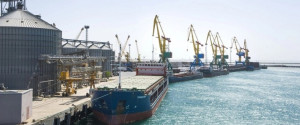
However, the recent war and the resulting instability in global energy markets have pushed Gulf states to accelerate the search for strategic alternatives that reduce dependence on the strait. Projects have emerged to expand export routes through the Arabian Sea, the Red Sea, and the Eastern Mediterranean, gradually limiting Iran’s ability to use Hormuz as a geopolitical pressure card.
This shift reflects a growing Gulf realization that energy security is no longer linked solely to military protection of maritime corridors, but also to diversifying export geography and reducing the vulnerability of regional economies to potential military escalation.
From Military Containment to Economic Containment
Over the past decades, the American strategy toward Iran has relied primarily on economic sanctions, military deterrence, and attempts to undermine Tehran’s regional influence. Yet experience has shown that the policy of “maximum pressure,” despite weakening the Iranian economy, failed to produce a fundamental transformation in the structure of the regime or its regional doctrine.
As a result, an alternative vision has gradually emerged based on the concept of “containment through economic interests”—that is, transforming Iran from a permanent center of military confrontation into a broad arena of economic and investment interdependence, where major economic interests themselves become a force pushing toward stability rather than escalation.
This approach rests on a core assumption: states deeply integrated into global economic networks become less inclined toward large-scale military adventures, because stability becomes a prerequisite for sustaining investment and economic growth, while military escalation becomes a direct threat to the survival of the economic system itself.
China and the United States: Competition Within a Shared Environment
Any future economic opening within Iran is unlikely to be monopolized by the United States alone. China is also expected to emerge as a major player in any future phase of regional stability, given its strategic interests, its Belt and Road Initiative projects, and its heavy dependence on Gulf energy security.
In this context, overlapping American and Chinese investments inside Iran could produce a form of “great-power balance of interests,” creating an environment less vulnerable to sudden collapse and granting Gulf investors greater confidence in regional market stability.
Such economic interdependence may also encourage major powers to manage their competition in the region through economic and investment tools rather than transforming the Middle East into an open arena of geopolitical confrontation.
Iran’s Central Dilemma: Ideological State or Economic State?
Despite the theoretical appeal of economic containment, implementing such a strategy faces profound structural obstacles within Iran itself. The Iranian system was not built merely as a conventional nation-state, but as an ideological project possessing extensive security, military, and regional networks, with the Islamic Revolutionary Guard Corps standing at the center of this structure.
This architecture was shaped through decades of conflict with the United States, Israel, and the broader regional environment, making a significant portion of the regime’s legitimacy dependent on the concept of “resistance” and permanent confrontation rather than economic development and regional integration.
At the same time, however, the recent war exposed the magnitude of the pressures confronting Iran internally—economically, socially, and politically. Long-term sanctions, inflation, currency depreciation, and widening socioeconomic hardship are all factors pushing decision-makers toward reconsidering national priorities.
Consequently, attracting foreign investment, improving economic conditions, and reducing tensions with the Gulf and the West may become not merely economic choices, but strategic necessities for preserving regime stability and preventing the escalation of domestic pressures.
The Gulf: Between Caution and Conditional Engagement
Although there are increasing indications of Gulf willingness to reduce tensions with Iran, Gulf states continue to approach any economic opening with considerable caution unless accompanied by genuine changes in Iranian regional behavior.
Gulf concerns extend beyond Iran’s nuclear program and military capabilities to include the nature of the Iranian regional project itself and the use of transnational influence networks as instruments of political and security leverage.
For this reason, any regional economic integration with Iran will likely remain conditional upon guarantees related to maritime security, respect for state sovereignty, and the reduction of escalation and regional intervention policies.
Conclusion
The region today stands before the possibility of a major strategic transformation: a transition from the “management of conflicts” to the “management of interests.” Yet the success of this transition will depend primarily on Iran’s own ability to redefine its regional role and gradually move from the mindset of an “ideological militant state” toward that of an “economic state” integrated into regional and international stability networks.
If such a transformation occurs, the Middle East could witness a profound restructuring of power balances, influence patterns, and development models. However, if the contradiction between Iran’s ideological and economic projects persists, the region may instead find itself trapped in a new cycle of postponed conflicts rather than sustainable economic peace.
In all cases, the future of relations with Iran will not be determined solely by weapons or sanctions, but by the ability of all parties to construct a system of interests in which stability becomes more profitable than conflict, and economics more influential than war.
Most read