From Tehran to Beijing: How Tariff Pressure Could Trigger a Global Trade Crisis

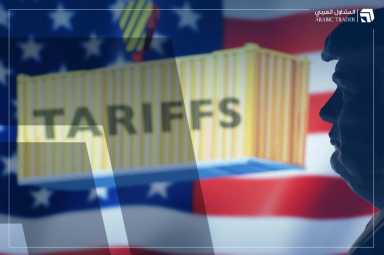
The threat issued by Donald Trump to impose 25 percent tariffs on countries trading with Iran is not merely a move aimed at Tehran. It carries broader implications that could reopen one of the most sensitive fault lines in the global economy: the trade relationship between the United States and China.
Once Iran policy becomes tied to global trade enforcement mechanisms, attention inevitably shifts toward Beijing — Tehran’s largest commercial partner.
In this context, the threat appears less like a narrow pressure tactic and more like a direct stress test of the fragile balance that has recently begun to form between Washington and Beijing after years of tariff escalation. The temporary understanding reached late last year — widely described as a “truce” — paused the cycle of duties, restrictions, and retaliation. Reintroducing tariffs now effectively returns trade escalation to the status of default policy rather than negotiation leverage.
From Bargaining Tool to Confrontation Strategy
The proposed 25 percent tariffs mark a qualitative shift in US trade policy. Instead of using duties as pressure instruments to extract concessions, they are increasingly being treated as tools of direct confrontation — reviving the dynamics of the previous trade war.
Past experience suggests such measures rarely remain limited. They tend to provoke reciprocal actions that reshape the global economic landscape as a whole.
China’s swift warning against unilateral sanctions reflects its awareness of this trajectory. Accepting US pressure over Iran could be seen domestically as political weakness, while rejection risks external economic fallout. In both scenarios, confrontation becomes more likely than compromise.
The Most Vulnerable Sectors: Agriculture as an Early Indicator
Previous trade escalations show that agriculture is often the first casualty. US soybean exports to China never fully recovered from earlier trade-war rounds, and American farmers learned how quickly political decisions can shut down foreign markets.
With tariff threats resurfacing, fears are growing that barely restored trade opportunities may once again disappear — entrenching long-term uncertainty for exporters.
But the fallout extends far beyond agriculture. Technology, energy, manufacturing, and global supply chains all depend on stable trade flows and predictable policy frameworks. Linking Iran-related sanctions to tariffs forces companies into an impossible equation: comply with shifting political demands or absorb severe commercial losses.
Macroeconomic Effects: Energy, Inflation, and Uncertainty
Washington’s stated strategy rests on “maximum pressure,” yet its consequences rarely remain confined to the intended target. Iran is a key player in global energy markets, and further escalation layered onto existing sanctions raises risk premiums in oil prices.
Higher energy costs quickly feed into inflation, tighter financial conditions, and greater economic uncertainty across Asia and Europe alike.
In the past, trade diplomacy offered off-ramps to de-escalate disputes before they hardened into long-term crises. Today, tariffs increasingly function as automatic responses rather than negotiating tools — stripping trade policy of its stabilizing role and turning it into a persistent source of volatility.
The Decision Dilemma in Washington and Beijing
China faces two painful choices: submit to US pressure on Iran at domestic political cost, or resist and absorb economic consequences. Past behavior suggests Beijing rarely accepts coercion without retaliation — making countermeasures highly probable.
Washington faces a similar dilemma. Backing down could signal weakness, while pressing forward risks reigniting a trade conflict that previously slowed global growth and rattled markets.
This uncertainty quickly translates into higher risk premiums, reduced long-term investment, and frozen expansion plans across global industries.
Asia at the Center of the Storm
Asia is likely to bear the brunt of renewed escalation due to deeply interconnected supply chains linking Chinese factories, Southeast Asian ports, and global energy routes.
Any fresh US–China confrontation would send immediate shocks through growth rates, currencies, and capital flows — far beyond the borders of the two powers themselves.
Analytical Conclusion
Trump’s tariff threat against countries trading with Iran does not merely test the durability of “maximum pressure” strategy — it also tests whether the global trade system has truly absorbed the lessons of the previous trade war.
That experience showed trade conflicts leave long-lasting scars, pushing companies to restructure supply chains and reduce exposure to geopolitical risk zones — costs ultimately borne by consumers.
While the strategic benefits of renewed escalation remain debatable, the tangible dangers of reopening barely healed economic wounds are far clearer than any prospective gains.
Once again, the world stands at a crossroads: restrain the logic of escalation — or slide into a new cycle of global economic uncertainty.
Most read