Child Labor in Lebanon: The Impact of Economic Collapse and War on Social Security

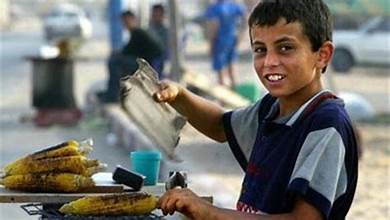
Lebanon is experiencing one of the most complex economic and social crises in its modern history, amid the intersection of financial collapse and the security and political repercussions of the ongoing war in southern Lebanon. This compounded crisis has not only led to deteriorating economic indicators and rising rates of poverty and unemployment, but has also driven dangerous social transformations, most notably the rapid expansion of child labor. The phenomenon has become a clear indicator of the fragility of Lebanon’s economic and social structure and the unprecedented erosion of the country’s social protection system.
This issue acquires additional significance in the context of International Workers’ Day, which is traditionally meant to highlight labor rights, working conditions, and social justice. In Lebanon, however, it has become a reflection of the depth of the country’s socioeconomic collapse and the state’s diminishing ability to protect its most vulnerable groups, particularly children.
Economic Collapse and the Restructuring of the Labor Market
Since the outbreak of the financial crisis in 2019, the Lebanese economy has entered a phase of structural collapse that has directly affected the labor market. The national currency lost most of its value, inflation soared, and purchasing power sharply declined, resulting in the erosion of the middle class and the expansion of poverty, while large segments of the population lost their traditional sources of income.
With escalating security tensions and military operations in southern Lebanon—and the resulting large-scale internal displacement—pressures on the economy and social fabric intensified, especially in already fragile regions. Key sectors such as trade, tourism, and services, which historically represented major sources of employment in Lebanon, were also severely damaged.
In this context, Lebanese families increasingly found themselves facing a harsh equation: either abandon essential needs or resort to painful survival strategies, including sending children into the labor market to help secure minimal household income.
Child Labor as an Indicator of State Fragility
The continuous rise in child labor rates reflects the declining ability of the Lebanese state to perform its core social functions. Although laws and regulations prohibit the employment of children below certain ages, the economic crisis and weak enforcement mechanisms have rendered these legal provisions largely ineffective in practice.
Estimates indicate a significant increase in child labor in recent years, particularly within informal sectors such as agriculture, manual labor, and low-wage service work. Many children work in hazardous conditions lacking even basic health and safety protections, while being exposed to multiple forms of physical, psychological, and verbal abuse.
The danger of the phenomenon is compounded by its overlap with the refugee and displacement crisis. Displaced and refugee families—particularly Syrian and Palestinian communities—are among the groups most vulnerable to pushing their children into labor due to poverty and the absence of effective social safety nets.
War, Displacement, and the Expansion of the Informal Economy
The war in southern Lebanon has deepened labor market instability and expanded the informal economy, a sector in which child labor typically flourishes because of weak oversight and limited legal protections.
Mass displacement from border villages has placed additional pressure on host communities and increased unemployment and competition for scarce job opportunities. This has pushed many households toward reliance on cheap labor, including child labor.
At the same time, the declining capacity of the Lebanese state to provide essential services, coupled with rising education and transportation costs, has forced growing numbers of children out of school and into the workforce at an early age. This threatens to produce an entire generation trapped in structural poverty and deprived of adequate educational and professional opportunities.
Weak Public Policies and the Funding Crisis
Although the Lebanese government officially committed itself to combating child labor at the beginning of the 2000s and launched programs in cooperation with UNICEF and the International Labour Organization, practical results have remained limited due to insufficient funding and weak institutional coordination.
Government policies have largely remained confined to formal legal approaches without building a comprehensive social protection system capable of addressing the economic roots of the phenomenon. Combating child labor cannot be achieved through legislation alone; it requires broad economic and social policies that include support for poor families, improvements in public education, expansion of social safety nets, and stronger cash assistance programs.
It is also evident that the absence of dedicated budget allocations for this issue, combined with declining international support, has significantly weakened Lebanon’s ability to implement effective and sustainable anti-child-labor programs.
Future Consequences: From Social Crisis to Security Threat
The dangers of child labor extend beyond humanitarian and social dimensions to include long-term security and developmental consequences. Children deprived of education and pushed prematurely into labor markets become more vulnerable to chronic poverty, social marginalization, and future involvement in illegal activities or networks of violence and crime.
The persistence of the phenomenon also threatens Lebanon’s human capital and undermines prospects for long-term economic recovery, especially in a country that historically depended heavily on education, skilled labor, and service industries.
Accordingly, child labor in Lebanon should not be viewed merely as a limited social issue, but rather as part of the broader crisis of the Lebanese state itself and its declining capacity to protect society and manage rapidly evolving economic and security challenges.
Conclusion
The child labor crisis in Lebanon reveals the deep interconnection between economic collapse, war, state fragility, and the erosion of social protection systems. The deeper the economic and security crises become, the more families rely on harsh survival strategies, foremost among them child labor.
As long as security tensions persist and prospects for economic recovery remain weak, the phenomenon is likely to continue expanding unless a comprehensive approach is adopted—one that addresses the structural roots of the crisis rather than merely its symptoms.
Protecting children in Lebanon is no longer simply a humanitarian or rights-based issue; it has become an essential component of preserving social stability and safeguarding the future of the Lebanese state itself.
Most read