Can Libya Fill the Global Oil Gap as the Iran Conflict Intensifies

A defining pillar of President Donald Trump’s “America First” agenda has been national energy security. Coupled with the diplomatic momentum of the Abraham Accords, this strategy has reshaped regional alliances, strengthened U.S. partnerships, and reinforced domestic economic stability.
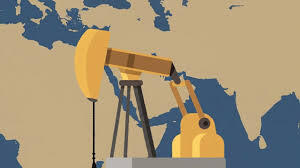
Today, both pillars are under growing strain. The widening war with Iran has triggered one of the most severe energy shocks in decades, pushing oil prices above $115 per barrel as markets respond to escalating tensions and the risk of prolonged disruption.
At the center of the crisis lies the Strait of Hormuz, through which roughly one-fifth of global oil supply passes. As shipping becomes constrained, the repercussions are cascading across the global economy—raising fuel costs, fueling inflation, and heightening the risk of economic slowdown in the United States and among its allies.
Washington has responded with extraordinary measures. As of March, the United States had released approximately 172 million barrels from the Strategic Petroleum Reserve as part of a coordinated 400-million-barrel drawdown with members of the International Energy Agency. While this has helped curb immediate price spikes, it has reduced U.S. reserves to around 243 million barrels—the lowest level since the early 1980s.
At the same time, policymakers have cautiously adjusted sanctions policy to stabilize supply. While maintaining core restrictions on major Russian energy firms such as Lukoil and Rosneft, the United States has temporarily eased certain measures. These include a 30-day waiver for stranded Russian and Iranian oil cargoes, as well as a more flexible approach to shipments involving Cuba—reflecting a pragmatic effort to ease market pressures amid disruptions in the Strait of Hormuz.
These steps underscore the urgency of the moment but also reveal their limitations. Strategic reserves are finite, and sanctions flexibility entails geopolitical trade-offs. Together, they buy time but do not address the core constraint: insufficient global supply and unstable supply chains.
As Trump searches for durable ways to stabilize markets, a strategic opportunity lies in plain sight: Libya.
Libya holds more than 48 billion barrels of proven oil reserves—the largest in Africa—and produces the light, sweet crude most sought after by European refiners.
Before years of instability following the intervention of the NATO against the regime of Muammar Gaddafi, Libya was producing approximately 1.6 million barrels per day. With political stabilization and renewed investment, output could exceed 2 million barrels per day, providing a meaningful buffer against disruptions in the Gulf.
In today’s market, such incremental supply is critical. Energy markets are driven as much by expectations as by actual production. A credible outlook for increased Libyan output could restore confidence, reduce volatility, and exert downward pressure on global energy prices.
The challenge, however, is governance—not geology.
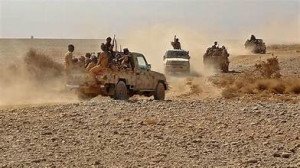
Since the fall of Gaddafi in 2011, following NATO’s intervention under the administration of Barack Obama, Libya has remained deeply fragmented. Rival governments and militia control over infrastructure have repeatedly disrupted production and deterred investment.
Yet this very failure presents a strategic opportunity. A durable political settlement in Libya would unlock suppressed production, attract investment, and provide Europe with a reliable and geographically proximate alternative to Middle Eastern supply routes. At a time when the Strait of Hormuz remains a critical chokepoint, Libya offers a Mediterranean corridor largely insulated from Gulf volatility.
The benefits extend beyond energy. Libya’s instability has created space for extremist organizations such as ISIS and al-Qaeda to operate. Stabilization would enhance counterterrorism cooperation with the United States and Europe, strengthen regional security, and counter the expanding influence of China and Russia across Africa’s energy sector. Given its reserves and strategic location, Libya represents a critical geopolitical prize.
For Trump, Libya offers a rare convergence of opportunity and feasibility. Unlike Iran, it is not a deeply entrenched adversary; unlike Venezuela, it is not defined by ideological opposition to U.S. engagement. Rather, it is a fragmented state whose competing factions share a common incentive: restoring oil production and revenue.
This shared interest creates the foundation for a pragmatic diplomatic breakthrough. While emergency reserve releases and temporary sanctions relief serve as short-term measures, a successful diplomatic initiative in Libya could expand global supply, reduce long-term price volatility, and deliver a clear geopolitical win.
At a moment of historic disruption driven by the Iran conflict, Libya is not merely another foreign policy challenge—it is a strategic solution hiding in plain sight.
Most read



Read also