
BRICS Takes First Concrete Steps Toward an Alternative Global Payments Network

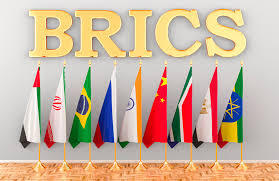
The idea of creating a unified BRICS currency to facilitate decoupling from the US dollar remains a distant aspiration. Yet a digital alternative to the SWIFT system now appears far closer to reality. As India prepares to host the BRICS summit later this year, attention is shifting toward the creation of a payment system linking the member states’ national digital currencies. By prioritizing infrastructure over launching a new currency, the bloc is betting on a pragmatic approach—one that assumes functional systems can reshape the global financial order more effectively than symbolic initiatives.
A key item on the summit agenda signals this potential shift: the development of a BRICS payment system based on interoperability among central bank digital currencies (CBDCs). This infrastructure-focused initiative has attracted less media attention, as it avoids the controversy surrounding calls for a “BRICS currency” or explicit dollar decoupling. Yet its quiet profile may be its greatest strength, reinforcing the article’s central argument: practical changes in financial infrastructure can be more transformative than direct symbolic challenges.
Rather than confronting the dollar head-on, the proposal adopts a more realistic strategy—building alternative payment “rails” that allow trade settlement directly in national digital currencies, thereby reducing reliance on the dollar-centered SWIFT system.
Not a Unified Currency
There is persistent confusion about the nature of financial cooperation within BRICS. The current initiative does not seek to establish a common currency, nor does it require member states to surrender monetary sovereignty to a supranational authority. Previous proposals along those lines stalled for predictable reasons, including divergent inflation regimes, incompatible capital controls, and fears of Chinese yuan dominance.
The present approach moves in the opposite direction. It aims to connect existing national digital currencies—such as India’s digital rupee, China’s digital yuan, and Russia’s digital ruble—through interoperable infrastructure. Each currency retains full sovereignty; the transformation lies solely in the mechanisms enabling smoother interaction.
In practical terms, this would allow cross-border payments to be settled directly in national currencies, bypassing correspondent banks and the dollar-based SWIFT network. The benefits are clear: faster settlements, lower costs, and reduced exposure to sanctions or asset freezes imposed by Western governments.
India’s Central Role
India is playing a pivotal role in driving this agenda. As summit host and a key agenda-setter, New Delhi has moved digital currency interoperability from theoretical discussion to practical political coordination. This reflects India’s broader digital payments philosophy—shaped by the domestic success of interoperable platforms—centered on efficiency without sacrificing monetary sovereignty.
The Reserve Bank of India has emphasized that the digital rupee is not a cryptocurrency nor a step toward monetary union, but a state-backed digital equivalent of cash designed to improve efficiency while preserving full monetary control.
This stance explains India’s resistance to a supranational BRICS currency and its support for infrastructure that enhances the usability of national currencies in cross-border trade. Practical experience also shaped this view. Earlier bilateral settlement arrangements with Russia led to large accumulations of rupees in Moscow that could not easily be spent—a problem dubbed the “rupee trap.” This failure highlighted the need for a multilateral network in which earned currencies can circulate within a broader trade bloc rather than pile up unused.
Direct Settlement Mechanisms
At the core of the proposed BRICS payment system are two mechanisms designed to enable seamless trade in national currencies without reliance on the dollar: clearing cycles and foreign exchange swap lines.
Clearing cycles function as periodic netting systems. Instead of settling every transaction individually—requiring constant high liquidity—payments between two countries are aggregated over a set period. Only the net balance is settled at the end. If India imports 500 billion rupees’ worth of goods from China in a month while China imports 400 billion rupees’ worth from India, only the 100 billion rupee difference needs to be transferred. This dramatically reduces currency movement volumes, lowers costs, and prevents the accumulation of unusable partner currency surpluses.
Swap lines serve as liquidity backstops—prearranged agreements between central banks to exchange fixed amounts of their currencies for specified periods. If a country suddenly needs more of a partner’s currency to settle a net obligation—due to seasonal import spikes, for example—its central bank can temporarily “borrow” that currency via the swap line.
Dollar Debt Risks
None of this makes BRICS a replacement for the dollar, which remains the backbone of the global financial system. The dollar accounts for roughly 59% of global foreign exchange reserves, supports 58% of international payments, and prices more than half of global trade.
However, the unprecedented scale of dollar-denominated debt—both in the United States and worldwide—has become a major systemic risk. With US national debt nearing $39 trillion and global debt around $315 trillion—64% of it dollar-denominated—global financial stability is increasingly tied to continued confidence in the dollar.
The danger lies in a self-reinforcing cycle: servicing massive US debt depends on sustained global demand for dollar assets, particularly US Treasury bonds. If that demand weakens, interest rates could spike sharply, raising US debt-servicing costs and tightening global financial conditions—potentially triggering debt crises across dollar-indebted states and corporations.
US Defensive Measures
To protect the dollar’s reserve-currency status, the United States employs a multi-layered strategy combining institutional, financial, and sometimes coercive tools. Among the most powerful is the use of financial sanctions and control over access to SWIFT. Countries such as Iran and Russia have faced severe economic isolation—sending a clear deterrent message about the costs of operating outside the dollar system.
At the same time, Washington is modernizing the dollar’s reach through digital finance, particularly dollar-backed stablecoins, aiming to entrench dollar dominance within the digital economy rather than allow innovation to undermine it.
Shock Absorption and Parallel Rails
These pressures explain BRICS’ push to develop a parallel payments track alongside SWIFT—especially after Russia’s exclusion from the system and the seizure of large portions of its reserves. While legal and technical hurdles remain, the trajectory is clear.
The system is likely to evolve gradually, building on existing bilateral arrangements before expanding into a multilateral network. The India–UAE linkage offers an early example that could be scaled across BRICS in the future.
While the dominant financial order will not collapse overnight, history suggests the emergence of alternative rails is almost inevitable. Under India’s leadership, BRICS is now laying the first tracks.
Most read



Read also