Beyond Trade and Energy: The Geopolitical Dimensions of the Arab–Chinese Partnership

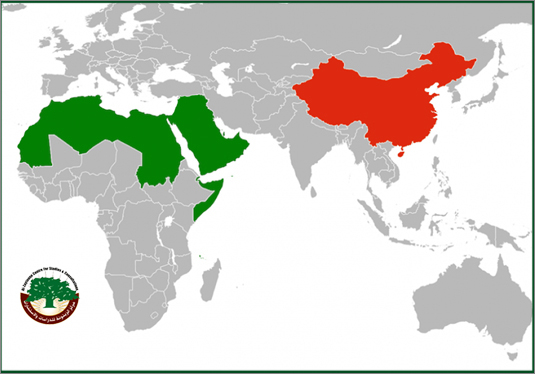
At a time when the international system is undergoing profound transformations and many of the assumptions that shaped the post–Cold War order are being challenged, Arab–Chinese relations have emerged as one of the most significant geopolitical and economic developments of the twenty-first century. No longer confined to trade exchanges or development cooperation, these relations increasingly reflect a broader restructuring of global power dynamics and the rise of new forms of cross-regional partnerships.
Historically, Arab–Chinese ties were rooted in centuries of commercial and cultural interaction dating back to the ancient Silk Road. Yet over the past two decades, these relations have evolved into a far more comprehensive strategic partnership. As China has risen to become the world's second-largest economy and a leading actor in international trade, it has come to view the Arab region as a strategically vital space characterized by its geopolitical location, vast energy resources, growing consumer markets, and influence over regional security dynamics.
For Arab states, meanwhile, China represents an increasingly attractive partner capable of providing investment, technology, infrastructure development, and economic opportunities without attaching the political conditions that have often accompanied Western engagement. This convergence of interests has injected unprecedented momentum into bilateral relations and positioned them as a central feature of contemporary international politics.
China's Rise and the Decline of Unipolarity
The expansion of China's presence in the Arab world cannot be understood apart from the broader transformation of the international system. For nearly three decades following the end of the Cold War, the United States occupied a dominant position in global affairs. However, China's remarkable economic, technological, and political ascent has accelerated the transition toward a more multipolar international order.
Within this context, the Arab region occupies a critical place in Beijing's long-term strategic calculations. Stretching across some of the world's most important maritime and commercial routes—from the Suez Canal and the Red Sea to the Arabian Gulf and the Indian Ocean—the region serves as a crucial link connecting Asia, Africa, and Europe.
Consequently, China's engagement with Arab states has expanded beyond securing energy supplies. It now encompasses efforts to strengthen global supply chains, diversify overseas markets, expand political influence, and enhance China's role within international institutions.
The Belt and Road Initiative: Geography as Strategy
The Belt and Road Initiative (BRI), launched by President Xi Jinping in 2013, marked a turning point in Arab–Chinese relations. Far more than an economic project, the initiative represents a comprehensive geopolitical vision aimed at reconnecting Asia, Africa, and Europe through an extensive network of ports, transportation corridors, industrial zones, and infrastructure projects.
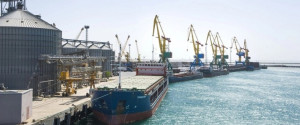
Within this framework, Arab countries occupy a pivotal position. Ports along the Arabian Gulf, the Red Sea, and the Mediterranean constitute essential nodes in China's global trade network. As a result, several Arab states have become key logistical and investment hubs for Chinese enterprises, significantly enhancing the region's strategic importance in Beijing's long-term planning.
Moreover, the initiative has enabled China to project influence through development-oriented engagement. By financing infrastructure projects and supporting economic modernization, Beijing has sought to present itself as a partner committed to mutual benefit rather than political conditionality.
Energy Security: The Foundation of the Partnership
Despite the diversification of cooperation, energy remains the cornerstone of Arab–Chinese relations. China is the world's largest energy importer, while the Arab world possesses some of the largest oil and gas reserves globally.
Yet the partnership is increasingly moving beyond conventional hydrocarbon trade. Cooperation now extends to renewable energy, green hydrogen, solar power, wind energy, and advanced energy technologies. This evolution reflects a growing recognition on both sides that future economic cooperation must adapt to global energy transitions and the demands of sustainable development.
Most read