
Beyond Hormuz: Testing the Resilience of Saudi Arabia’s Oil-Export Network

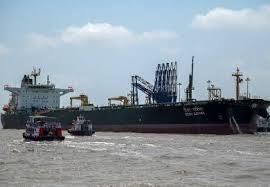
For more than four decades, Saudi Arabia has sought to reduce its dependence on the Strait of Hormuz, one of the world’s most sensitive energy chokepoints, by developing a more resilient oil-export network. The East-West Pipeline, constructed during the Iran-Iraq War, became the cornerstone of this strategy. By carrying crude from the Kingdom’s eastern production areas to Yanbu on the Red Sea, the pipeline provides an alternative export route that bypasses the Gulf and the Strait of Hormuz.
In energy security and critical infrastructure planning, this approach is commonly described as redundancy: maintaining alternative routes or infrastructure that can be used when a primary system fails.
Recent developments, however, are testing this concept under more demanding conditions. Drone strikes have damaged the East-West Pipeline and forced a temporary suspension of operations, while shipping through the Strait of Hormuz has faced severe disruption and the Houthis have expanded their military presence around the Bab el-Mandab Strait.
The central question is therefore shifting from whether Saudi Arabia has alternative export routes to a more consequential one: Can those alternatives remain effective when several links in the export network are disrupted simultaneously?
This shift—from redundancy to resilience under simultaneous disruption—is at the heart of the challenge facing Saudi Arabia’s oil-export strategy.
Bypassing Hormuz Does Not Eliminate Chokepoint Risk
The East-West Pipeline was designed to reshape the geography of Saudi oil exports. Rather than requiring crude produced in the Kingdom’s east to pass through the Gulf and the Strait of Hormuz, the pipeline carries oil westward to Yanbu, from where it can reach international markets through the Red Sea.
Under normal conditions, this architecture gives Saudi Arabia significant flexibility in managing its crude exports. Yet it does not eliminate maritime chokepoint risk; it shifts part of that risk to another point in the network.
For the capacity of the East-West Pipeline to translate into actual large-scale exports, the Red Sea system and the maritime routes connecting it to global markets must also remain available. This makes Bab el-Mandab the critical maritime link in the alternative pathway.
Bypassing Hormuz, therefore, does not necessarily eliminate geopolitical risk. It can instead redistribute that risk geographically.
That issue has become more consequential as the Houthis have expanded their military presence around the Red Sea and Bab el-Mandab, including control of strategic locations and islands, according to the underlying report.
Pressure on the infrastructure connecting Saudi Arabia’s eastern oil-production system to its Red Sea export terminals consequently raises a broader question than the security of the pipeline itself: How resilient is Saudi Arabia’s export network when several strategic nodes come under pressure at the same time?
The East-West Pipeline: A Strategic Alternative, Not an Absolute Guarantee
The importance of the East-West Pipeline lies not merely in its existence as an additional route, but in its ability to move substantial volumes of crude away from the Strait of Hormuz. Rystad Energy estimates that as much as four million barrels per day were moving through the pipeline in late August.
Its importance, however, does not make it immune to attack. The pipeline and associated infrastructure have previously suffered damage and temporary operational disruptions, including an attack in 2019 and damage during the 2026 war with Iran, according to the report.
This indicates that Saudi Arabia’s redundancy strategy was never based on the assumption that the East-West Pipeline could not be targeted. Its primary function was to provide an alternative route when Hormuz became more difficult to use, rather than to operate as a completely independent system.
The critical difference today is the simultaneity of the threats.
In 2019, the pipeline was targeted, but Saudi Arabia’s primary export route through Hormuz remained available. In April 2026, the Strait of Hormuz faced severe disruption, but Bab el-Mandab was not subject to the same level of constraint now confronting it.
By September 2026, all three elements of the Saudi export network are under simultaneous pressure: the East-West Pipeline, the Strait of Hormuz, and Bab el-Mandab amid an expanding Houthi military presence.
This exposes a fundamental limitation of the concept of an “alternative”: a backup route is most valuable when the primary route fails, but its value falls sharply if the backup is disrupted at the same time.
Saudi Arabia’s Alternative Routes Are Not Fully Independent
Saudi Arabia has multiple options for directing its crude exports, reflecting decades of investment in infrastructure, export terminals, and transportation networks.
Saudi Aramco’s 2026 corporate presentation identifies the Suez Canal/SUMED route as an alternative export pathway, while Aramco holds a 15 percent stake in SUMED.
Yet having multiple destinations does not necessarily mean having multiple independent pathways.
Saudi Arabia may have several outlets for its crude, but some of those outlets depend on the same infrastructure at earlier stages of the supply chain. This is particularly relevant to the East-West Pipeline and Yanbu, which are critical nodes in the Kingdom’s ability to move large volumes of crude from the east to the Red Sea.
This highlights one of the most important distinctions between diversification and resilience.
An export network may appear diversified when viewed in terms of final destinations while remaining considerably less diversified if several routes depend on a limited number of common infrastructure nodes.
Oil-Flow Data Reveals the Paradox
Regional oil-flow data illustrates this tension more clearly.
As flows through the Strait of Hormuz declined from approximately 21.6 million barrels per day in the fourth quarter of 2025 to around 4.9 million barrels per day in the second quarter of 2026, Saudi Arabia increasingly relied on its western export network.
During the second quarter of 2026, flows through the Suez Canal and SUMED pipeline remained relatively stable at around 5.8 million barrels per day, while flows through Bab el-Mandab increased from approximately 5.4 million barrels per day to 8.1 million barrels per day over the same period.
These figures highlight two simultaneous realities.
First, Saudi Arabia has demonstrated a meaningful ability to redirect part of its oil flows when Hormuz becomes constrained.
Second, that flexibility is not entirely independent of the rest of the network. Greater reliance on the Red Sea increases the importance of the infrastructure that feeds crude into that system, particularly the East-West Pipeline and Yanbu.
In other words, diversifying maritime routes does not necessarily eliminate the upstream land-based chokepoints that supply those routes.
SUMED Cannot Simply Replace Every Barrel
The Suez Canal-SUMED route may provide an additional safety valve, but it cannot necessarily replace every barrel that would otherwise move through Bab el-Mandab or Hormuz.
The practical capacity of any alternative route depends on a range of factors, including pipeline throughput, port capacity, vessel size, the characteristics of the crude being transported, and the logistical requirements of redirecting supplies between markets.
The existence of an alternative route on paper therefore does not necessarily mean that flows can be redirected to it immediately or at the same scale.
This distinction highlights the gap between the nominal capacity of an export network and its effective crisis-response capacity.
From Diversification to Operational Independence
The current crisis suggests that energy security should not be assessed simply by counting the number of routes available to a major oil exporter.
The more important question is: How many of those routes can operate independently when multiple parts of the network are disrupted?
This makes the concept of resilience more important than redundancy alone.
Redundancy means having an alternative. Resilience refers to the ability of the wider system to absorb a shock, redistribute flows, and maintain an acceptable level of operation despite the failure of some components.
From this perspective, the problem facing Saudi Arabia is not necessarily a lack of alternatives, but the possibility of shared dependencies among those alternatives.
If Route A and Route B depend on the same critical infrastructure upstream, a disruption at that shared node can affect both routes simultaneously. The greater the number of such dependencies, the lower the effective value of nominal diversification.
The Real Test: Simultaneous Disruption
The current crisis differs from previous episodes because it does not place a single component of Saudi Arabia’s energy system at risk.
The East-West Pipeline is being disrupted, the Strait of Hormuz is facing severe restrictions, and Bab el-Mandab is experiencing growing military pressure.
The crisis is therefore testing an entire network rather than a single facility.
This makes a basic principle of critical infrastructure design particularly relevant: it is not enough to have an alternative route; the alternative must remain operational when it is actually needed.
If the primary route fails while the backup retains sufficient capacity, redundancy has served its purpose. But when both the primary and backup routes face simultaneous pressure, the problem shifts from a shortage of alternatives to a shortage of effective risk isolation.
What Does This Mean for Saudi Energy Security?
The current developments do not necessarily indicate that Saudi Arabia’s strategy of diversifying its oil-export routes has failed. On the contrary, the construction of the East-West Pipeline and the development of western ports and export routes have demonstrated clear strategic value during previous crises.
What the current episode exposes are the limits of that strategy.
Diversification does not necessarily mean that risks are distributed evenly, and multiple routes do not necessarily mean independent routes. An export network can be geographically extensive while remaining dependent on a relatively small number of critical nodes.
The most important lesson, therefore, is not about the number of pipelines and ports Saudi Arabia possesses, but about their degree of operational independence and their ability to function simultaneously under stress.
Saudi energy security does not depend solely on its ability to bypass the Strait of Hormuz. It also depends on its ability to prevent risks from migrating from one chokepoint to another.
Ultimately, the real test of Saudi Arabia’s strategy is not whether it has an alternative route, but whether it has a genuinely alternative network.
That distinction is fundamental. An alternative route provides an option; a resilient network provides the capacity to withstand disruption.
As the risk of simultaneous attacks on energy infrastructure and maritime chokepoints increases, that capacity for resilience may become more important than simply adding more export routes.
Most read




Read also