
Beyond Giant Models: How China Is Redefining Artificial Intelligence

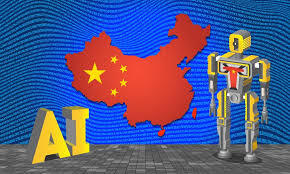
While most global debates around artificial intelligence focus on privacy concerns, big tech dominance, and the race to build ever-larger models, China is moving along a different path — quieter, yet far more structural in nature.
Rather than treating AI as an elite product or a competitive tool among technology giants, Beijing is approaching it as a foundational component of society, comparable to electricity or the internet — not as an exclusive service confined to massive data centers.
This shift reflects not merely a technical divergence, but an integrated political, economic, and social vision aimed at redefining AI’s role in daily life, in state–society relations, and within the national economy.
From “Closed Models” to “Embedded Intelligence”
In the United States, the dominant approach centers on developing massive AI models owned by private corporations, operating within closed cloud platforms and marketed as high-value products. Despite their technical sophistication, these systems largely confine AI access to major firms and institutions able to absorb high costs.
China’s model rests on a different assumption: the real value of AI lies not in model complexity, but in widespread diffusion and deep integration into social and economic infrastructure.
The Chinese government has openly outlined plans to transform AI into a public utility — affordable, widely accessible, and deployable across sectors — with the stated goal of building the world’s first “AI society” by 2035. In this vision, AI becomes not an add-on tool, but an invisible operating layer supporting production, services, public administration, and welfare systems.
The State as Regulator — Companies as Operators
China’s approach relies on a clear division of roles. The central state establishes policy frameworks, national data standards, and core infrastructure, while private firms handle development, deployment, and competition within this regulated environment.
Major domestic companies such as Baidu and Tencent have been designated as key AI platform providers.
What distinguishes the model, however, is not the strength of each platform individually, but their interconnection within a unified ecosystem.
Some analysts describe this strategy as the construction of a “national nervous system,” where data, services, and algorithms flow seamlessly across sectors — enabling faster decision-making, more precise public services, and enhanced administrative efficiency.
Plug-and-Play Artificial Intelligence
A defining feature of China’s AI rollout is what might be called “ready-to-deploy intelligence.” Instead of selling standalone software, Chinese firms offer integrated solutions combining software, hardware, data, operational infrastructure, and ongoing support.
This model suits governments, municipalities, and industries that lack the capacity or desire to build AI systems from scratch. Technology thus shifts from a long-term, high-risk investment into a scalable service that can be rapidly implemented.
In practice, this has turned AI into infrastructure rather than experimentation.
Cost Advantages and Industrial Power
Cost plays a decisive role in enabling this transformation. As the world’s manufacturing hub, China produces most of the hardware needed for large-scale AI deployment — from sensors to servers — with the exception of the most advanced semiconductor chips still dominated by the United States.
This industrial edge allows China to roll out low-cost AI solutions domestically and abroad, giving it a competitive advantage in developing countries seeking practical service upgrades without massive digital investments.
Global Implications Beyond China
The impact of this model is unlikely to remain confined within China’s borders. As turnkey AI systems are exported, China could become a global reference point for integrating artificial intelligence into public administration, transportation, urban security, and social services.
This raises a fundamental question:
Will China’s infrastructure-driven AI model emerge as an alternative to the Western market-led, decentralized innovation approach?
Or will the future feature multiple AI systems shaped by differing political and cultural philosophies?
Efficiency Versus Control
Despite its strengths, the Chinese model raises legitimate concerns about privacy, governance, and surveillance. Embedding AI deeply into society grants the state unprecedented capacity for data collection and behavioral analysis.
While Beijing frames this as a tool for efficiency and stability, critics warn it may reinforce new forms of social control.
Yet this tension is not unique to China — it is a global dilemma of the AI age, as societies everywhere struggle to balance technological benefits with individual rights.
Conclusion
What is unfolding in China is not merely a technological race, but a redefinition of artificial intelligence’s role in society.
Rather than treating AI as a luxury product or digital commodity, it is being transformed into public infrastructure — operating quietly in the background while reshaping economic organization, governance, and everyday life.
While much of the world remains fixated on model sizes and algorithmic breakthroughs, the deeper shift may lie in this transition from “AI as a product” to “AI as a social operating system.”
And it is this structural transformation that may ultimately have the most profound impact on the future of technology and societies in the decades ahead.
Most read