
Across the Middle East in general, the names of cities, dialects, and styles of dress may differ, yet the details of daily life often remain remarkably similar in ways that can sometimes be surprising.
The way guests are welcomed, the aroma of coffee, crowded family homes during holidays, respect for elders, nostalgia for the village, and even the deep sensitivity toward dignity and family—all these details reveal that the peoples of the region are far closer to one another than many imagine.
For this reason, Arab–Kurdish relations cannot be understood solely through politics or history, but also through everyday life itself—through the small habits repeated in homes, markets, and social occasions, often without people realizing the extent of the similarities between them.
This human dimension was among the areas emphasized by the “Takamul… Arabs and Kurds… A Shared Destiny” campaign, affiliated with the International Istishraf Network. Through various cultural and social materials, the campaign sought to highlight the everyday commonalities between Arabs and Kurds as a genuine foundation for any long-term rapprochement.
People do not build deep relationships only through grand narratives, but through the details that make them feel they belong to a shared social and human space.
Anyone who reflects on the social customs of Arabs and Kurds will notice the significant overlap in the way family and social relations are organized.
The idea of the extended family, strong ties with relatives, the importance of neighbors, and the centrality of collective occasions all remain deeply rooted in both societies.
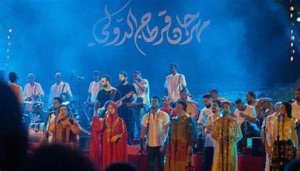
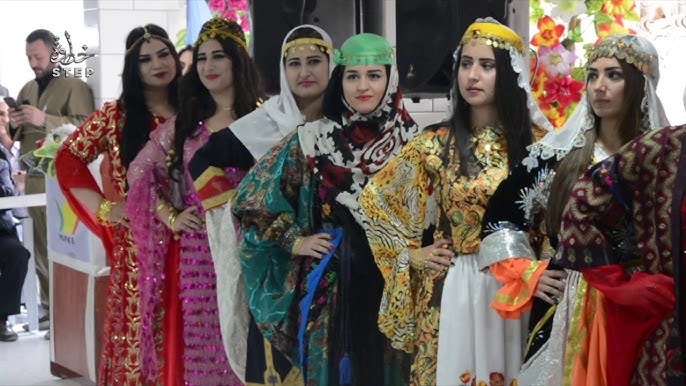
At weddings, for example, the similarities are striking: the spirit of collective celebration, the broad participation in joy, the presence of folk songs and communal dances, traditional clothing, and large feasts shared among relatives and guests.
Even the rituals of mourning and condolence reveal many common features, whether in terms of social solidarity or the idea of standing beside the family during difficult times.
Perhaps these simple details reveal a deeper truth: societies that have long shared the same environment, geography, fears, joys, and historical transformations inevitably develop similar ways of understanding life.
In recent years, social media has contributed to rediscovering these commonalities on a wider scale. Many Arab youths have begun following Kurdish content related to daily life, weddings, celebrations, and folk traditions, only to discover that the image sometimes shaped by politics differs greatly from lived human reality.
This is precisely what the “Takamul” campaign sought to build upon: moving Arab–Kurdish relations beyond the framework of a mere “political file” toward a warmer and more human-centered space. Politics may create temporary understandings, but social and cultural similarities foster a deeper form of mutual acceptance.
It is also notable that many Arab and Kurdish traditions are built around values such as generosity, respect for guests, and helping others—values that still hold a prominent place in the social consciousness of both communities.
In Eastern societies generally, a person’s status is measured not only by what they possess, but also by how they treat others and by their ability to preserve social and family ties.
For this reason, rapprochement between Arabs and Kurds has never been artificial or sudden, but rather the natural outcome of decades of coexistence and everyday interaction.
It is true that politics has gone through periods of tension and complexity, yet society itself often remained wiser than the conflict. Ordinary people continued to work, trade, intermarry, and live together, even when grand political narratives were more emotionally charged.
Perhaps this is why cultural and social initiatives that once again highlight everyday commonalities are of such importance today: they remind people of what they may have forgotten amid the noise of crises.
In its own indirect way, the “Takamul” campaign sought to convey that the path toward understanding does not always begin with political conferences, but rather with rediscovering the human being in the other.
The human being who celebrates in much the same way, grieves in much the same way, raises children upon nearly the same values, and dreams of the same security, dignity, and stability.
And in a region exhausted by divisions, these simple details may ultimately prove far more important than they first appear.
Translated from Al Qrar Al Araby:
Al Qrar Al Araby
Most read