
When the United States and Iran concluded a ceasefire agreement last month aimed at reopening the Strait of Hormuz, President Donald Trump was quick to declare victory.
"This great agreement will bring peace and security to the entire region," Trump wrote on social media.
The preliminary agreement, whose details were outlined in a Memorandum of Understanding dated June 17, established a 60-day period for negotiating restrictions on Iran's nuclear program in exchange for easing economic pressure on Tehran.
Yet only weeks later, nearly all fourteen provisions of the agreement had been violated—so much so that President Trump himself declared that the agreement was "over."
What follows is a review of what has become of each provision.
Article One
"By signing this Memorandum of Understanding, the United States of America, the Islamic Republic of Iran, and their respective allies in the current conflict declare an immediate and permanent cessation of military operations on all fronts, including Lebanon. From this point forward, both parties undertake not to wage war or conduct military operations against one another, to refrain from threatening or using force, and to guarantee Lebanon's territorial integrity and sovereignty. The final agreement shall confirm the permanent cessation of hostilities on all fronts, including Lebanon, together with all provisions contained in this article."
Military operations continue on multiple fronts. On Thursday, Iran rejected a new U.S. ceasefire proposal, while the United States carried out strikes against Iranian targets for thirteen consecutive days during the current month.
In Lebanon, although the ceasefire slowed Israel's military advance, it did not require Israeli forces to withdraw. Israel has continued striking what it describes as Hezbollah targets, while Hezbollah has responded with attacks on Israeli forces across large areas of southern Lebanon.
Article Two
"The United States of America and the Islamic Republic of Iran undertake to respect each other's sovereignty and territorial integrity and to refrain from interfering in each other's internal affairs."
Iran responded to U.S. strikes by targeting countries in the Middle East hosting American forces. Eighteen U.S. service members have been killed since the war began on February 28. In addition, several Iranian officials have recently called for the assassination of President Trump.
Article Three
"The United States of America and the Islamic Republic of Iran commit themselves to negotiating and concluding the final agreement within a maximum period of sixty days, extendable by mutual consent."
Achieving this objective appears increasingly unlikely. Only three weeks remain before the sixty-day deadline expires, with no indication that substantive negotiations have begun.
U.S. Secretary of State Marco Rubio said this week:
"The problem we have right now is that they're not serious about the talks. If they're serious, we're serious. If they're not, we'll do whatever is necessary to protect our interests and those of our allies."
Article Four
"Upon signing this Memorandum of Understanding, the United States shall immediately begin lifting its naval blockade and removing all restrictions imposed on the Islamic Republic of Iran, completing the process within thirty days. During this period, the Islamic Republic of Iran shall gradually restore maritime traffic to pre-war levels. The United States also undertakes to withdraw its forces from the vicinity of the Islamic Republic of Iran within thirty days of concluding the final agreement."
The United States reinstated the naval blockade on July 13. The Trump administration said the move was a response to Iranian attacks on commercial oil and gas tankers in the Strait of Hormuz a week earlier.
Tehran denied responsibility for those attacks and accused Washington of violating the ceasefire by resuming military strikes and reimposing sanctions on Iranian oil exports.
Article Five
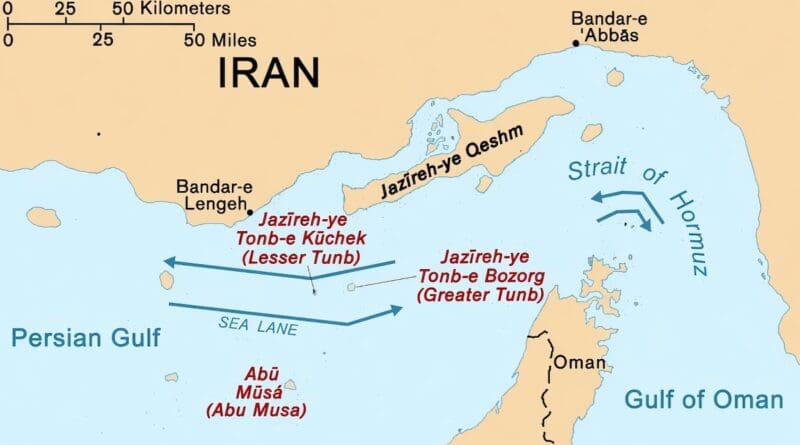
"Upon signing this Memorandum of Understanding, the Islamic Republic of Iran shall, to the fullest extent possible, take the necessary measures to ensure the safe and toll-free passage of commercial vessels for a period of sixty days between the Arabian Gulf and the Gulf of Oman in both directions. Commercial shipping shall resume immediately and return to normal levels within thirty days, subject to the removal of technical obstacles, military barriers, and naval mines by the Islamic Republic of Iran. Iran shall also engage in dialogue with the Sultanate of Oman to determine the future administration and maritime services of the Strait of Hormuz, in consultation with the other Gulf littoral states, in accordance with international law and the sovereign rights of the coastal states."
Military strikes have driven much of the commercial shipping traffic away from the Strait of Hormuz. According to the latest data from maritime analytics firm Kpler, only six commercial vessels transited the Strait on Thursday—the lowest figure recorded in weeks—compared with roughly 130 vessels per day before the conflict erupted.
Article Six
"The United States of America, in cooperation with its regional partners, undertakes to establish a mutually agreed final reconstruction and economic development plan for the Islamic Republic of Iran valued at no less than $300 billion. The implementation mechanism for this plan shall be finalized as part of the final agreement within sixty days. The United States shall also grant all licenses, waivers, and authorizations necessary to facilitate the related financial transactions."
Vice President J.D. Vance stated that reconstruction financing would not come from regional investors unless "Iran ends its nuclear program, eliminates its stockpile of enriched material, and genuinely opens itself to a system of inspections and enforcement."
In other words, reconstruction efforts are unlikely to gain momentum before the most complex issue—the Iranian nuclear program—is resolved.
Article Seven
"The United States undertakes to terminate all sanctions imposed on the Islamic Republic of Iran, including those stemming from United Nations Security Council resolutions, resolutions of the Board of Governors of the International Atomic Energy Agency, and all unilateral U.S. primary and secondary sanctions, in accordance with a timetable to be agreed upon in the final agreement. The Islamic Republic of Iran and the United States acknowledge the critical importance of lifting these sanctions and express their intention to address these issues immediately during negotiations with the aim of reaching a mutually acceptable agreement."
Days after signing the Memorandum of Understanding, the United States issued a general license allowing Iran to produce, sell, and deliver oil for a two-month period while peace negotiations were underway.
However, Washington reinstated economic sanctions on July 7 after three commercial vessels came under attack in the Strait of Hormuz.
Article Eight
"The Islamic Republic of Iran reaffirms that it will neither seek nor develop nuclear weapons. The United States and the Islamic Republic of Iran agree to address the status of Iran's stockpile of enriched material through a mutually agreed mechanism, in accordance with the timetable specified in Article Seven. At a minimum, this process shall involve reducing enrichment levels within Iran under the supervision of the International Atomic Energy Agency. The parties also agree to discuss uranium enrichment and other mutually agreed matters relating to the Islamic Republic of Iran's peaceful nuclear requirements, on the basis of the legal framework to be established in the final agreement. The final agreement shall reaffirm the provisions of this article. The United States and the Islamic Republic of Iran recognize the paramount importance of these nuclear issues and express their intention to address them immediately in negotiations with a view to reaching a mutually acceptable agreement."
No progress has been made in the nuclear negotiations since the ceasefire collapsed. By comparison, the 2015 international agreement limiting Iran's nuclear program took years—not months—of negotiations to conclude.
Article Nine
"Pending the conclusion of the final agreement, the United States and the Islamic Republic of Iran agree to maintain the status quo. The Islamic Republic of Iran shall preserve the current state of its nuclear program, while the United States shall refrain from imposing new sanctions or deploying additional military forces to the region."
Reaching a final agreement before August 16—the expiration of the sixty-day deadline—appears highly unlikely.
Although President Trump approved a reduction of certain U.S. forces in the Middle East, including the withdrawal of troops from Iraq by September 30, he has simultaneously deployed additional combat aircraft to the region.
Article Ten
"The United States undertakes that, immediately upon signing this Memorandum of Understanding and pending the termination of sanctions, the U.S. Department of the Treasury shall issue waivers permitting the export of Iranian crude oil, petroleum products, petroleum derivatives, and all related services, including banking, insurance, transportation, and associated commercial activities."
Those sanctions waivers were revoked on July 7 after the Trump administration accused Iran of attacking commercial vessels in the Strait of Hormuz.
Article Eleven
"The United States undertakes to make available for unrestricted use the frozen or restricted funds and assets belonging to the Islamic Republic of Iran immediately upon implementation of this Memorandum of Understanding. During the negotiations, the United States and the Islamic Republic of Iran shall mutually agree on the procedures governing the release of these funds. Whether they remain in their original accounts or are transferred elsewhere, the assets shall be fully available for payments to any ultimate beneficiary designated by the Central Bank of the Islamic Republic of Iran. The United States further undertakes to issue all licenses and authorizations necessary to implement these arrangements."
President Trump initially agreed to release approximately $24 billion in frozen Iranian assets, out of more than $100 billion currently held by foreign financial institutions.
The week after the interim agreement was signed, Treasury Secretary Scott Bessent stated that the United States would oversee how the released assets were spent, adding that "a very substantial portion" would be used to purchase American food and pharmaceutical products.
Iran rejected any suggestion that Washington would determine how the funds should be used. Iranian officials insisted that the release of frozen assets should form part of the broader negotiations over Iran's nuclear program, negotiations that now appear to have stalled.
Article Twelve
"The United States of America and the Islamic Republic of Iran agree to establish an implementation mechanism to monitor the successful execution of this Memorandum of Understanding and to ensure compliance with the final agreement in the future."
According to experts, this implementation mechanism was never established. It was supposed to be discussed during technical negotiations that, in fact, never began after the agreement was signed.
Since then, mediators from Pakistan and Qatar have undertaken intensive diplomatic efforts to bring both parties back into compliance with the agreement, including engaging other countries to persuade each side to scale back hostilities. Those efforts remain ongoing but have so far produced little tangible progress.
Article Thirteen
"Following the signing of this Memorandum of Understanding, and provided that Articles One, Four, Five, Ten, and Eleven have begun to be implemented and continue to be observed, the United States of America and the Islamic Republic of Iran shall commence negotiations on the final agreement, with such negotiations being strictly limited to the remaining provisions."
Article One called for the commencement of the ceasefire.
Article Four required the lifting of the naval blockade.
Article Five provided for safe navigation through the Strait of Hormuz.
Article Ten envisaged U.S. sanctions waivers for Iran.
Article Eleven stipulated the release of Iran's frozen assets.
Until each of these issues is resolved, negotiations over Iran's nuclear program are likely to remain at a standstill.
Article Fourteen
"The final agreement shall be adopted through a binding resolution of the United Nations Security Council."
According to experts and analysts, the prospect of reaching a new agreement that would impose stricter constraints on Iran's nuclear program than the 2015 accord brokered under President Barack Obama remains remote.
Should such an agreement eventually be reached, the United Nations Security Council would likely play a central role in endorsing it.
However, the U.S. Congress would also have a decisive say over any final agreement negotiated by President Trump with Iran. Legislation passed with bipartisan support in 2015, as the international negotiations with Tehran were nearing completion, granted Congress the authority to review U.S. nuclear agreements with Iran on a periodic basis.
Most read