Scientific and Cultural Life in Kuwait Since the Late Nineteenth Century

By Badr Al-Kharif
Saudi Writer
A Saudi Researcher Explores Political and Economic Transformations and Their Impact
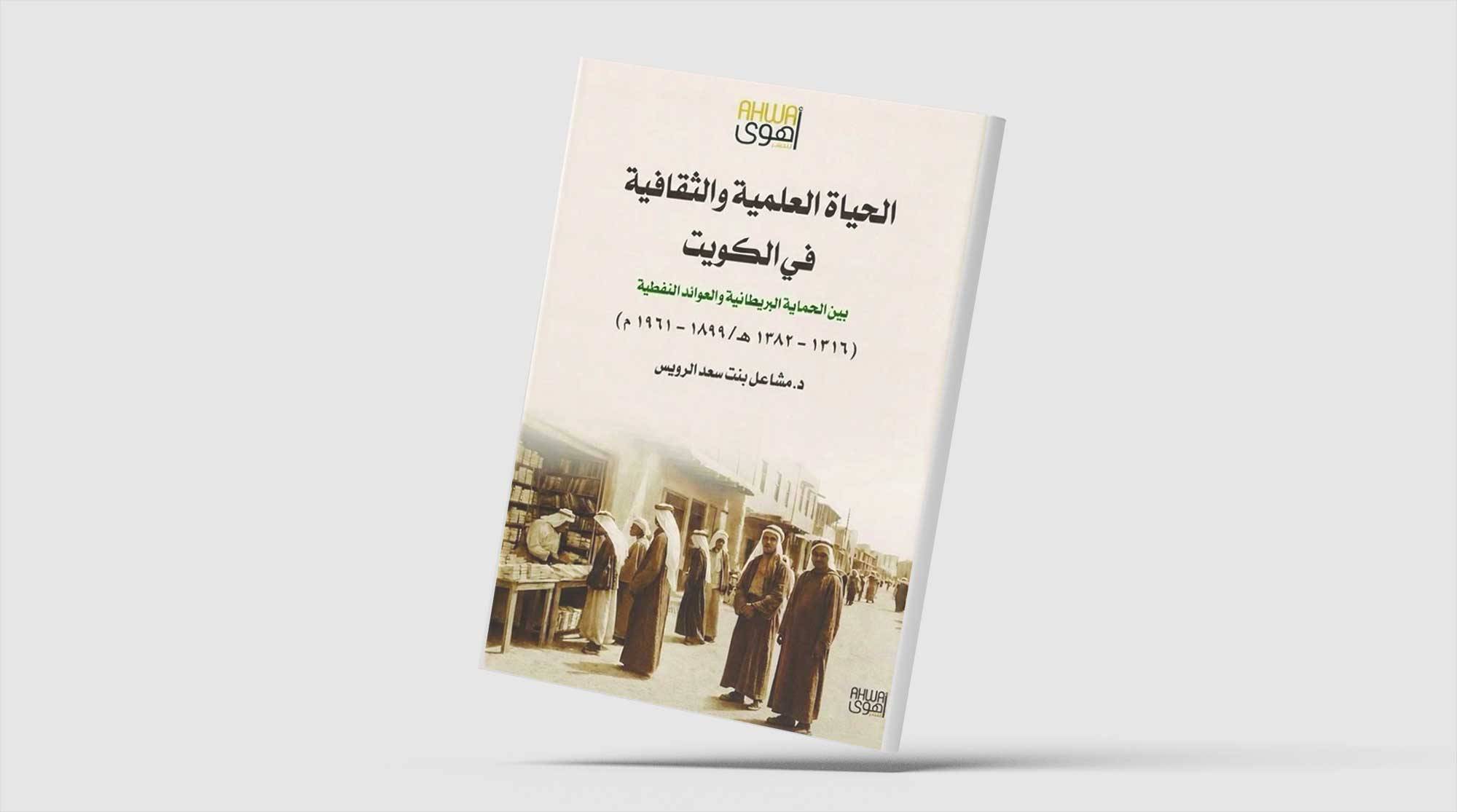
In her book Scientific and Cultural Life in Kuwait (1899–1961), Saudi historian Mashael bint Saad Al-Ruwais examines the evolution of Kuwait's scientific and cultural life beginning in 1899, the year Kuwait signed the protection agreement with Britain.
Spanning 446 pages, the book traces the emergence and development of Kuwait's intellectual and cultural landscape while exploring the relationship between the country's political and economic transformations and the growth of its scientific and cultural activities. The work was originally submitted as a doctoral dissertation to the Department of History at King Saud University.
A Period of Cultural Stagnation
According to the author, Kuwait remained almost devoid of organized scientific and cultural activity until the end of the nineteenth century. From its founding through 1316 AH / 1899 CE, the country experienced a prolonged period of cultural stagnation that affected education, libraries, cultural clubs, and the local press alike.
This era was characterized by the relative isolation of Kuwaiti society from broader intellectual developments in the region and beyond. Such isolation may largely be attributed to the harsh conditions of life during that period. Kuwaitis lived in a simple society where securing a livelihood was their foremost concern. Education was traditional and closely resembled the systems prevailing throughout the Gulf emirates, leaving little opportunity for participation in broader cultural or intellectual movements.
The Beginnings of the Cultural Renaissance
The first signs of cultural awakening began to emerge toward the end of the nineteenth century. Before the establishment of the modern state, the consolidation of political institutions, and the discovery of oil, cultural activity remained largely a private and community-driven endeavor supported voluntarily by wealthy individuals, including members of the ruling family and prominent merchants.
The establishment of modern schools marked a turning point in Kuwait's educational and cultural development.
Among the earliest institutions was Al-Mubarakiyah School, which opened on 22 December 1911 (1 Muharram 1330 AH) through donations from leading statesmen and prominent citizens after a group of scholars and intellectuals, headed by Yusuf bin Isa Al-Qina'i, proposed the creation of Kuwait's first modern school. The institution was named in honor of Sheikh Mubarak Al-Sabah.
The same year witnessed the establishment of the American Mission School, founded by American physician Edwin Calverley, with education serving as its principal mission.
This was followed by the Charitable Society School, inaugurated in March 1913 by Farhan Fahd Al Khalid, a member of a distinguished Kuwaiti merchant family known for its extensive commercial travels.
The Al-Ahmadiyah School opened at the beginning of 1921. Sheikh Ahmad Al-Jaber Al-Sabah became its first major benefactor by donating land for the project and pledging an annual contribution of 2,000 rupees from his personal income. Numerous leading figures, merchants, and notables of Kuwait also made significant contributions toward its establishment.
Alongside these modern institutions, the traditional kuttab schools continued to play an important educational role. Among the most notable were Al-Ameriyah School, Al-Sa'adah School, Mulla Murshid School, and Al-Irshad National School.
As the number of schools expanded and the need for coordination increased, the Board of Education (Majlis al-Ma'arif) was established in 1936. The following year it introduced Kuwait's first comprehensive educational framework, known as the Kuwaiti Education Law (1937), which regulated educational planning, curricula, appointments, elections, and administrative regulations. The Board later evolved into the nucleus of Kuwait's Ministry of Education and assumed responsibility for financing education, replacing the previous reliance on private donations.
Oil and Educational Transformation
Under British protection, Britain exercised considerable influence over Kuwait's educational policies through its broader regional authority. This included involvement in selecting teachers from Arab countries, preventing certain educators from entering Kuwait because of their political affiliations, and influencing the educational environment through British advisers.
Following the discovery of oil and the export of Kuwait's first shipment of crude oil after the Second World War during the reign of Sheikh Ahmad Al-Jaber, the Kuwaiti government assumed full responsibility for funding education.
Oil revenues became a major financial resource that enabled educational institutions to expand rapidly. Greater financial allocations were devoted to cultural activities as the number of educated Kuwaitis increased, while investors and cultural institutions contributed to the country's growing intellectual life.
After Sheikh Ahmad's death, Sheikh Abdullah Al-Salem assumed power in 1950, ushering in a period of remarkable educational expansion. Large state budgets were allocated to education, resulting in substantial improvements in educational services and infrastructure.
Oil wealth transformed virtually every aspect of Kuwaiti society, including education. Traditional mud-built schools gave way to spacious modern buildings constructed from reinforced concrete and cement blocks. These schools featured contemporary architectural designs and became among the finest educational facilities in the Arab world, equipped with sports fields, auditoriums, theaters, large classrooms, modern teaching aids, and well-stocked libraries.
Education in Kuwait was provided free of charge at every level. Students received textbooks, stationery, uniforms, and transportation without cost, while comprehensive medical care was also made available. Nutrition formed an integral part of educational policy; some schools operated their own cafeterias, while others received meals from the Board of Education's central kitchen.
Kuwait also participated in the Second Arab Conference of Ministers of Education, held in Alexandria in 1950, which focused on educational reform. Following the conference, officials from the Board of Education invited Arab educational consultants to evaluate Kuwait's school system and submit detailed recommendations for further improvement.
The Rise of Intellectual and Political Consciousness
Educational progress stimulated a broader intellectual and cultural renaissance throughout Kuwait. Cultural and literary clubs played an influential role in fostering political awareness at both the national and pan-Arab levels.
The country's first Consultative Council was elected in 1921, consisting of twelve prominent citizens.
This was followed by the establishment of the First Legislative Council in 1938, after Sheikh Ahmad Al-Jaber approved its creation on 2 July 1938, appointing Sheikh Abdullah Al-Salem as its president.
A year later, in 1939, a new advisory body known as the Second Legislative Council was established under Sheikh Abdullah Al-Salem to assist in administering the country's affairs.
The Role of Scholars and Intellectuals
The study highlights the contributions of Kuwait's scholars and intellectuals to scientific and educational life through their teaching, judicial work, religious instruction, and scholarly gatherings.
Among the most prominent were Mohammed bin Abdullah Al-Adsani, Abdullah bin Khalid Al-Adsani, and Abdullah bin Khalaf Al-Dihyan. These figures laid the foundations of Kuwait's modern educational renaissance by developing curricula, introducing educational expertise, and promoting modern teaching methods.
The author also discusses numerous Kuwaiti scholars, their writings, scholarly licenses (ijazahs), and their political roles in supporting—or opposing—major events of their time. Their influence extended well beyond education and religious instruction, as they also helped shape political developments, including leading popular resistance against British influence.
Likewise, prominent intellectuals—including Yusuf bin Isa Al-Qina'i, Abdul Aziz bin Ahmad Al-Rashid, Ahmad Mishari Al-Adwani, and Ahmad Mohammed Al-Khatib—made significant contributions to Kuwait's social and political reform during the period under study. Their influence became especially pronounced between the 1920s and the 1960s.
Kuwait's Educational Influence Beyond Its Borders
The impact of Kuwait's scientific and cultural development extended well beyond its own borders. Kuwait helped establish schools in neighboring countries, dispatched teaching missions, financed educators' salaries, and assisted in developing curricula in several of the Trucial States (present-day United Arab Emirates), particularly Sharjah.
When Sharjah's ruler, Saqr bin Sultan Al Qasimi, requested educational assistance in 1952, Kuwait's Board of Education dispatched an educational delegation led by Abdul Aziz Hussein, Director of Education, to Sharjah in 1953. Kuwait subsequently expanded its educational support to Dubai, Ajman, Umm Al Quwain, and other emirates.
Kuwait's educational and cultural role also extended beyond the Arab world into the broader Islamic sphere. The study documents Kuwait's educational initiatives in India, reflecting the long-standing presence of Kuwaiti and Arab merchants and their families in India and Pakistan, as well as the desire of Muslim communities to educate their children in Arabic and Islamic studies.
A school was established in Bombay (Mumbai) in 1952, to which Kuwait sent teachers, including several Egyptian educators who relocated with their families. The institution soon became an important center of learning for Arab and Muslim communities throughout India.
Pakistan likewise benefited from Kuwait's educational efforts. The Kuwaiti government established another school in Karachi the year after opening the Bombay school. Both institutions played an important role in teaching the Arabic language, the Holy Qur'an, and Islamic sciences, illustrating Kuwait's enduring contribution to preserving the Arabic language and promoting Islamic education in non-Arab societies over many decades.
Originally published in Asharq Al-Awsat.
Most read