
Bt: Muhsin Jassim Al-Musawi
Throughout my long journey since the mid-1960s, I have carried with me a worn bundle of papers whose yellowing pages and tattered green cover were held together by a single piece of string. I came across it again while compiling my notes on the phenomenon of Arabic poetry for a multi-volume work, the first installment of which is scheduled to be published by Dar Al-Shorouk this year. It struck me as remarkable that this fragile bundle had accompanied me across countries for so many decades.
The notebook contained observations I had written in the mid-1960s on the margins of Badr Shakir Al-Sayyab's collection Hymn of the Rain, published in 1960, although the poem that gave the collection its title had first appeared in Al-Adab magazine in June 1954.
At the time, while immersed in those notes, I was editing the rather modest literary pages of the weekly newspaper Abnaa Al-Noor, under the editorship of Samir Ali Al-Dulaimi, who had been my colleague at the College of Education—formerly the Higher Teachers' Training College. Published by the Association of the Blind, the newspaper organized the first anniversary of Al-Sayyab's death in December 1965 at the People's Hall. Apart from contributions by the lawyer Mahmoud Al-Abta and Abdul Jabbar Al-Basri, little was presented that truly did justice to Al-Sayyab. Dr. Ihsan Abbas's landmark study on the poet would not appear until 1969.
That book remains perhaps the most comprehensive and authoritative account of the profound relationship between Al-Sayyab's poetry and his life.
Yet I never felt satisfied. Al-Sayyab's presence continued to haunt me, as evidenced by that old bundle of notes whose pages I still hesitate to turn, even now, as I continue to ask what his enduring presence truly means.
Even after publishing my book Arabic Poetry: Paths of Tradition and Modernity with Routledge in 2006—later translated by Dar Toubkal under the title The Trajectories of the Modern Poem—I never felt that I had fully done justice to him.
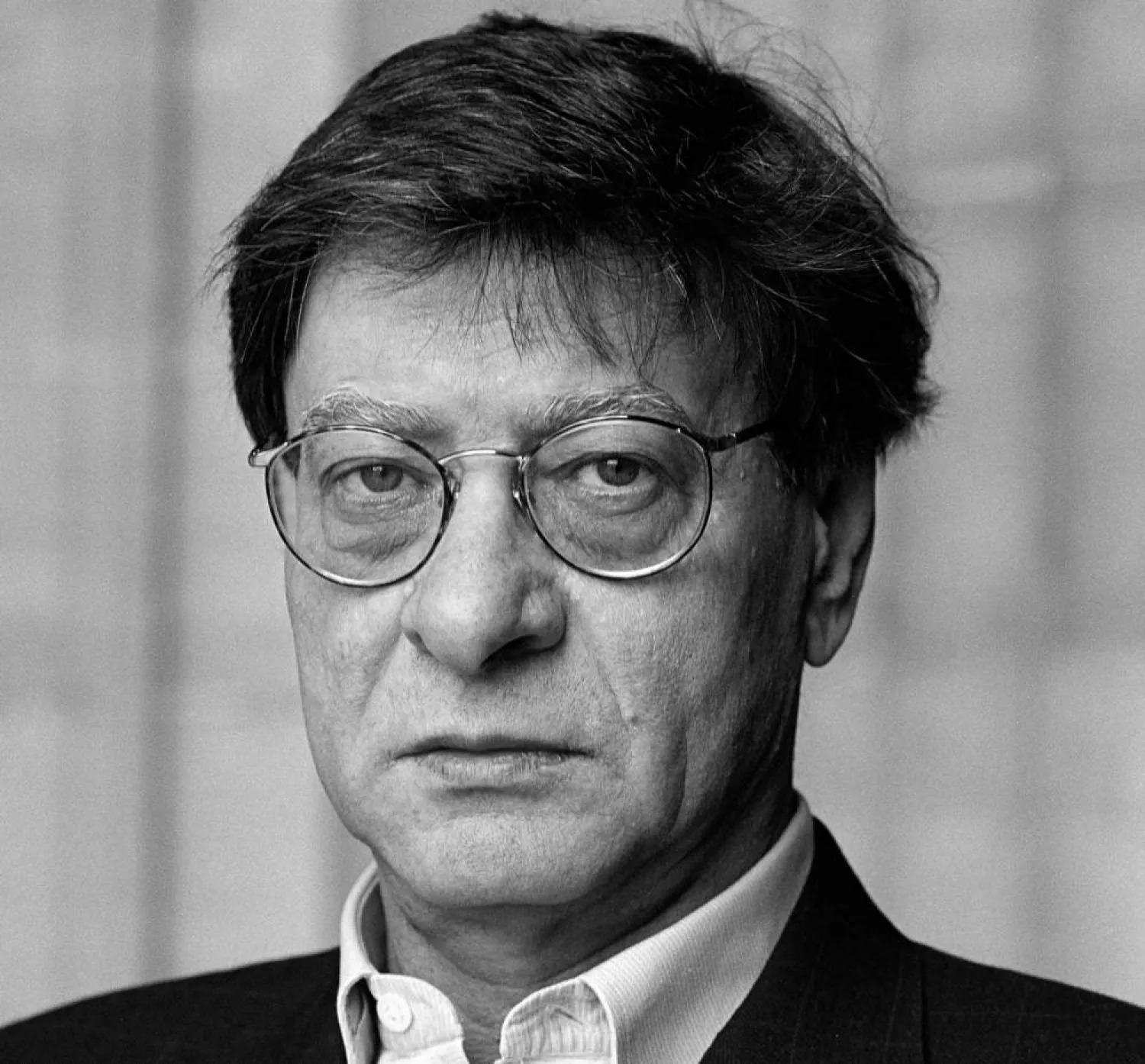
Mahmoud Darwish's poem "Remembering Al-Sayyab..." proved to be the work that most eloquently expressed the questions that had preoccupied and eluded me for decades.
Darwish included the poem in his collection Do Not Apologize for What You Have Done. Despite its brevity, it grasps the identity that Al-Sayyab struggled to preserve throughout his exile: "Nothing but Iraq." This key unlocks the intricate fabric of Al-Sayyab's poetry, a fabric that cannot fully mature without the Sumerian landscape—Jikur, the Buwayb River, the shanashil balconies of the merchant's daughter, and everything that merges in Al-Sayyab's poetic universe into music, color, imagery, and ecstatic emotion, where the sorrow of sailors mingles with children's cries and the memory of Wafiqah's window.
This poetic tapestry would never have remained so vibrant had it not been shaped by exile and estrangement.
Addressing his fellow poet, Darwish writes:
Do you remember Al-Sayyab, in this Sumerian horizon?
A woman triumphed over the barrenness of the nebula,
And bequeathed to us both the homeland and exile.
The poem also unsettles the contemporary Arab poetic landscape through what becomes Darwish's recurring refrain—sometimes openly declared, at other times deliberately concealed. He suggests that this suffering, together with its rich interplay of colors, blended senses, dynamic imagery, and emotional resonance, emerges in Al-Sayyab's finest poems as something profoundly Iraqi, rooted exclusively in the soil of Sumer:
Remember Al-Sayyab. Poetry is born in Iraq.
Be Iraqi, my friend, if you wish to become a poet.
The depth of Al-Sayyab's most cherished poems disappears whenever criticism becomes an ideological exercise. As Darwish so succinctly suggests, these poems proclaim that "poetry is experience and exile." One never truly settles within poetry; one's homeland itself becomes a form of exile. Every poem creates within its author a renewed exile, for the emotional turbulence that Romantic poets believed gave birth to poetry remains an endless process of becoming.
Many critics and scholars seeking to understand Al-Sayyab overlooked precisely this dimension. Some concentrated on the influence of T. S. Eliot upon his work, while others emphasized his fascination with Federico García Lorca and his unique blending of sensory impressions. Yet such influences mean little without what might be called Al-Sayyab's own poetics—that extraordinary gift and profound sensitivity toward Jikur and the orchards of Abu Al-Khasib.
It was there that Al-Sayyab's poetic imagination was nurtured. It was the same fertile ground that inspired Iraqi painters and sculptors, including Jawad Salim, to recognize the necessity of remaining deeply connected to the cultural soil from which they emerged.
There is no denying Eliot's immense presence in Iraq's literary scene during the 1950s. His poetry and criticism were widely translated, particularly The Waste Land and Four Quartets. His essays—especially "Tradition and the Individual Talent"—were equally familiar to Al-Sayyab and his contemporaries.
Yet such influences often serve to illuminate one aspect while obscuring another. They are even more pronounced in the poetry of Abdul Wahab Al-Bayati, whose later collections reveal an even stronger indebtedness to Eliot than Al-Sayyab's own work.
Professor Terri DeYoung later produced both a translation and a scholarly study of Hymn of the Rain, followed by her important book Placing the Poet: Badr Shakir Al-Sayyab and Postcolonial Iraq (1998).
Perhaps the most valuable contribution of DeYoung's study was its close attention to the intricate structure of Al-Sayyab's celebrated poem. She demonstrated how the song of displaced sailors functions as a reflective mirror, intersecting and intertwining with the poem's other images, including recurring childhood memories of the mother whose death the rain continually recalls and whose grave it endlessly soaks.
The poem is one of profound sorrow and longing. Yet it also lightens the burden of its grief through the promise carried by thunder—a promise of upheaval, rebellion, and relentless movement that can end only with transformation and the recovery of Iraq itself.
Most read