The Culture of War Memory

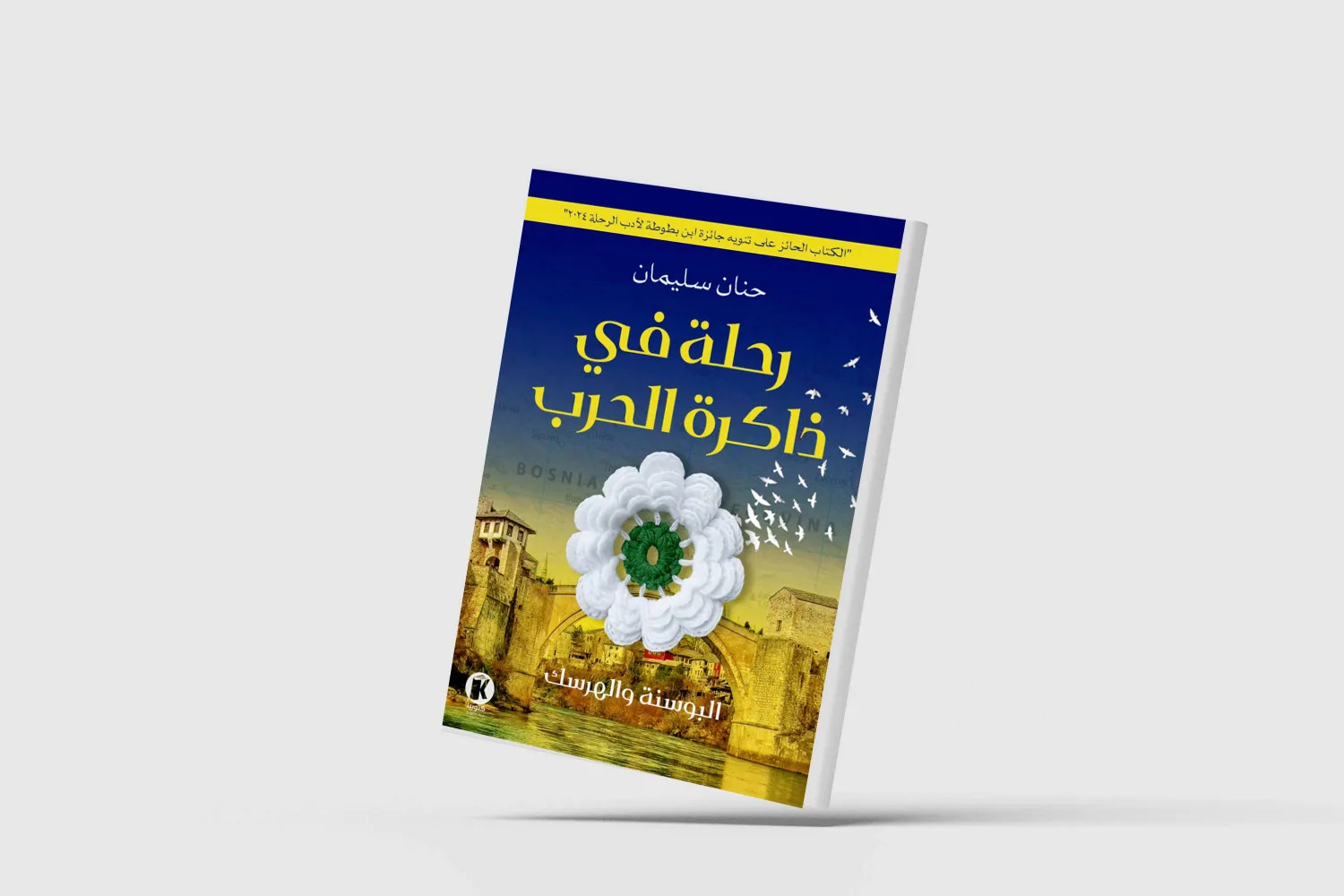
Travel literature often begins with the first moments of a journey. A Journey Through the Memory of War, however, begins much earlier. Its author, Egyptian writer Hanan Soliman, takes readers back to her childhood, when she was a nine-year-old girl sitting in front of the television, watching news reports about a war she knew nothing about, yet somehow felt deeply connected to.
"There, in Bosnia, I witnessed the world's first great tragedy creeping into my childhood through the television screen. Their faces looked nothing like ours—their skin and eyes were lighter, and they spoke a language we could only understand through subtitles. The distance was doubled: geographical, linguistic, and emotional."
The memory of that war remained with the author throughout her childhood, gradually evolving into a profound intellectual curiosity. After becoming both a journalist and a novelist, her journey to Bosnia appeared almost inevitable—a natural continuation of a fascination that had begun decades earlier. She packed her bags to attend the Srebrenica Summer University, whose intensive academic program took participants through Bosnia's past and present via historical sites, museums, and meetings with activists and local residents.
After Genocide
Published by Kotobia Publishing House in Cairo, the book is essentially an exploration of war's enduring legacy and of the culture that preserves collective memory through museums, symbols, rituals, and literature.
Arriving in Srebrenica decades after the genocide that devastated the town, Soliman documents, through her daily walks, observations, and seemingly ordinary encounters, the invisible threads connecting Bosnia's present to its wartime past. Throughout the book, she repeatedly contrasts the country's breathtaking natural beauty with the horror of the atrocities committed there:
"Bosnia is a land of beaches, waterfalls, mountains, rivers, and every imaginable form of beauty that captivates the eye. It possesses a vibrant tourism and entertainment industry and is a global destination for skiing enthusiasts. Yet the country's most enduring landmark remains the memory of war—or, more precisely, the memory of genocide."
The author's keen observational eye becomes one of the book's defining strengths. She carefully traces the lingering imprint of the Bosnian War, which erupted following the breakup of Yugoslavia and produced one of modern Europe's darkest tragedies through systematic ethnic cleansing and the Srebrenica massacre, now internationally recognized as Europe's worst genocide since the Second World War.
She also reflects extensively on the Srebrenica Summer University itself. In its early years, the institution fully funded participants from around the world, providing accommodation and academic support. Over time, however, financial assistance from international donors steadily declined—particularly after the COVID-19 pandemic—forcing the university to scale back many of its activities.
This is far more than a passing detail in the book. Instead, it becomes a broader reflection on the fate of cultural institutions entrusted with preserving historical memory.
The university does far more than teach Bosnia's history. Every year, it plays a central role in commemorating the Srebrenica genocide by concluding its programs with the annual Peace March, during which participants retrace the route followed by thousands who fled death in 1995. Consequently, the decline in funding represents not merely a setback for education but a threat to the preservation of historical memory itself.
Visual Symbols
One of the book's most distinctive features is that it goes beyond documenting war to explore what Bosnia has done with its memory after the conflict.
Rather than erasing the traces of tragedy, Bosnian society has chosen to integrate them into everyday life.
Soliman describes, for example, the famous "Sarajevo Roses"—the shell craters left in the city's streets, later filled with red resin so they resemble flowers blooming from the asphalt.
To the author, these are not merely memorials but an entire philosophy of resisting oblivion. Sarajevo did not conceal its wounds; instead, it deliberately left them visible, transforming the streets themselves into an open historical archive.
From there, she turns to the "Srebrenica Flower," woven by the mothers of genocide victims and now one of the most recognizable symbols of the massacre. Its eleven petals represent 11 July, the date of the genocide. Its white color symbolizes the innocence of the victims, while its green center evokes hope and the continuity of life.
Through these symbols, the book demonstrates culture's extraordinary capacity to transform mourning into symbolism, and symbolism into collective memory, making art itself an extension of resistance.
Soliman does not limit her reflections to visual memorials such as monuments, murals, and museums. She also examines Bosnia's political and social structure, contemplating the very meaning of belonging.
She writes:
"The land has room for everyone, but belonging to it is not granted easily."
She makes this observation while discussing Bosnia and Herzegovina's citizenship law, which does not grant nationality simply by birth on Bosnian soil but requires at least one parent to be a Bosnian citizen.
From this legal detail, the author opens a wider discussion about a society that continues, decades after the war, to protect its fragile demographic and religious balance. Muslim, Christian, and Jewish identities coexist within a state whose political institutions still bear the imprint of conflict. Understanding this reality, she argues, provides an essential key to understanding Bosnians' relationship with their land, their identity, and the collective memory that continues to shape many of their choices.
Literature as a Keeper of Memory
The author also pursues the memory of genocide through literature. She makes a point of purchasing Bosnian novels, while noting how few have been translated into English and how limited their presence remains in Arabic literary culture.
She devotes particular attention to literary comparisons between Bosnian works and other novels, including Firewood of Sarajevo by Algerian novelist Said Khatibi, which similarly revisits the memory of war in the Balkans and illustrates how fiction transcends geographical borders to reach a shared human memory.
Through these readings, the book reinforces the idea that literature is no less important than historical documentation in understanding societies emerging from war.
Museums preserve facts and events.
Novels preserve something far more fragile: fear, longing, disappointment, and the unanswered questions that violence leaves behind.
For this reason, Soliman's literary reflections never feel like diversions from her journey. Rather, they become an integral part of it, as though she believes that the road to Bosnia passes not only through its landscapes but also through its books.
Ultimately, the author raises broader questions about the absence of meaningful Arab investment in cultural initiatives dedicated to preserving the memory of genocide and supporting institutions that today face declining financial resources.
In doing so, she returns to the book's central theme: the Bosnian people's determination to resist forgetting by transforming the remnants of their historical tragedy into a living visual, literary, and human language.
Most read