
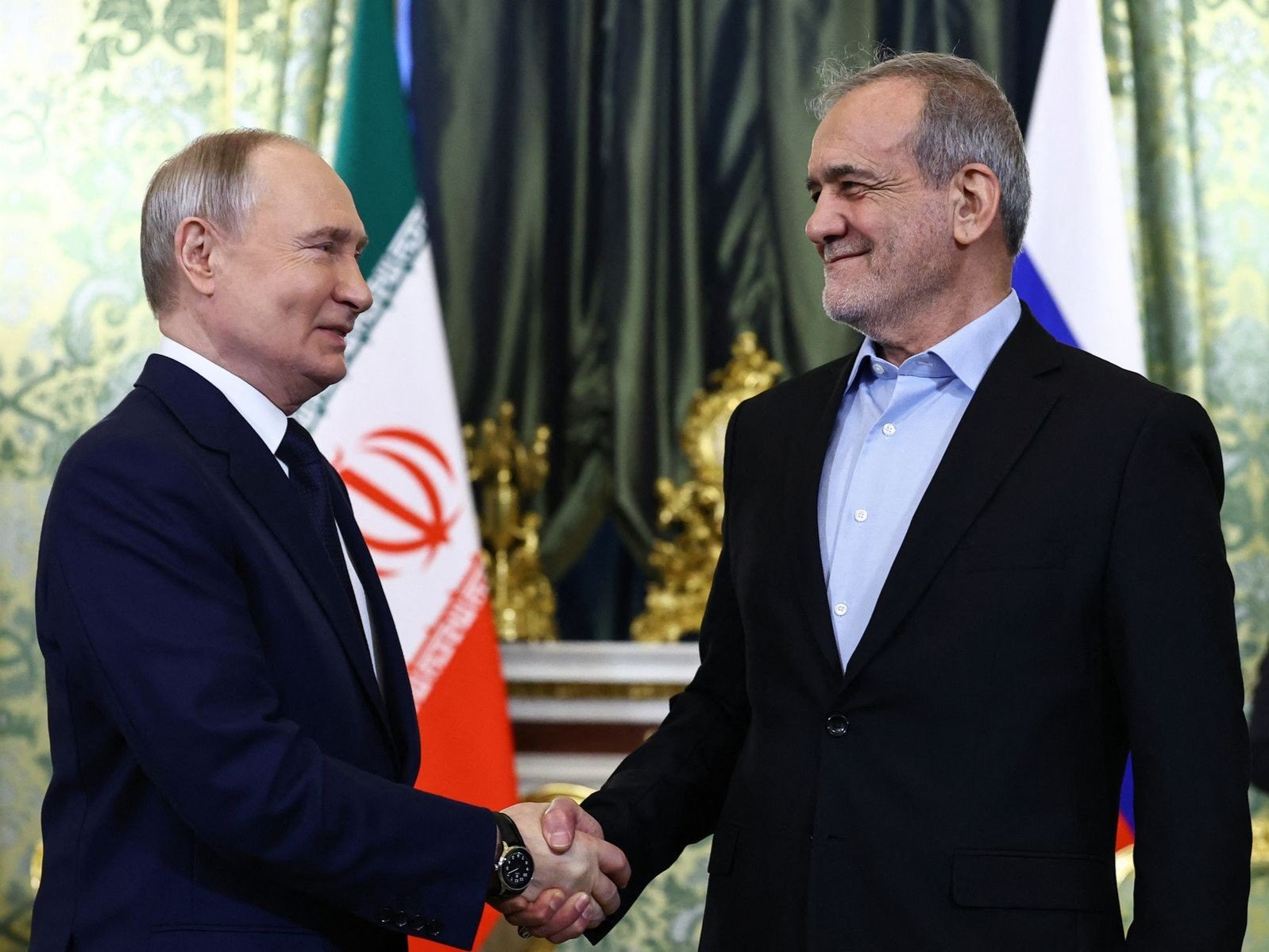
The Kremlin’s renewed offer to mediate between the United States and Iran reveals an important shift in the nature of Russia’s role in the Middle East. It also reflects Moscow’s efforts to leverage its growing relationship with Tehran in pursuit of a broader negotiating agenda with Washington, one in which nuclear, military, and regional issues intersect with the war in Ukraine and the future of US–Russian relations. The issue, therefore, is not simply Russia’s willingness to help broker an understanding on Iran’s nuclear programme. Rather, it concerns Moscow’s ability to convert its political, military, and technological influence over Tehran into a bargaining asset that could secure strategic gains in its dealings with the United States.
This initiative has acquired additional significance following Russian Foreign Minister Sergey Lavrov’s visit to Tehran in October 2026, amid mounting indications of deepening military and intelligence cooperation between the two countries and the growing convergence of Moscow’s strategic calculations with the Trump administration’s efforts to reassess US foreign policy priorities. In this context, a fundamental paradox emerges: Russia seeks to persuade Washington that it can influence Iranian behaviour, yet it is also the very power strengthening some of Iran’s military and intelligence capabilities, potentially undermining US efforts to contain threats originating from Iran or associated with it.
Understanding Russia’s potential role therefore requires moving beyond diplomatic statements concerning nuclear mediation. It necessitates examining the nature of Russian–Iranian relations, the limits of their strategic alignment, and the ways in which this relationship might become an instrument of strategic bargaining between Moscow and Washington.
Russian Mediation and the Repositioning of the Iranian File in Negotiations with Washington
Russia’s renewed interest in mediating between Washington and Tehran cannot be separated from the changing and often strained context of its relations with the United States. Since the outbreak of the war in Ukraine, Moscow has sought to prevent its confrontation with the West from becoming an open-ended process of strategic attrition. It has also attempted to exploit opportunities to reopen negotiations with Washington over sanctions, European security, and the prospects for a settlement in Ukraine.
Within this framework, the Iranian file represents a potential area of convergence between Russian and American interests, despite their substantial differences on other issues. The United States seeks to prevent Iran from acquiring nuclear weapons and to constrain its capacity to threaten American forces and interests in the Middle East. Russia, meanwhile, seeks to preserve its relationship with Tehran, prevent the collapse of the Iranian state, and avoid a situation in which Iran becomes an exclusive sphere of Western influence.
This convergence does not mean that Russia and the United States share identical objectives regarding Iran. Rather, it suggests that both have an interest in preventing certain high-risk scenarios, particularly a broader regional confrontation or the collapse of diplomatic efforts concerning Iran’s nuclear programme.
The real significance of Russian mediation, however, extends beyond this dimension. In theory, Moscow can present itself to Washington as a power with influential channels of communication with Iran’s leadership, capable of helping create the conditions for a negotiated settlement. In return, Russia may seek concessions on other issues, particularly the war in Ukraine and the sanctions imposed on it.
This raises the possibility of a strategic bargain in which progress on one issue is used to secure gains on another. Rather than treating the Iranian nuclear programme and the war in Ukraine as entirely separate tracks, Moscow may regard its ability to influence developments in one arena as a means of expanding its bargaining leverage in the other.
Nevertheless, a distinction must be made between Russia’s potential interest in linking the two issues and the existence of an actual agreement to exchange concessions. The timing of diplomatic initiatives alone is insufficient to establish that Moscow has formally offered to reduce its support for Iran in return for American concessions over Ukraine. The more accurate interpretation is that such an arrangement represents one possible scenario shaping the Kremlin’s calculations, rather than a completed deal or a confirmed understanding.
Iran’s Enriched Uranium Stockpile and the Limits of Technical Solutions
The proposal to transfer Iran’s stockpile of enriched uranium to Russian territory is among the principal ideas upon which Russian mediation could be based. The proposal draws on the experience of the 2015 nuclear agreement, in which Russia participated as one of the negotiating powers and contributed to arrangements concerning Iranian nuclear material during the implementation process.
Politically, such an arrangement, if its conditions were met, could provide a negotiating formula enabling the United States to present the agreement as a tangible step towards reducing nuclear risks. Iran, in turn, could benefit from the arrangement by easing external pressure or securing political and economic concessions.
Russian participation in such an arrangement could also give Moscow a direct role in implementing the agreement and monitoring certain aspects of its execution, thereby reinforcing its position as an indispensable participant in any sustainable nuclear settlement.
However, reducing the Iranian nuclear problem to the question of transferring enriched uranium would be an oversimplification. A settlement concerns not only the location of nuclear material but also enrichment levels, Iran’s technical capabilities, centrifuges, international inspections, safeguards governing the peaceful use of nuclear technology, and mechanisms for verifying compliance with any agreement.
More importantly, the success of any arrangement depends on Iran’s consent and on the leadership’s ability to convince its political and security institutions that relinquishing part of its nuclear leverage will not become a unilateral concession unsupported by credible guarantees.
This dilemma became particularly evident following Lavrov’s visit to Tehran. Reports published on 20 October 2026 indicated that Iranian Foreign Ministry spokesperson Esmaeil Baghaei denied that the transfer of Iranian nuclear material to Russia had been discussed during the visit. This underscores the need to distinguish between proposals circulating in discussions of Russian mediation and measures that can be verified as having been formally raised at the negotiating table. (APA, 20 October 2026).
Consequently, transferring enriched uranium, even if it returns to the negotiating agenda, cannot constitute a self-sufficient solution. It would instead represent one component of a broader settlement requiring agreement on safeguards, monitoring, sanctions, and regional security.
Military and Intelligence Cooperation and the Transformation of Russian–Iranian Relations
While nuclear mediation represents the most visible diplomatic dimension of Russian–Iranian relations, military and intelligence cooperation constitutes one of their most strategically significant aspects. The war in Ukraine accelerated the rapprochement between the two countries, as Moscow faced a growing need for relatively inexpensive weapons that could be produced in large quantities, while Tehran sought greater access to advanced military technologies and aimed to strengthen its position in the face of Western pressure.
During the early stages of the war in Ukraine, Russia relied on Iranian Shahed drones, or related technology, in its military campaign against Ukraine. The significance of this cooperation extended beyond meeting immediate operational requirements. It helped establish a reciprocal relationship encompassing not only direct weapons supplies but also the exchange of expertise, technology, and lessons derived from military operations.
As the war continued, Russian expertise in satellite reconnaissance, electronic warfare, data analysis, and weapons guidance became increasingly valuable. In return, Russia gained additional experience in operating and producing low-cost drones on a large scale, capabilities that have become central to the conduct of modern warfare.
Western and Ukrainian reports during 2026 pointed to an expansion of Russian–Iranian cooperation in intelligence sharing. In March of that year, The Washington Post reported, citing US officials familiar with intelligence assessments, that Russia had provided Iran with information concerning the locations of American military assets in the Middle East, including ships and aircraft. In April, Reuters published a report based on a Ukrainian intelligence assessment concerning Russian satellite surveillance of military sites and critical infrastructure in the region, alongside allegations of information sharing with Iran. The precise scope of this cooperation and its operational objectives, however, remain subject to the limitations of publicly available information. (The Washington Post, 6 March 2026; Reuters, 7 April 2026).
These developments are significant because military superiority is determined not merely by the number of missiles or aircraft a state possesses, but also by its ability to collect information, analyse it, and translate it into operational decisions. Satellite imagery, information on military movements, and electronic warfare data can reduce the time required to detect targets, establish their locations, and assess the outcomes of strikes.
Russian–Iranian cooperation may therefore extend beyond weapons exchanges towards the development of relatively integrated capabilities in reconnaissance, targeting, jamming, and operational management. This evolution increases the strategic value of the relationship because it makes cooperation more durable than a series of arms transactions that could be halted through a single political decision.
Nevertheless, the relationship should not be overstated as a fully integrated military alliance. Evidence of close cooperation does not necessarily imply the existence of a joint military command or a Russian commitment to engage in direct confrontation in Iran’s defence. Cooperation in specific fields, however significant, remains distinct from an alliance involving clearly defined mutual security obligations.
Has Iran Become a Russian Bargaining Chip Against the United States?
The strategic importance of Russian–Iranian relations lies partly in Moscow’s ability to transform them from a source of military and technological cooperation into an instrument of leverage in negotiations with Washington. Russia does not necessarily need to sever its relationship with Tehran to benefit from mediation. Nor must it abandon military cooperation with Iran entirely to present itself as a power capable of helping reduce certain forms of escalation.
Russia’s leverage may take the form of its ability to influence some Iranian policy choices, maintain channels of communication for conveying messages, facilitate specific nuclear arrangements, or encourage Tehran to accept partial understandings. The extent of this influence, however, is a separate question from Moscow’s willingness to exercise it.
Iran is not a Russian client state, nor does it treat its foreign policy as an extension of Russian policy. The Iranian leadership has its own calculations concerning national security, deterrence, sanctions, and the American military presence in the region. These calculations may at times conflict with Russia’s interests.
Moscow also has little reason to exercise all its influence over Tehran solely to serve American objectives. If Russia were to make substantial concessions on the Iranian file without receiving tangible benefits in return, it could lose part of its regional leverage and weaken its relationship with a partner that has helped address some of its military requirements during the war in Ukraine.
A complex strategic equation therefore emerges. Moscow seeks to demonstrate its ability to influence Tehran in order to enhance its negotiating value in Washington, but it does not want the success of mediation to weaken Iran to such an extent that Russian interests in the Middle East are undermined.
The Kremlin may consequently prefer to manage its relationship with Tehran in a manner that preserves some influence over the level of regional escalation, rather than seeking to eliminate all sources of tension. From Moscow’s perspective, maintaining channels of influence that can be activated when necessary may prove more useful than relinquishing the leverage associated with its relationship with Iran.
This possibility does not, however, establish that Moscow deliberately seeks to perpetuate regional tensions or that all its actions form part of a single coordinated plan. Russian policy is also shaped by military and economic constraints, the need to avoid direct confrontation with the United States, and regional dynamics that Moscow cannot fully control.
The central issue, therefore, is whether the Kremlin possesses sufficient leverage to influence Iranian decisions in ways that advance its own strategic objectives without compromising the foundations of its partnership with Tehran.
The Limits of the Russian–Iranian Partnership and the Problem of Mutual Distrust
Despite the considerable development of relations between Moscow and Tehran, their partnership is not based on complete convergence of interests or strategic outlooks. Russia is a major power seeking to consolidate its position in the international system, and it approaches the Middle East within a broader framework involving Europe, China, the United States, and the balance of power in the international order. Iran’s priorities, by contrast, are more directly centred on national and regional security, deterrence, resistance to American and Israeli pressure, and the expansion of its influence in its immediate neighbourhood.
The two countries may share interests in countering Western pressure, developing military and technological cooperation, and limiting the United States’ ability to impose its preferences unilaterally. Yet this convergence does not eliminate differences in priorities or the possibility of competition for influence in particular areas.
Mutual distrust remains one of the principal constraints on the relationship. Iran recognises that Russia may prefer an understanding with the West if the anticipated political or economic benefits justify it. Moscow, in turn, understands that Tehran may pursue regional or military policies that do not align with Russian calculations, particularly when Iranian leaders believe that national security requires escalation.
Distrust is not confined to the Iranian side. Moscow cannot assume that Tehran will accept strategic concessions simply because Russia considers a particular diplomatic arrangement desirable. Any Russian–American agreement that fails to take Iranian interests into account could undermine confidence between the two countries. Conversely, an Iranian rejection of Russian proposals could weaken Moscow’s credibility as an effective mediator.
Resource constraints further complicate the relationship. Despite its advanced military and intelligence capabilities, Russia remains engaged in a prolonged war in Ukraine that consumes a substantial portion of its resources and strategic attention. Its capacity to provide Iran with broad security guarantees or to regulate Iranian regional behaviour is therefore limited compared with what political rhetoric might suggest.
Accordingly, describing the relationship as a strategic partnership should not obscure its complex nature. It is an important partnership in specific areas, but it does not necessarily amount to an integrated alliance characterised by fully aligned interests and unified decision-making.
The American Dilemma Between Exploiting Russian Mediation and Countering Russian–Iranian Military Cooperation
From Washington’s perspective, Russian diplomatic initiatives concerning Iran create a dilemma that extends beyond the nuclear programme. On the one hand, Russia may provide an additional channel for negotiations with Tehran, particularly if direct communication becomes difficult or if the parties require technical arrangements concerning nuclear material, monitoring, and safeguards. On the other hand, the expansion of Russian–Iranian military and intelligence cooperation may increase the risks facing American forces and US partners in the Middle East.
The paradox is that Russia may offer assistance in reducing certain Iran-related risks while simultaneously being accused of providing intelligence and technical support that could strengthen some Iranian capabilities. This contradiction requires Washington to distinguish between mediation as a diplomatic process and military cooperation as a relatively independent strategic undertaking.
A Russian commitment to help address the nuclear issue is not sufficient to resolve American concerns about intelligence sharing, drone technology, or military targeting capabilities. Similarly, the suspension of certain forms of intelligence cooperation, if it occurred, would not automatically resolve disagreements over Iran’s nuclear programme, missile capabilities, or regional influence.
Any broader US–Russian understanding would therefore need to specify precisely what Moscow could offer, what it could realistically implement, and what concessions it would seek from Washington. It would also require mechanisms for verifying compliance, so that mediation does not become merely an instrument for easing pressure on Russia without producing tangible changes in its behaviour.
If Washington treats the Iranian file as a bargaining asset that can be exchanged for Russian concessions on Ukraine, it risks overlooking the security interests of regional states or accepting concessions that fail to address the underlying sources of tension. Conversely, rejecting any Russian role in advance could deprive diplomacy of a channel that might prove useful under certain circumstances.
The central challenge, therefore, is to assess Russia’s role on the basis of verifiable outcomes rather than promises or assumptions about the Kremlin’s ability to control Tehran’s choices.
Russian Mediation Between Genuine Leverage and Strategic Bargaining
Russia’s renewed diplomatic engagement with Iran demonstrates that Moscow is not merely seeking to mediate the nuclear dispute. It is also attempting to exploit its position in the relationship with Tehran to strengthen its bargaining position in any broader negotiations with the United States. Yet the ability to offer mediation does not necessarily translate into the ability to impose a settlement, just as possessing instruments of influence is not equivalent to controlling another state’s decisions.
The war in Ukraine has deepened Russian–Iranian cooperation and elevated the relationship to a more consequential level in military, technological, and intelligence affairs. Nevertheless, this development has not eliminated differences in strategic priorities, mutual distrust, or resource constraints. These factors make the transformation of the partnership into a fully integrated alliance far from certain.
For Moscow, the potential gain does not necessarily lie in persuading Iran to surrender its strategic assets. Rather, it lies in demonstrating that Russia remains an indispensable actor in addressing Middle Eastern crises and that its influence over Tehran can enhance its negotiating value in relations with Washington.
For the United States, the challenge is to take advantage of any diplomatic channel capable of reducing nuclear and regional risks without confusing Russian mediation with guarantees that Moscow may be unable or unwilling to provide. A sustainable settlement cannot rest solely on the transfer of nuclear material or on bilateral understandings among major powers. It requires clear commitments, effective verification mechanisms, and a balanced approach to the relevant security concerns.
Ultimately, the decisive question is not whether the Kremlin can offer mediation, but whether it is prepared to bear the political and strategic costs of pursuing it, and whether Tehran would accept Russian influence in support of a settlement compatible with its own calculations.
Until these questions are answered, Russian mediation will remain a potentially important instrument for managing the crisis, but it will also remain part of a broader contest over bargaining power and strategic influence—one extending well beyond Iran’s nuclear programme to encompass the future of regional and international power relations.
Most read