Iraq Between Self-Sufficiency and Gasoline Supply Shortages

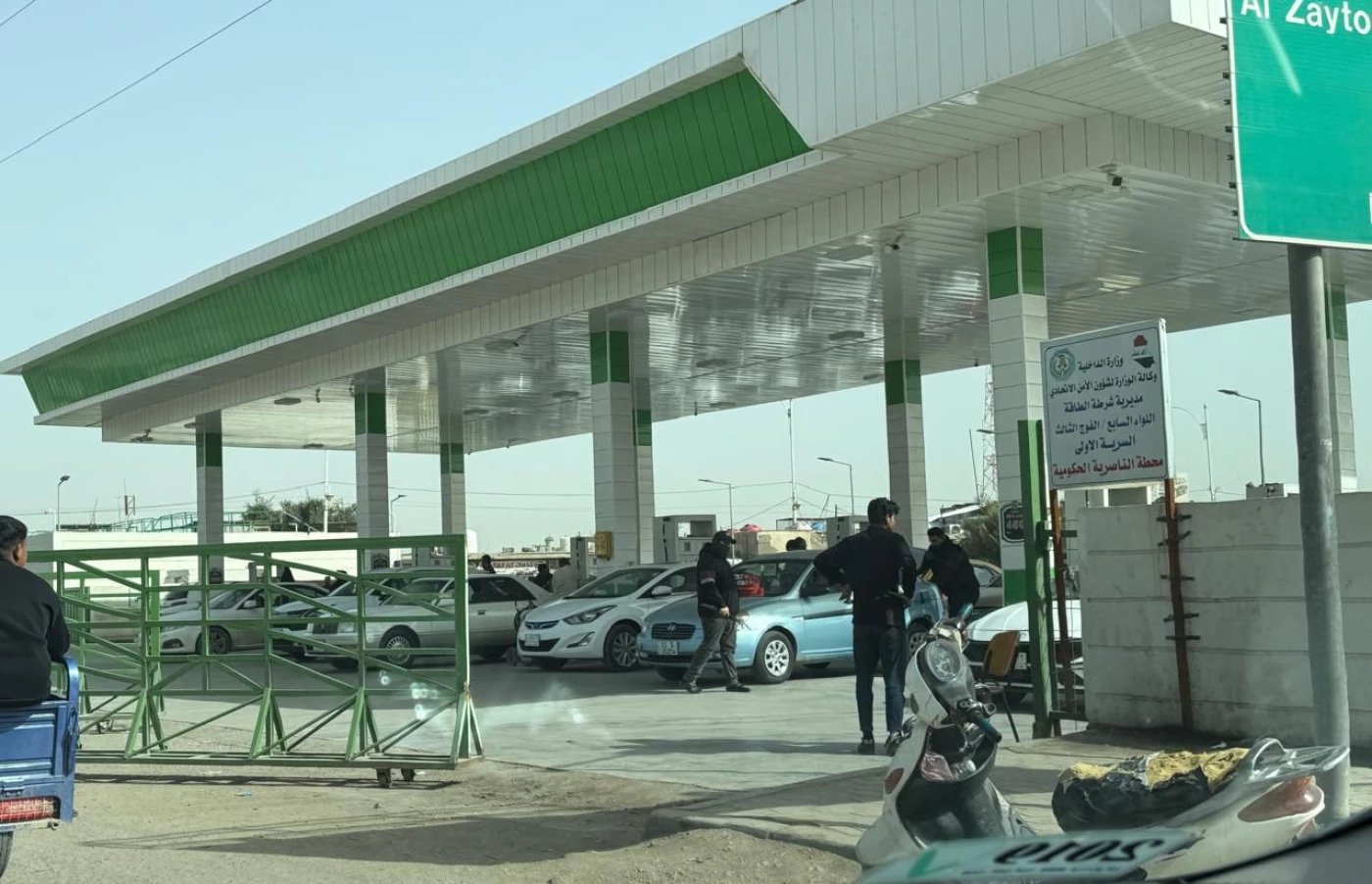
Iraq’s continued imports of certain petroleum products, despite rising crude oil production and expanded refining capacity following the construction of new refineries, have raised questions about the country’s ability to achieve sustainable self-sufficiency. Long queues of cars at petrol stations last summer once again highlighted the challenges of supplying the domestic market with petroleum products, particularly during periods of peak demand.
In a study published by the Bayan Center for Studies and Planning in Baghdad, Thamer Al-Ghadhban, Iraq’s former deputy prime minister and oil minister, examined the reasons behind the difficulties in sustaining the suspension of gasoline imports, despite the government’s announcement that the country had achieved self-sufficiency in major petroleum products.
On November 4, 2025, Prime Minister Mohammed Shia Al-Sudani announced that Iraq had achieved self-sufficiency in major petroleum products, describing the achievement as an important step toward energy independence. He subsequently issued a directive to halt imports of gasoline, gas oil (diesel), and kerosene, while exporting surplus production, on the basis that domestic output had exceeded demand. In a separate announcement, Al-Sudani projected that Iraq would begin importing liquefied natural gas (LNG) by 2028.
However, according to Al-Ghadhban, the decision to suspend gasoline imports proved difficult to sustain because of several operational factors that had not received sufficient attention when the decision was made.
The first factor concerns gasoline blending requirements. A substantial proportion of imported gasoline had been used to blend with domestically produced fuel, particularly at the Baiji refineries, to achieve the required octane levels. Consequently, the availability of domestically produced gasoline does not necessarily eliminate the need for imported supplies used in blending operations.
The second factor relates to seasonal fluctuations in demand. The surplus that underpinned the decision to halt imports emerged in November, a month when gasoline consumption typically declines. Al-Ghadhban notes that this seasonal pattern has been well established in Iraq for decades, including throughout the 1990s.
The third factor involves the management of strategic reserves. Under practices followed by the Ministry of Oil for years, gasoline and gas oil reserves are built up during the autumn and winter, when seasonal surpluses are available. By contrast, reserves of kerosene and liquefied petroleum gas (LPG) are accumulated during the summer, when demand for these products declines.
However, suspending gasoline imports forced the government to draw down existing stocks to meet rising demand, ultimately contributing to a severe shortage during the summer. According to Al-Ghadhban’s analysis, this experience demonstrates that a surplus recorded during a particular period is not, by itself, sufficient to guarantee reliable supplies throughout the rest of the year.
In addition to operational and seasonal factors, the diversion of petroleum products from the domestic market further reduced the quantities available to consumers. Al-Ghadhban identifies two forms of smuggling. The first is domestic, involving the movement of some products into the Kurdistan Region due to substantial differences in retail prices. The second involves smuggling to neighbouring countries, also driven by price disparities.
Supply projections were further complicated by delays in commissioning the catalytic cracking unit at the Basra refinery, which was expected to produce approximately five million litres of high-octane gasoline per day. According to Al-Ghadhban, the unit was undergoing trial operations but had not yet entered service after the contractor withdrew following the regional conflict.
Al-Ghadhban concludes that these factors collectively indicate that Iraq had not yet achieved sustainable self-sufficiency in major petroleum products. Under this assessment, self-sufficiency should not be measured by a temporary production surplus, but by the ability to meet demand consistently, supported by adequate refining capacity, suitable gasoline-blending components, strategic reserves, and effective measures to curb the diversion of petroleum products from the domestic market.
Regarding liquefied natural gas, Al-Ghadhban expects Iraq to face considerable difficulties in beginning imports by 2028. He notes that Iraq has flared enormous quantities of gas because of the absence of the equipment needed to capture and utilise it, describing the country as one of the world’s largest gas-flaring nations. Nevertheless, he expects flaring rates to decline in the future as projects currently under development begin operating.
These challenges place Iraq’s energy sector at the intersection of two closely related priorities: ensuring a reliable year-round domestic supply of petroleum products and developing the capacity to capture and utilise associated gas, reduce flaring, and prepare to secure the country’s gas requirements through imports if necessary.
Source: Asharq Al-Awsat newspaper.
Most read