
There was a time when parliamentary elections in Israel were celebrated as a national festival—a democratic occasion often described as the country's "democratic wedding." Election Day was a paid public holiday. Those required to work received additional compensation. Citizens genuinely felt they were choosing their leaders. Tens of thousands of people served on polling committees for pay, while political parties mobilized large numbers of activists, most of them compensated rather than volunteers. Since the day was also a national holiday, many Israelis combined voting with family outings and leisure trips.
Seventy-seven years after Israel's first parliamentary elections in 1949, however, elections have come to resemble a battlefield rather than a celebration. The phrase "election campaign" has acquired a literal meaning, with every political camp treating the other as an existential enemy. Political polarization has reached unprecedented levels, and the atmosphere is saturated with hostility and mistrust. The President of Israel now convenes meetings with the heads of the domestic intelligence service and the Central Elections Committee to discuss the risks of foreign interference and domestic attempts to manipulate the electoral process. Veteran politicians and senior security officials openly warn of the dangers posed by deep societal divisions, including political assassinations, physical violence, intimidation, and harassment directed at citizens because of their political beliefs. What was once a festive democratic occasion has become a day many Israelis simply hope will pass without tragedy.
At first glance, Israel's ongoing confrontation with Iran and its regional allies appears to be the primary reason for the current tension. Yet this is neither the first election held during wartime nor the first occasion on which military conflict has intersected with domestic politics. Israel has lived under the shadow of war since its establishment, making elections conducted amid military confrontations almost a recurring feature of its political history.
The 1959 elections followed shortly after the 1956 Sinai Campaign and Israel's withdrawal from the territories it had occupied. Elections in 1969 and 1971 took place during the War of Attrition. The 1974 elections were held only months after the October War. The 1984 elections unfolded against the backdrop of the Lebanon War. In 1981, Prime Minister Menachem Begin ordered the bombing of Iraq's Osirak nuclear reactor on the eve of elections in which his government appeared destined for defeat—and he ultimately survived by a margin of only ten thousand votes. Likewise, shortly before the 1996 elections, Prime Minister Shimon Peres ordered Israel's military operation in Lebanon that culminated in the Qana massacre.
Netanyahu Is Not an Exception
In this sense, Prime Minister Benjamin Netanyahu is hardly unique. He is neither the first Israeli leader to use military operations to strengthen his electoral prospects nor the first to view war as an instrument of domestic political survival.
What distinguishes Netanyahu's era, however, is a charge repeatedly leveled by his political opponents, echoed by many independent analysts and even some former allies: that alongside his external wars, Netanyahu has also been waging a political war against Israel itself.
His military campaigns have extended from Gaza following Hamas's October 7, 2023 attack, to Lebanon after Hezbollah opened what it called the "support front," to Syria following the collapse of the Assad regime, and to Iran, the Iraqi Hezbollah factions, and the Houthis in Yemen, all while military operations continued in the occupied West Bank.
The War Within Israel
Critics argue that Netanyahu's internal confrontation actually began well before the October 7 attacks. It initially appeared under the banner of judicial reform but gradually evolved into what many viewed as a broader effort to reshape Israel's entire system of governance. The reforms targeted the judiciary, challenged the independence of the media, sought to influence academic institutions, and questioned the liberal democratic foundations upon which Israel's political system had been built—effectively weakening what many describe as the country's "deep state."
This confrontation was rooted largely in Netanyahu's increasingly hostile relationship with Israel's legal establishment. Official inquiries had blamed his governments for major national tragedies, including the deadly Mount Carmel forest fire in 2010 and the Mount Meron disaster in 2021. In addition, police investigations led to Netanyahu's indictment on multiple corruption charges in 2020, while another inquiry examined the controversial submarine procurement affair. Then came Hamas's October 7 attack, widely regarded inside Israel as the gravest national security failure since the Holocaust. Israel's military response rapidly evolved into a devastating campaign dominated by retaliation and vengeance, a conflict that critics argue also provided Netanyahu with an opportunity to postpone political accountability and strengthen his own prospects for survival.
Those who know Netanyahu well contend that these legal battles fundamentally transformed his political outlook. Once regarded as a defender of judicial independence, he became its fiercest critic. A politician who had long cultivated close relations with the media launched an aggressive campaign against it while simultaneously helping establish numerous media outlets aligned with his political agenda. Likewise, after once maintaining close ties with academic institutions, he increasingly supported conservative think tanks designed to advance his own ideological priorities.
Perhaps most significantly, whereas previous Israeli governments generally sought to represent the broad spectrum of Zionist political movements, Netanyahu assembled one of the most ideologically homogeneous right-wing coalitions in Israel's history, deepening political polarization across the country.
Conflict Beyond Israel's Borders
Netanyahu's confrontational approach has not been confined to domestic politics. His government has increasingly clashed with European governments and much of the Western political establishment despite their historic role in supporting Israel diplomatically, militarily, and economically. At the same time, he cultivated closer ties with right-wing populist movements across Europe.
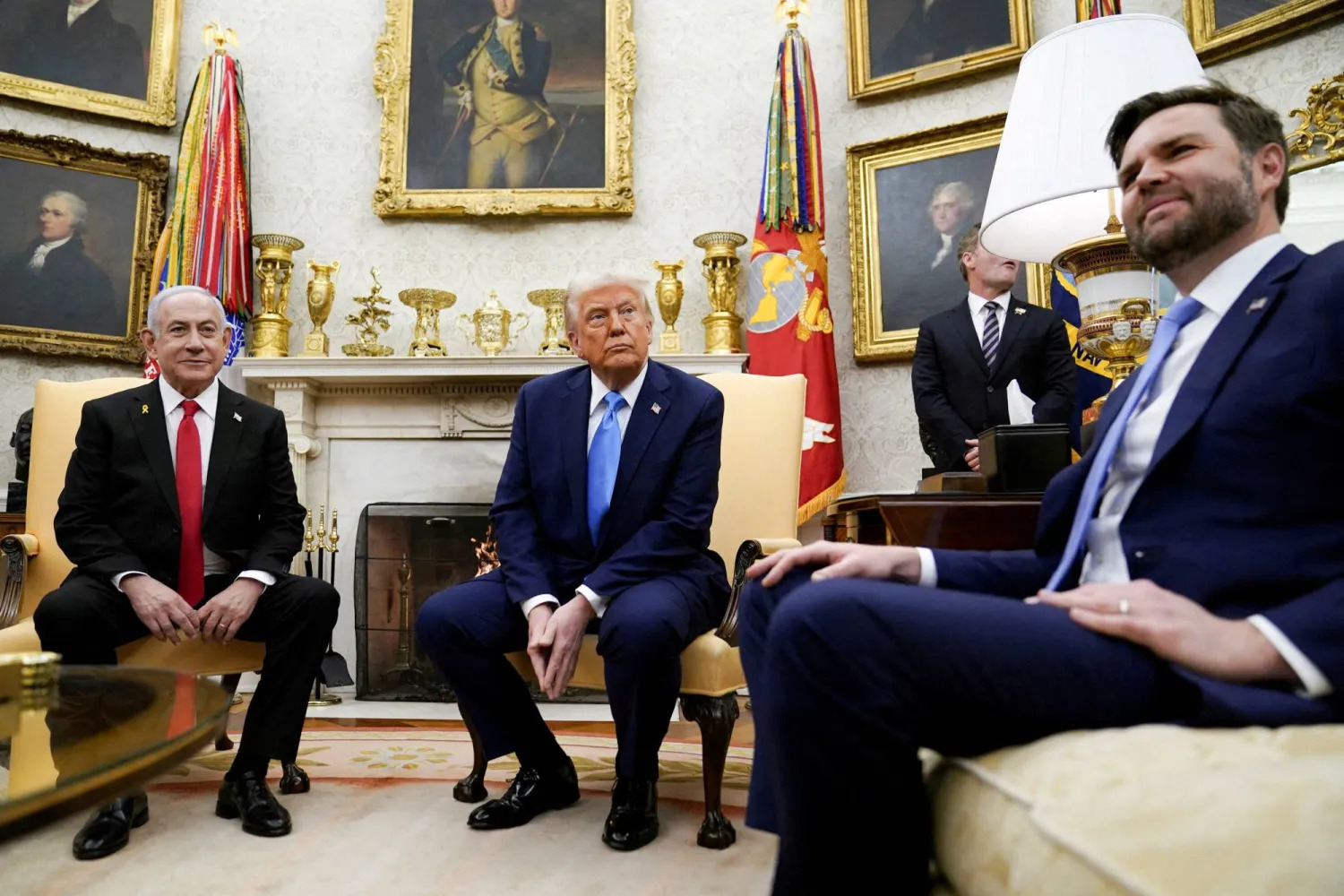
His approach also marked a departure from Israel's traditional bipartisan strategy in the United States. Previous Israeli governments invested heavily in maintaining strong relationships with both Republicans and Democrats. Netanyahu, by contrast, found himself in recurring confrontation with the Clinton, Obama, and Biden administrations while placing unprecedented political weight behind Donald Trump.
Yet even Trump's patience appears increasingly strained.
Israeli journalist Barak Ravid—who maintains unusually close access to senior figures in Washington—now speaks openly of a deterioration in the personal relationship between Trump and Netanyahu. According to Ravid, strategic ties remain intact, but confidence in the current Israeli government has declined significantly within broad segments of the Republican administration. He argues that many officials increasingly view Netanyahu's government as politically unstable, strategically unpredictable, and excessively expansionist.
Such assessments, if accurate, represent a remarkable departure from the traditionally close rapport between Republican administrations and Israeli governments.
The Ninth Front
Against this backdrop, Netanyahu approaches the coming elections as what many observers describe as his "ninth front"—and perhaps the most consequential one of all.
For Netanyahu, this election is more than a contest for political power; it is a battle for political survival. He is convinced that his opponents are determined not merely to remove him from office but to ensure that he ultimately faces prison. Should they prevail, they are expected to establish an official commission of inquiry into the failures surrounding October 7, potentially assigning him primary responsibility while reviving investigations into the submarine affair. In Netanyahu's view, electoral defeat could therefore carry consequences extending far beyond the end of his premiership.
This perception helps explain the extraordinary intensity of the current campaign. What further complicates Netanyahu's position is that his political strategy appears increasingly fragile.
Opinion polls consistently indicate that his coalition could lose more than a quarter of its current parliamentary strength. A growing majority of Israelis believes his government has failed to achieve the objectives it set for the war. Meanwhile, former Chief of Staff Gadi Eisenkot has emerged as an increasingly attractive alternative, with many voters viewing him as better suited to lead the country.
Even Trump's relationship with Netanyahu appears less certain than before. Having once portrayed him as the leader who successfully managed Israel's wars, Trump has reportedly become increasingly reluctant to meet him, questioned the sincerity of their friendship, and even accused Netanyahu of encouraging political campaigns against him within the United States.
Arab Voters and New Political Possibilities
At the same time, many analysts have warned Netanyahu that the confrontational style dominating his campaign may ultimately backfire.
One notable example was a campaign video targeting Eisenkot by invoking the memory of his son, who was killed during the war, in an effort to portray Eisenkot as politically closer to Arab leader Mansour Abbas than to the Israeli mainstream. Rather than damaging Eisenkot, the advertisement generated widespread public sympathy for him and criticism of Netanyahu, with many Israelis condemning what they regarded as an unacceptable exploitation of personal tragedy.
Ironically, the controversy also revived discussion about the possibility of Arab participation in future governing coalitions. Surveys showed that 44 percent of opposition voters—and even 18 percent of coalition supporters—would accept such participation. Abbas described these figures as evidence of a gradual political shift.
Sources close to Abbas have indicated that he is considering transforming his United Arab List into a joint Arab-Jewish political movement by recruiting moderate Jewish figures committed to equality. One name mentioned is former Deputy Minister Yoav Segalovitz, a retired senior police officer who earned recognition for reducing violent crime in Arab communities during the previous government.
If such an initiative were to succeed, it could fundamentally reshape Israel's political arithmetic, potentially providing an anti-Netanyahu coalition under Eisenkot with an outright parliamentary majority of between 63 and 65 seats in the 120-member Knesset.
Eisenkot has already pledged that, should he become prime minister, one of his first priorities would be rebuilding trust and restoring close relations with the United States—an objective that only heightens Netanyahu's concern that he may be losing what has long been his most valuable international political asset: President Donald Trump.
For this reason, Professor Boaz Ganor, President of Reichman University and Director of its International Institute for Counter-Terrorism, argues that these elections are "existential in every sense of the word" if the opposition succeeds in presenting a compelling alternative to an electorate increasingly eager for change.
Ganor contends that Israel must fundamentally rethink its national security doctrine. It should prepare for the next confrontation with Iran on the assumption that Tehran will either possess nuclear weapons or stand on the threshold of acquiring them. Israel, he argues, should abandon its longstanding policy of nuclear ambiguity if necessary, accelerate the development of laser-based missile defense systems as a national strategic priority, strengthen its capabilities against drones and missiles, and significantly improve the country's resilience during prolonged conflicts.
He also calls for strengthening regional alliances by protecting the Abraham Accords from Iranian pressure while pursuing a broader regional coalition with moderate Arab states—even if doing so requires meaningful initiatives on the Palestinian issue.
Ultimately, Ganor argues, Israel must improve its international standing through policies capable of resonating with younger global audiences, restore national unity, reinforce societal resilience, abandon what he describes as a culture of arrogance, acknowledge the limits of military power, and embrace a long-term strategic vision.
Otherwise, he warns, Israel may continue winning tactical victories while suffering strategic defeat—an outcome that could ultimately threaten the country's long-term security and future.
Originally published in Asharq Al-Awsat.
Most read