Is Trump Beginning to Lose Patience with Putin?

A series of developments in Washington suggest that the Russia–Ukraine war is returning to the forefront of President Donald Trump's agenda after being overshadowed by the conflict with Iran. The U.S. Senate is moving to tighten economic pressure on Moscow, influential figures within the "Make America Great Again" (MAGA) movement are reassessing their previous hostility toward Kyiv, and Russia's support for Tehran is increasingly being presented as evidence that President Vladimir Putin is not a reliable partner for the United States.
Yet these pressures have not translated into a complete reversal of Trump's policy. He remains intent on keeping communication channels with the Russian president open, even as he moves closer to Ukrainian President Volodymyr Zelenskyy and explores the possibility of reviving U.S.-led mediation efforts.
Pressure Beyond Individual Voices
The clearest indication of the changing Republican mood came from the U.S. Senate, which voted 86–12 to advance a sweeping sanctions bill against Russia, named after the late Senator Lindsey Graham. The legislation targets Russian officials and grants Trump the authority to impose tariffs of up to 100 percent on major importers of Russian energy. At the president's request, Iran-related sanctions were also incorporated into the bill, effectively linking Moscow's and Tehran's behavior.
The measure enjoys the backing of more than sixty senators, including prominent Republicans such as Senate Foreign Relations Committee Chairman Jim Risch, Senate Majority Leader John Thune, and Senate Armed Services Committee Chairman Roger Wicker.
Risch argued that increasing pressure could alter Putin's strategic calculations and bring the war closer to an end, while supporters of the legislation contend that sanctions would provide Trump with greater leverage at the negotiating table rather than serve as a prelude to a wider conflict.
In the same vein, Thomas Graham, the former White House adviser on Russia during the George W. Bush administration, wrote in The New York Times urging Trump to dispatch his envoys, Steve Witkoff and Jared Kushner, first to Kyiv and then to Moscow in an effort to launch intensive shuttle diplomacy. Graham argued that the exhaustion of both sides presents a rare opportunity for a negotiated settlement, warning that continued escalation could rapidly close that window, with potentially serious consequences for U.S. national security.
MAGA Reassesses Ukraine
Perhaps the most striking shift has come from Laura Loomer, a conservative activist and close Trump ally. After returning from a ten-day visit to Ukraine, Loomer—once one of Zelenskyy's harshest critics and an outspoken opponent of U.S. aid—now argues that Russia is the primary problem and that supporting Ukraine is fully consistent with the "America First" doctrine.
According to The Washington Post, Loomer intends to present her conclusions directly to Trump at the White House after the president reposted her interview with Zelenskyy.
The significance of this shift extends beyond Loomer herself. It reflects a broader effort to reframe Ukraine's case for Republican audiences. Rather than portraying Kyiv as a country seeking endless financial assistance, advocates increasingly describe it as a valuable strategic partner with advanced expertise in drone warfare and countering Iranian-made weapons—knowledge that could benefit the United States through technological cooperation and joint production. In this sense, Ukraine has partially succeeded in shifting the debate from the cost of supporting it to the strategic returns it can offer.
The Russia-Iran Connection
This narrative has been reinforced by growing concerns over Russian-Iranian cooperation. Zelenskyy recently claimed that Ukraine had detected Russian satellite activity over American and Gulf military installations since early July, alleging that the imagery was subsequently shared with Iran.
Defense Secretary Pete Hegseth cautiously acknowledged that both Russia and China are assisting Tehran to varying degrees. Trump, however, chose to accept denials issued by both Putin and Chinese President Xi Jinping, according to CBS News.
Former Secretary of State and CIA Director Mike Pompeo adopted a far stronger position, arguing that the conflict has evolved beyond a regional war into what he described as a "global war" linking Iran, Russia, and China in an emerging axis seeking to undermine Western dominance.
Moscow Rejects Western Ultimatums
Russian Deputy Foreign Minister Mikhail Galuzin stated that Moscow has yet to receive any constructive proposals from Western governments regarding Ukraine.
Speaking on the sidelines of the Third Kazakhstan–Russia Media Forum, Galuzin said that Western governments continue to rely on "the language of ultimatums," believing that their war of attrition and hybrid campaign—including economic measures and what he described as unfair competition through international financial institutions—would compel Russia to alter its policies.
According to Russia's TASS news agency, Galuzin insisted that such an approach would ultimately fail, arguing that Western leaders mistakenly believe they can pressure Russia into making concessions.
The Battlefield Shapes the Political Landscape
Military developments continue to reinforce calls for renewed diplomacy while simultaneously underscoring the growing difficulty of reaching a settlement.
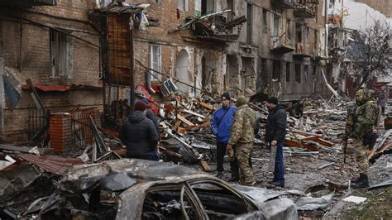
In the early hours of August 4, Russian authorities reported that a new wave of Ukrainian drone strikes hit two warehouses belonging to the Wildberries retail company in the Leningrad and Tver regions, following previous attacks on the company's facilities. Another strike targeted a warehouse in Chekhov, near Moscow, where officials reported five fatalities and ten injuries.
Wildberries confirmed that one of its warehouses in Krasny Bor caught fire following the attack, while Moscow Region Governor Andrei Vorobyov said fires also broke out in the Novoselki industrial zone.
These strikes form part of Kyiv's broader strategy of bringing the costs of war deeper into Russian territory by targeting facilities it says support Moscow's economy and military operations.
Russia, meanwhile, has continued expanding its own campaign against Ukrainian infrastructure.
According to the Russian Ministry of Defense, Russian forces struck seven cargo vessels in the Ukrainian port of Mykolaiv and in the Black Sea, alleging—without presenting evidence—that they were transporting military supplies.
The ministry also claimed that attacks in the Odesa region damaged the Chornomorsk automotive components plant as well as a port facility where Ukrainian forces were repairing military vehicles and storing ammunition and fuel.
Turkey, for its part, condemned a drone attack in the Black Sea targeting two commercial vessels operated by Turkish shipping companies and carrying grain. In a statement, the Turkish Foreign Ministry said that several crew members, including Turkish citizens, were injured after the vessels departed the Russian port of Novorossiysk.
The Black Sea has therefore evolved from a logistical corridor into an active battlefield where supply lines and commercial shipping have become military targets. This geographical expansion of the conflict—combined with continuing Russian attacks on Ukrainian ports and cities and Kyiv's growing strikes deep inside Russia—makes renewed negotiations increasingly urgent while simultaneously raising the political cost of another failed American mediation effort.
Trump Has Yet to Decide
During his July 28 meeting with Zelenskyy, Trump discussed reviving peace negotiations and authorizing the licensed production of Patriot missile systems in Ukraine.
Reuters also reported that Trump's envoys, Steve Witkoff and Jared Kushner, had agreed in principle to visit Kyiv for the first time, although no date has yet been announced. Such a visit would represent a notable adjustment after several previous trips to Moscow that did not include Ukraine.
Even so, Trump continues to emphasize that he "gets along with both" Putin and Zelenskyy, avoiding any attempt to place sole responsibility for the stalled peace process on Moscow.
The Kremlin, in turn, has praised what it describes as Trump's sincere efforts while maintaining that Russian military operations will continue until "complete victory," pending new American proposals.
The real test, therefore, is not whether Trump will sever ties with Putin, but whether he will translate sanctions and closer engagement with Kyiv into meaningful negotiating leverage. Current political trends appear to be pushing him in that direction. Yet, as is often the case with Trump's foreign policy, the final decision will likely depend on his personal calculations and on what he believes he can ultimately extract from the Russian president.
Source: Asharq Al-Awsat.
Most read