How Hamas' Leadership Has Evolved Over Four Decades

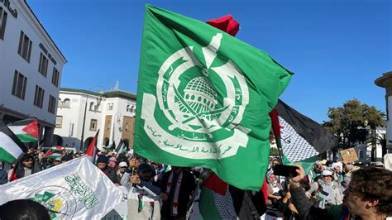
Since the establishment of the Islamic Resistance Movement (Hamas) in 1987, almost every major transition in its leadership has been shaped by assassinations, arrests, wars, or other extraordinary circumstances rather than routine organizational succession. With the election of Khalil Al-Hayya as head of Hamas' Political Bureau in July 2026, the movement has entered what may be the most challenging phase in its history, having lost most of its first-tier political and military leadership in less than two years.
From Grassroots Movement to Organized Resistance
Hamas did not emerge overnight with the outbreak of the First Palestinian Intifada. Rather, its establishment was preceded by nearly a decade of organizational and religious groundwork. The movement was officially founded in December 1987 following a meeting held at the home of Sheikh Ahmed Yassin, where its founding statement was drafted.
One year later, Hamas issued its first charter, and in 1991 established its first Shura Council, laying the institutional foundations for an organization that would gradually evolve into one of the most influential Palestinian political and military movements.
Sheikh Ahmed Yassin is widely regarded as Hamas' founder and spiritual leader. He remained the movement's defining ideological figure until he was assassinated by Israel on March 22, 2004, in what became one of the most consequential events in Hamas' history.
The Birth of the Political Bureau
A major organizational milestone came in 1992, following Israel's deportation of hundreds of Hamas members to southern Lebanon. The experience highlighted the need for a centralized political body capable of managing the movement's international relations and supervising its external institutions.
As a result, Hamas established its Political Bureau, electing Dr. Mousa Abu Marzouk as its first chairman. Since then, the bureau has served as the movement's highest political authority, coordinating Hamas' regional and international activities alongside its internal leadership in the Palestinian territories.
Since its establishment, five leaders have served as head of the Political Bureau, each presiding over a distinct phase in the movement's evolution.
Mousa Abu Marzouk: Building Hamas Abroad
Mousa Abu Marzouk served as the first head of the Political Bureau from 1992 to 1996, overseeing a critical period during which Hamas expanded its organizational presence outside the Palestinian territories following Israel's large-scale arrests of its members in 1989.
Born in Rafah in southern Gaza in 1951, Abu Marzouk earned his Ph.D. in the United States. He was arrested by U.S. authorities in 1995 and spent two years in detention before being deported to Jordan.
In subsequent years, he divided his time between Egypt, Qatar, and Gaza, while also leading Hamas delegations during Palestinian reconciliation talks hosted in Cairo.
Khaled Meshaal: Two Decades of Leadership
In 1996, leadership of the Political Bureau passed to Khaled Meshaal, who would become the movement's longest-serving political leader, remaining in office until 2017.
Born in the West Bank in 1956, Meshaal moved with his family to Kuwait, where he studied physics and later worked as a schoolteacher. He was among Hamas' founding members in 1987.
During his two decades at the helm, Hamas expanded its regional and international political profile while consolidating its organizational structure. In 2012, Meshaal made his first visit to the Gaza Strip since leaving the West Bank as a child, a trip that carried considerable symbolic and political significance.
Ismail Haniyeh: From Prime Minister to Political Leader
Ismail Haniyeh succeeded Meshaal as head of the Political Bureau in 2017 after decades of leadership within Hamas.
Born in 1962, Haniyeh was arrested several times by Israel before rising to prominence following Hamas' victory in the 2006 Palestinian legislative elections. Heading the "Change and Reform" electoral list, he became Prime Minister of the Palestinian Authority after the movement secured a parliamentary majority.
He remained chairman of the Political Bureau until his assassination in 2024, bringing to an end a leadership period marked by efforts to strengthen Hamas' political and diplomatic standing.
Yahya Sinwar: The Shortest Tenure
Following Haniyeh's assassination, Hamas appointed Yahya Sinwar as head of its Political Bureau on August 6, 2024.
Born in Khan Younis in southern Gaza in 1962, Sinwar studied at the Islamic University of Gaza before spending many years in Israeli prisons. He was released in the 2011 prisoner exchange agreement, subsequently emerging as one of Hamas' most influential leaders.
His tenure, however, proved to be the shortest in the bureau's history. Israel assassinated him in October 2024, after which Hamas adopted a collective leadership structure during the ongoing war.
Khalil Al-Hayya: Leading During Reconstruction
The election of Khalil Al-Hayya in July 2026 marks the beginning of a markedly different chapter in Hamas' history.
Unlike his predecessors, Al-Hayya assumes leadership after an unprecedented wave of Israeli operations eliminated many of Hamas' most senior political and military figures. His primary challenge will not simply be directing the movement politically, but rebuilding its leadership structure, preserving organizational cohesion, and managing the consequences of an exceptionally difficult period.
His election also signals the end of the collective leadership arrangement adopted after Sinwar's death and the restoration of the office of an elected chairman of the Political Bureau.
Leadership Forged by Conflict
The history of Hamas' leadership demonstrates that the movement has rarely experienced conventional transitions of power. Instead, nearly every leadership change has resulted from extraordinary developments—assassinations, arrests, military confrontations, or regional upheavals.
Consequently, Khalil Al-Hayya's election represents more than an internal organizational change. It marks the beginning of a new phase in which Hamas must rebuild itself after losing much of its historic leadership in a remarkably short period.
The movement's new leadership now faces a dual challenge: preserving Hamas' internal cohesion while navigating an increasingly complex regional and international environment that may ultimately reshape both the organization's future and its role within the broader Palestinian cause.
Originally published in Asharq Al-Awsat.
Most read

Read also