AIPAC's Influence and the Iran War: Calculations Behind the Political Battle

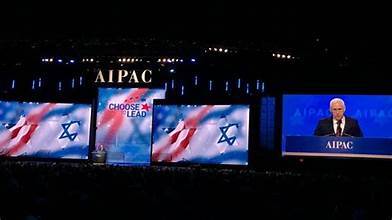
Michigan has emerged as the epicenter of the political battle over the American Israel Public Affairs Committee (AIPAC), while the war with Iran has evolved from a distant foreign policy issue into a direct electoral factor.
Although AIPAC is officially a lobbying organization, its electoral activities are also conducted through the AIPAC PAC and the United Democracy Project (UDP), its independent expenditure arm. To date, AIPAC and its affiliated organizations have spent approximately $30 million backing Congresswoman Haley Stevens against Abdul El-Sayed in the August 4 Democratic primary—its largest investment ever in a single race, according to the Associated Press.
When spending by other outside groups is included, pro-Stevens independent expenditures approach $50 million, including roughly $12 million from Michigan Stronger, a nonprofit organization that does not disclose its donors. Ironically, the advertisements scarcely mention Israel. Instead, they focus on manufacturing, confronting Donald Trump, and prominently feature images of former President Barack Obama. In other words, while the funding is primarily motivated by the battle over U.S. policy toward Israel, the message presented to voters is overwhelmingly economic and local.
For his part, El-Sayed has made AIPAC itself a campaign issue, portraying the race as a contest between grassroots organizing and billionaire-funded political influence. His campaign says it has mobilized more than 10,000 volunteers. The issue carries particular sensitivity in Michigan, home to the largest Arab American community in the United States. Stevens presents herself as a strong pro-Israel Democrat, while El-Sayed has described the war in Gaza as "genocide" and argues that its continuation is closely linked to AIPAC's political influence.
The disagreement, however, is no longer confined to the Democratic Party's progressive wing. On July 15, 103 Democratic lawmakers voted in favor of an amendment seeking to suspend the $3.3 billion in annual U.S. military assistance to Israel, compared with just 37 Democrats who supported a similar proposal in 2024. Although the amendment failed by 314 votes to 104, it exposed divisions within the Democratic leadership itself: House Minority Leader Hakeem Jeffries opposed the measure, while Katherine Clark and former Speaker Nancy Pelosi voted in its favor.
Pro-Israel financial influence has also extended into Republican politics. The Republican primary in Kentucky involving Representative Thomas Massie became the most expensive House primary in the state's history, with total spending exceeding $34 million, including more than $15.5 million from political committees backed by pro-Israel donors, before Trump's endorsed candidate, Ed Gallrein, ultimately prevailed.
Nor is AIPAC the only major political spender. According to a review of Federal Election Commission records published by The Nation, political action committees linked to the cryptocurrency industry, artificial intelligence interests, and AIPAC have collectively spent more than $180 million, often without campaign advertisements disclosing the actual interests of their financial backers. The trend has fueled an internal Democratic debate between those advocating tighter restrictions on Super PAC spending and others who argue that abandoning such fundraising tools would amount to unilateral disarmament while political opponents continue to rely on them, according to Politico.
The war with Iran has likewise become a central campaign issue. Defense Secretary Pete Hegseth announced that the conflict had cost $37.5 billion as of July 21, while the White House has requested an additional $90 billion in emergency funding. The fighting has claimed the lives of 18 American service members and left approximately 430 wounded, following the collapse of the ceasefire and the resumption of military operations.
Republicans have framed the conflict as a necessary campaign of deterrence aimed at preventing Iran from acquiring nuclear weapons and safeguarding maritime navigation through the Strait of Hormuz. Yet that message increasingly clashes with the "America First" pledge to end costly overseas wars. Massie's defeat illustrated that the Republican non-interventionist wing remains organizationally and financially weaker than the coalition of Trump and the party's foreign policy hawks. Nevertheless, grassroots skepticism toward the war has not disappeared, particularly as its costs have translated into higher fuel and consumer prices.
Democrats, meanwhile, have linked the war directly to household purchasing power. They argue that money spent overseas, combined with rising oil, fuel, and fertilizer prices, ultimately drives up the cost of food, transportation, and housing. The party is also seeking to highlight the contradiction between Trump's campaign promise to end America's "endless wars" and his administration's growing involvement in the conflict.
That intersection of national security and domestic politics is reflected in the Republican supplemental $95 billion budget proposal. The package allocates $60 billion for defense, $13 billion for intelligence, $12 billion to compensate farmers affected by rising fuel and fertilizer costs, and $10 billion to encourage states to require photo identification and proof of citizenship for voter registration. According to Reuters, the proposal faces opposition from multiple directions: foreign policy hawks demanding even greater military spending, fiscal conservatives objecting to the absence of clear funding sources, and Republicans concerned that linking the war to voting regulations could ultimately damage the party politically.
Despite broad Democratic agreement on criticizing the Trump administration over the war, the party remains divided over how far its opposition should go. Progressives are calling for an unequivocal end to military operations and for rejecting campaign money from defense contractors and AIPAC alike. Moderates, by contrast, favor opposing an "open-ended war" while preserving U.S. deterrence capabilities and maintaining traditional alliances. That distinction could prove decisive in battleground states whose voters oppose the war but are equally reluctant to support a candidate perceived as weak on national security.
Most read