UAE Exit from OPEC and the Rise of the Petroyuan

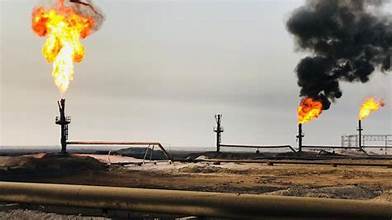
The United Arab Emirates’ announcement on May 1, 2026, of its withdrawal from the Organization of the Petroleum Exporting Countries (OPEC) represents a pivotal development that extends beyond immediate oil-market implications to affect the structure of the international monetary system tied to energy markets. While early analyses have focused on the impact on production levels and prices, a deeper reading suggests that this move opens the door to a reconfiguration of the relationship between energy and currencies—particularly in Asia, where demand patterns and financial settlement mechanisms are undergoing rapid transformation.
OPEC and the Petrodollar – From Production Coordination to Monetary Anchoring
Since the 1970s, OPEC has not merely functioned as a framework for coordinating production policies but has also played a central role in consolidating the petrodollar system. The 1974 U.S.–Saudi understanding—linking oil pricing to the dollar in exchange for security guarantees—was institutionalized through OPEC’s pricing mechanisms. As a result, the organization became an implicit channel for recycling oil revenues into the Western financial system, reinforcing global demand for the dollar and cementing its status as the dominant reserve currency.
Within this framework, OPEC’s internal discipline constituted a structural barrier to any serious attempts to price oil in alternative currencies, even when bilateral interests between producers and consumers warranted such arrangements. Thus, the UAE’s continued membership meant remaining subject to monetary constraints that extended beyond production considerations.
The UAE’s Strategy – Building Institutional and Pricing Autonomy
Over the past decade, the UAE has pursued a gradual strategy to enhance its independence in oil pricing and trading. This was reflected in the development of Murban crude as a regional benchmark and the launch of its futures contracts on the Abu Dhabi exchange, creating an alternative reference point to Brent and WTI.
Additionally, Abu Dhabi has strengthened its engagement in multilateral financial arrangements by joining emerging economic groupings and participating in cross-border digital settlement platforms. These steps indicate an early recognition of the limitations of the existing system and a deliberate effort to build infrastructure enabling more flexible pricing and settlement models. However, this transition remained constrained by OPEC’s framework, which enforces a unified dollar-based pricing signal.
Exiting OPEC – Removing the Monetary Constraint and Reopening Options
The UAE’s withdrawal effectively removes this institutional constraint, allowing it to adopt multi-currency pricing and settlement arrangements based on market dynamics. Emirati oil is no longer bound to dollar-denominated benchmarks but can now be traded under bilateral agreements in yuan, rupees, yen, or other currencies.
This flexibility is particularly significant in light of ongoing transformations in the Asian economy, where calls are growing to reduce reliance on the dollar in international trade—especially in the energy sector, one of the primary sources of global dollar demand.
Asian Implications – Toward a Multi-Currency Financial Architecture
The UAE’s decision creates a strategic opportunity for major Asian economies—particularly China and India—to restructure their oil trade relationships on new monetary foundations. For China, it provides a pathway to expand the use of the yuan in oil settlements, supporting broader efforts to internationalize its currency and enhance financial autonomy.
India, which has already used the rupee in some oil transactions, may find in the UAE a flexible partner to scale such arrangements. Other Asian economies may similarly benefit by reducing exposure to dollar volatility.
At the institutional level, these developments could strengthen regional payment platforms and alternative financial systems, gradually contributing to a more multipolar monetary architecture in energy markets.
Challenges and Constraints – Limits and Scenarios of Transition
Despite its significance, the shift toward a multi-currency system is unlikely to be immediate or frictionless. The dollar retains deep liquidity, strong institutional backing, and well-established legal frameworks. Many market participants may continue to prefer it due to lower transaction costs and greater predictability.
Moreover, the positions of other Gulf producers—especially Saudi Arabia—will be decisive in determining the scope of this transformation. If they adopt similar approaches, the transition could accelerate; if not, it may remain limited in scale.
Geopolitical Implications – From Petrodollar Dominance to Gradual Monetary Multipolarity
The UAE’s exit reflects a broader transformation in the international system, where monetary unipolarity is gradually giving way to more diversified arrangements. This does not imply the immediate collapse of the petrodollar system but signals the beginning of its gradual erosion.
In this context, the move can be seen as part of a wider shift in global competition—from control over resources to control over the mechanisms of pricing and settlement. The contest is no longer confined to production and export but extends to the monetary structures governing these processes.
In sum, the UAE’s withdrawal from OPEC is not merely a production policy adjustment but a structural shift in the relationship between energy and the international monetary system. While it may not produce immediate changes in global power balances, it opens the way for a gradual reconfiguration of the financial architecture of energy markets, particularly in Asia.
The world appears to be entering a transitional phase characterized by increasing diversity in pricing and settlement tools and a redistribution of roles among major currencies. The trajectory of this transition will depend on the interaction of economic and political factors, as well as the ability of global actors to adapt to an emerging multipolar reality in both energy and finance.
Most read