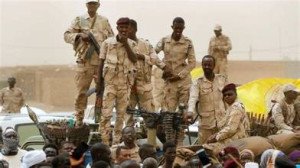

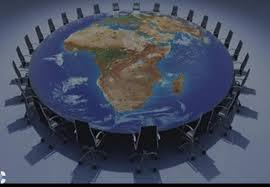
Debate over the future of the global order has not ceased since the outbreak of the Russian war on Ukraine in February 2022. In fact, it began months earlier when Moscow started massing troops along the border in a display signaling preparations for a major confrontation. Russia’s aggressive posture, met by a largely defensive Western response, has reinforced widespread perceptions that the world is approaching a profound shift in international power balances—perhaps even the dawn of a new phase in the structure of the global system.
The significance of these developments lies in the fact that this is the first major war in Europe since the end of World War II. It has raised fundamental questions about whether the world is moving toward a reconfiguration of power relations, an accelerated transition to a multipolar system, or a more turbulent phase of international rebalancing.
Any serious attempt to understand these transformations requires a methodological distinction between “change” and “transition” in the global order. What the world is experiencing is more likely not a complete rupture with existing rules, but a gradual process of reshaping the system from within. This perspective supports the hypothesis that renewing the international order through the attractiveness of developmental and economic models may prove more effective and sustainable than attempts to impose transformation through military force, and that cumulative quantitative shifts often precede abrupt qualitative change.
Historical Transformation Through Military Power
The nineteenth century witnessed the birth of the modern global order following the defeat of Napoleonic France and the establishment of the European balance of power at the Congress of Vienna, where principles of sovereignty and the prevention of absolute dominance were enshrined. Although a multipower system emerged, accumulated tensions eventually led to World War I, followed by efforts to reconstruct the international system through the Treaty of Versailles and the League of Nations.
However, the harsh sanctions imposed on Germany facilitated the rise of Nazism and culminated in World War II— the last historical moment in which the global order was fundamentally reshaped through direct military force. That war produced the ascent of two superpowers, the decline of traditional European powers, and the consolidation of a bipolar international system.
Transformation Through the Power of Models
During the Cold War, competition was no longer driven primarily by direct military confrontation, but by rivalry between political, economic, and cultural models. The United States successfully leveraged its model of an open economy, political freedom, and scientific innovation as a powerful instrument of global influence, in contrast to a Soviet system weakened by military expenditure and political rigidity.
With the end of the Cold War, the decisive shift in the international system occurred not through warfare, but through the growing appeal of the American model, enabling a smooth transition at the apex of global power without direct confrontation.
What initially appeared to mark the beginning of a unipolar era, however, proved short-lived. New powers soon began to rise—most notably China—alongside Russia’s efforts to regain lost influence and the emergence of rising regional actors.
A Global Order in an Era of Instability
The post–Cold War system has been characterized by unprecedented sources of instability, including the rise of transnational terrorism, crisis mismanagement, and intensifying strategic competition among major powers. As a result, this order has exhibited a shorter lifespan than its predecessors, with growing urgency surrounding questions about what will follow.
The war in Ukraine has reignited debate over whether the world is reverting to a logic of transformation through hard power, despite nuclear deterrence that renders any major confrontation existentially catastrophic.
Reliance on military force in the nuclear age appears increasingly unsustainable. Any attempt to impose a new global order through warfare risks comprehensive destruction that would strip the concept of “victory” of its political and strategic meaning.
China and the Quiet Shift in the Balance of Power
Within this context, China’s trajectory stands out as the clearest example of transformation driven by economic and developmental soft power. China’s extraordinary rise has made it the world’s leading trading power, a major hub of innovation, and an economy approaching parity with that of the United States.
Notably, Beijing has refrained from engaging in the Ukrainian conflict through military escalation, instead adopting a cautious stance favoring stability and preservation of the international system—reflecting a conviction that ascent to global leadership can be achieved from within the existing order rather than through its destruction.
This reinforces the view that China is not a revisionist power in the confrontational sense, but rather the primary beneficiary of the current system, seeking to reform it gradually in ways that accommodate its continued rise.
Toward a New Bipolar System?
Indicators suggest that even before the Ukraine war, the world was moving toward a renewed form of bipolarity, with China and the United States at the summit of the global order, separated by a significant gap from other major powers, followed by a tier of rising states.
In this framework, attempts to force systemic change through military means—as pursued by Russia—appear far less capable of producing durable structural transformation than China’s model-driven economic ascent.
Indeed, the war’s trajectory suggests that Beijing may ultimately emerge as the principal beneficiary, advancing quietly while other powers are absorbed in conflict and strategic exhaustion. The United States, meanwhile, is likely to incur fewer losses than Europe and Russia.
Analytical Conclusion
Current transformations reveal a global system suspended in a delicate transitional zone between the traditional logic of military power and a new logic of economic, technological, and model-based competition. While some actors seek to reshape the order through confrontation, others are reconfiguring it through developmental accumulation and normative appeal.
The central question today is not whether the global order will change, but how this transition will unfold:
through high-cost military upheavals, or through gradual shifts that redistribute power from within existing structures?
Historical experience and contemporary realities suggest that the future is more likely to be shaped by the strength of successful models than by the barrels of guns.
Most read


Read also