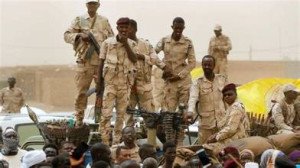

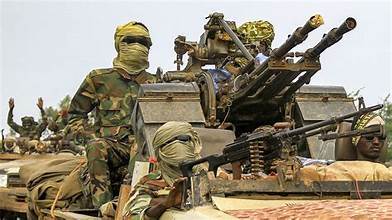
Since April 2023, the conflict in Sudan has evolved far beyond the framework of a domestic political and military confrontation. It has gradually transformed into one of the most dangerous regional crises in Africa, given its growing security, humanitarian, and geopolitical repercussions. As armed clashes between the Sudanese Armed Forces (SAF) and the Rapid Support Forces (RSF) continue, Sudan has entered a phase of institutional fragmentation and humanitarian collapse that increasingly affects neighboring states, particularly across the Horn of Africa and the Sahel — regions already burdened by chronic political fragility and security instability.
The gravity of the Sudanese crisis stems largely from Sudan’s highly strategic geopolitical position. Sudan constitutes a critical bridge linking North Africa, East Africa, Central Africa, and the Red Sea corridor. Consequently, any prolonged destabilization within Sudan cannot be viewed as an isolated domestic matter; rather, it directly threatens the broader regional security architecture across both Africa and the Arab world.
The Sudanese war has therefore surpassed the traditional boundaries of civil conflict and evolved into a multidimensional regional crisis characterized by border militarization, the expansion of armed networks, the growth of smuggling economies, large-scale forced displacement, and increasing regional and international competition for influence inside Sudan. In this context, the conflict should not merely be interpreted as a civil war, but as a geopolitical crisis capable of reshaping security dynamics throughout the Horn of Africa and the Sahel.
Sudan and the Regional Security Equation
Sudan represents one of the most geopolitically sensitive states in Africa. It shares borders with seven African countries and occupies a strategic space connecting the Horn of Africa, the Sahel, North Africa, and the Red Sea basin. This position has historically made Sudan both an arena for regional rivalries and a central factor in the stability of its surrounding environment.
Over the past decades, Sudan has played a pivotal role in regional dynamics related to security, migration, trade, and energy flows. Its extensive and relatively porous borders with fragile neighboring states — including Libya, Chad, South Sudan, and the Central African Republic — mean that internal instability within Sudan can rapidly spill across borders and destabilize the wider region.
The current crisis is particularly dangerous because of the multidimensional nature of the conflict itself. The war is no longer simply a struggle for power between two military factions. It increasingly reflects overlapping tribal, economic, and geopolitical divisions, as well as transnational networks of influence and informal cross-border economies.
According to United Nations estimates, the Sudan conflict has displaced more than 12 million people by 2026, making it one of the world’s largest displacement crises. The continuing economic collapse and the breakdown of essential public services have also forced large numbers of Sudanese civilians to flee toward neighboring countries, creating unprecedented pressure on the economic and security infrastructures of host states.
Chad as the Most Vulnerable Link
Recent developments along the Sudanese–Chadian border clearly demonstrate the growing regionalization of the conflict. Chad’s decision to close its border with Sudan following armed clashes near the border town of Tine was not merely a temporary security measure. Rather, it reflected mounting fears within N’Djamena that instability in Sudan could directly spill over into Chad itself.
Chad remains among the states most vulnerable to the consequences of the Sudan war due to its structural political, economic, and security fragilities. The country continues to face weak state institutions, economic hardship, and persistent threats linked to militant activity around the Lake Chad Basin, in addition to longstanding tribal and ethnic tensions.
International organizations estimate that Chad has received nearly one million Sudanese refugees, most of whom have settled in impoverished eastern provinces already suffering from weak infrastructure and limited public services. This massive population influx has intensified pressure on food supplies, water resources, healthcare systems, education services, and local labor markets, while also increasing tensions between host communities and refugee populations.
Moreover, the Sudanese–Chadian borderlands possess a long history of tribal and military entanglements, particularly since the Darfur crisis during the early 2000s, when the region became a major operational space for armed groups, smuggling networks, and cross-border recruitment activities. Today, the current conflict appears to be reproducing similar patterns, albeit within a significantly more fragile and complex regional environment.
Border Militarization and the Return of Armed Actors
One of the most dangerous regional consequences of the Sudan war has been the accelerating militarization of border areas, not only between Sudan and Chad, but also across the Libyan, Central African, and South Sudanese frontiers.
The security vacuum resulting from the collapse of state authority in several Sudanese regions has facilitated the resurgence of smuggling networks, illicit arms trafficking, and transnational armed groups. At the same time, the vast and porous geography of Sudan’s borders makes it extremely difficult for neighboring governments to impose effective security control, thereby creating favorable conditions for the movement of fighters, weapons, and illicit economies.
There are growing concerns that the continuation of the war may contribute to the emergence of an “arc of instability” stretching from Darfur to southern Libya, northern Central African Republic, and western Chad, potentially reproducing the model of ungoverned security spaces that has characterized the Sahel over the past two decades.
The persistence of the conflict also creates fertile conditions for extremist organizations and armed groups to expand, particularly amid weakening state institutions and declining security capacities throughout the region. The danger lies in the possibility that the Sudan crisis may merge with existing crises in both the Sahel and the Horn of Africa, creating a broad and interconnected zone of instability that could prove increasingly difficult to contain.
The Humanitarian Crisis as a Regional Security Threat
The humanitarian consequences of the Sudan war are no less dangerous than its military and security dimensions. In fact, they may represent one of the greatest long-term threats to regional stability.
According to United Nations agencies, millions of Sudanese civilians are facing acute levels of food insecurity, while large parts of the healthcare system and civilian infrastructure have collapsed as a result of ongoing military operations. The destruction of hospitals, water systems, and electricity networks has further accelerated the deterioration of public health conditions and increased the spread of disease and epidemics.
Neighboring countries — particularly Chad, South Sudan, and Egypt — have become major destinations for Sudanese refugees, placing enormous economic and social burdens on these states. In economically fragile environments, pressures associated with mass displacement can evolve into significant sources of domestic tension, especially amid rising unemployment, poverty, and weak public services.
Moreover, the continuation of the humanitarian crisis without effective intervention risks creating a new “generation of crisis” inside Sudan itself, as millions of children remain deprived of education and essential services. Such conditions may ultimately contribute to future cycles of violence, extremism, and prolonged instability.
Geopolitical Competition and the Risk of Proxy Warfare
Over the past two years, the Sudan crisis has increasingly acquired broader geopolitical dimensions, as both regional and international actors have become more deeply involved — directly or indirectly — in the conflict.
This growing involvement is closely tied to Sudan’s strategic position along the Red Sea corridor, its importance within regional trade and energy networks, and its substantial natural resources, particularly gold, which has become a critical source of financing within Sudan’s wartime economy.
At the same time, the multiplicity of regional actors and the divergence of their strategic interests raise serious concerns regarding the transformation of Sudan into an arena for proxy conflicts and geopolitical competition. Such dynamics are likely to prolong the war and complicate efforts toward a sustainable political settlement.
Meanwhile, international attention toward Sudan has declined considerably in recent months as global powers shifted focus toward other geopolitical crises. This decline has weakened diplomatic engagement and reduced media coverage of the conflict. Such disengagement is particularly dangerous because it risks normalizing the war and allowing it to evolve into a protracted crisis that receives limited international attention despite its severe regional implications.
Conclusion
Recent developments in Sudan confirm that the conflict has evolved beyond a domestic struggle for power and has become a multidimensional regional crisis directly threatening the stability of both the Horn of Africa and the Sahel.
The continuation of the war is accelerating border militarization, expanding arms trafficking networks and armed actors, intensifying humanitarian emergencies, and deepening geopolitical rivalries throughout the region. If left unresolved, the conflict risks fundamentally reshaping patterns of instability across a large part of Africa.
In this context, there is an urgent need for more effective regional and international engagement aimed at containing the crisis. Such efforts should prioritize ceasefire initiatives, the protection of humanitarian corridors, the prevention of further external militarization, and stronger support for neighboring countries facing the consequences of refugee flows and security deterioration.
Given the fragility of the regional environment surrounding Sudan, the failure of the international community to contain the conflict may ultimately lead not only to the collapse of the Sudanese state itself, but also to the emergence of a prolonged and interconnected regional instability zone that will become increasingly difficult to manage in the future.
Most read



Read also