To the Last Gazan
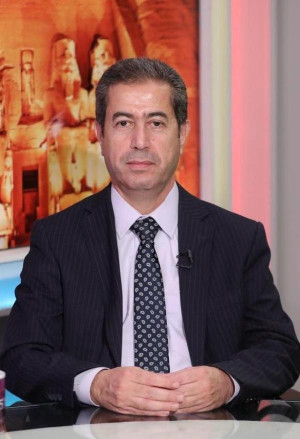
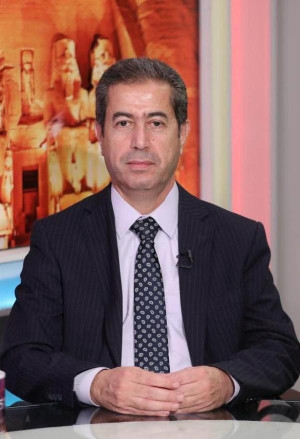
Dr: Theeb Qaralleh
Developments on the ground in the Gaza Strip these days indicate that the territory is now under near-total external siege from all directions by the forces of occupation — whose numbers are expected to reach 60,000 troops — as part of what is being called “Operation Gideon’s Chariots 2.”
Gaza is effectively trapped in a three-sided military vise, with a raging sea that is no less dangerous than the cruelty and deception of the occupying forces themselves — forces that kill, burn, and destroy without restraint, conscience, or fear of law.
Internally, Gaza’s population is also besieged by hunger, thirst, disease, pollution, and lawlessness. This means that the deaths of large numbers of civilians are virtually inevitable — in full view of the world. If not by Israeli fire, then by starvation and illness.
And even if some survive for months or a year or two — prolonging their suffering — the shadow of death still awaits them, as the basic conditions of life have disappeared. An Israeli “death sentence” has effectively been issued against Gaza’s people; only the timing of its execution remains uncertain.
Between Siege and Honor
The people of Gaza — bleeding for nearly two years in pain and loss, offering martyr after martyr in defense of their land, dignity, and cause — are living an unprecedented human epic of sacrifice.
They cannot be blamed for any decision they make. They have endured enough and given more than enough.
The great fear now is that Gaza’s tragedy will spread to the West Bank — though in a different form — amid accelerating Israeli killings, repression, settlement expansion, talk of annexation, forced displacement, and the dismantling of the Palestinian Authority.
What is unfolding in Gaza recalls defining moments in the histories of peoples and nations that faced overwhelming imbalances in power and resources. Some of those moments ended in victory, others in martyrdom, and others in what history calls “death with honor.”
Yet all became legendary — from Vietnam to Leningrad to Bosnia and Herzegovina — where the weak confronted the strong.
When Survival Is No Longer an Option
Who has not read of the legendary courage of Tariq ibn Ziyad, who burned his ships and told his army:
“The enemy is before you, and the sea is behind you.”
That moment produced a decisive victory and the opening of Al-Andalus — despite the enemy’s superior military power — becoming a timeless symbol of bravery and refusal to surrender.
Likewise, in the Battle of Yarmouk, when Muslim forces under Khalid ibn al-Walid were vastly outnumbered, Ikrimah ibn Abi Jahl famously called for fighters to pledge themselves to death.
Hundreds formed what became known as the “Battalion of Death,” breaking the Byzantine lines and shifting the battle’s course — a maneuver still studied in military academies today.
Beyond religious history, we read about the Samurai warriors of 19th-century Japan and saw their courage portrayed in the film The Last Samurai, where fighters chose a hopelessly unequal battle rather than surrender — embracing death with honor.
Israel’s Strategy of Forcing the Final Stand
Through its daily brutality, entrenched savagery, and pathological arrogance, Israel is forcing Gaza’s people — fighters and unarmed civilians alike — into confrontation and pushing them toward death with dignity.
Israel has left them no path to life, no avenue of survival.
Tel Aviv alone bears responsibility for both action and reaction — consequences whose future repercussions cannot be predicted and which may one day be portrayed in a film titled “The Last Gazan.”
Why Siege Produces Resistance, Not Surrender
Historical experience and psychological research confirm that total siege and barbaric warfare rarely produce submission. Instead, they generate hardened resolve and strengthen ideological motivation — driving people toward endurance rather than collapse.
Under collective religious and national identity, as in Gaza’s case, societies tend to fight to the end or live with dignity under any conditions.
Siege is not merely the closing of borders. It reshapes daily consciousness around the expectation of death at any moment.
When bread, water, and medicine become nearly impossible to obtain, the fear equation changes:
there is little left to lose, risk-taking increases, sacrifice overtakes survival.
Most people adapt — keeping the flame of resistance alive so that death does not become meaningless.
This is why lifting the siege would not only ease Gaza’s suffering, but would also reduce the drift toward “last stand” choices.
Otherwise, the equation ceases to be between life and death — and becomes between death with dignity and death without purpose.
Final Reflection
The lessons of conflict show one truth repeatedly:
The tighter the siege, the stronger the defiance.
When life itself is stripped away, human will can rise above fear — producing either greatness or tragedy, but rarely surrender.
Most read