
The ongoing war between the United States, Israel, and Iran is revealing growing reluctance among Washington’s allies to support the conflict, signaling the potential erosion of U.S. global influence. At the same time, moves to bypass the U.S. dollar in oil trade—amid China’s expanding role—could challenge the petrodollar system and reshape the global energy order.
Two key developments linked to the escalating war in West Asia may shape the United States’ long-term global appeal: how its allies respond to the conflict and whether the war diminishes the role of the U.S. dollar in regional oil transactions.
Cracks in the Alliance System
The reluctance of U.S. allies to be drawn into a war they did not choose is deeply concerning. Despite suffering collateral damage from Iranian attacks on U.S. military bases located on their territory, Washington’s Gulf allies have largely avoided direct involvement in the war waged by the United States and Israel against their neighbor Iran.
These states bore the brunt of Tehran’s response to joint U.S.–Israeli airstrikes. The wealthy Gulf monarchies witnessed disruptions in their petroleum exports, damage or threats to critical energy facilities, and disruptions to flights to and from their cities, affecting tourism and investor confidence.
Meanwhile, Washington’s security guarantees are increasingly being called into question. U.S. military bases have become fixed and vulnerable targets for Iran’s asymmetric arsenal of missiles, drones, and proxy networks. Arab partners have also been forced to use their own defensive stockpiles to intercept Iranian drones and projectiles passing through their airspace or territory on their way to strike U.S. targets, including American military infrastructure and diplomatic missions.
Thus, states that rely on the U.S. security umbrella now find themselves protecting not only their own interests but also the assets of the very power that claims to guarantee their security.
Although Iran’s conventional military forces have suffered significant losses, the capacity of the United States and Israel to intercept Iranian drones and missiles is increasingly strained. This situation compels regional allies—whose defensive supplies are also running low—to intensify their involvement in defensive operations.
Despite condemning Iranian strikes on their territories, several Gulf states have refused to allow Washington to use their territory or airspace to launch attacks against Iran. Their reluctance stems from fears that such cooperation would make them direct targets of Iranian retaliation.
Israel’s strike on the South Pars gas field and Iran’s attack on Qatar’s Ras Laffan complex—two of the world’s largest natural gas facilities—demonstrate the vulnerability of the region’s energy infrastructure to military hostilities, further destabilizing global energy markets.
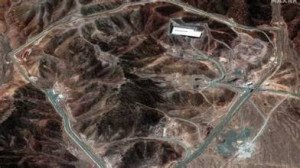
The assassination of foreign leaders and attacks on nuclear facilities and civilian targets—including major energy hubs—also violate international law and established norms, raising the risk of an unconstrained and escalating war. The attack on Iran’s Natanz nuclear facility and the strike near Israel’s Dimona town—close to the country’s undeclared nuclear site—have further escalated the conflict, raising the specter of a potential nuclear disaster.
Amid these developments, Arab allies find themselves in a highly precarious position. They were neither privy to how the war began nor certain about how it might end. Should they enter the conflict only for Washington to withdraw later, they could be left to deal with the aftermath of an open-ended war once the dust settles.
The Origins of the Petrodollar
In the 1970s, Riyadh and several members of the Organization of the Petroleum Exporting Countries (OPEC), including other Arab states, agreed to sell oil in U.S. dollars in exchange for security protection. This arrangement laid the foundation for what later became known as the petrodollar system, which emerged as a key pillar of America’s global ascendancy.
Arab countries subsequently became some of the largest purchasers of American arms and provided Washington with a substantial strategic footprint enabling it to project power across West Asia and beyond. Gulf sovereign wealth funds and private capital also became major investors in the U.S. economy. Several Arab militaries joined the U.S.-led multinational coalition during the First Gulf War to liberate Kuwait from Iraqi occupation.
Bahrain and the United Arab Emirates later signed the U.S.-brokered Abraham Accords, normalizing relations with Israel, Washington’s closest regional ally. Bahrain, Jordan, Kuwait, Qatar, Saudi Arabia, Turkey, and the UAE also joined President Donald Trump’s ambitious “Board of Peace” initiative despite concerns that it could challenge the role of the United Nations.
Yet these decades-long partnerships are now facing increasing strain due to insufficient consultation with allies, shifting war objectives, and the possibility of dragging them into a prolonged conflict.
Growing International Reluctance
This reluctance extends beyond West Asia. European countries such as Spain and Switzerland refused to allow American aircraft and ships to use their territory or airspace for operations against Iran, rejecting the U.S. justification for the war. Other NATO allies also resisted pressure to participate in the conflict.
Following a series of actions that alienated allies—such as referring to Canada as the “51st U.S. state,” demanding that Denmark cede Greenland, and bypassing European partners in negotiations with Moscow over ending the Russia–Ukraine war—Trump’s calls for allied assistance have largely fallen on deaf ears.
Similarly, allies in the Indo-Pacific region, including Australia and Japan, appear reluctant to deploy vessels to help reopen the Strait of Hormuz despite their heavy reliance on energy shipments passing through this critical chokepoint.
Some allies have set conditions before committing naval forces, including the establishment of a ceasefire and a clear international mandate. Meanwhile, countries such as Pakistan, India, Turkey, and China have negotiated safe passage arrangements for their commercial cargo. France and Italy may follow a similar approach.
Such developments could undermine U.S. efforts to mobilize allied naval escorts to break Tehran’s blockade of the Strait of Hormuz, through which roughly one-fifth of global oil shipments transit. This situation reflects less a victory for Iran than a signal of America’s waning global appeal.
The Challenge to the Petrodollar
Even more concerning for Washington is Iran’s proposal to allow oil tankers safe passage if transactions are denominated in Chinese yuan rather than U.S. dollars—a move that could undermine the petrodollar system.
Whether this initiative is meant as a symbolic rebuke to the United States or as a calculated strategy to secure Beijing’s support as the war enters its fourth week, its implications are far-reaching. China’s influence in West Asia is already expanding beyond economics, with Iran serving as a key partner.
China is the largest purchaser of Gulf oil and is becoming an increasingly significant investor in infrastructure, renewable energy, and technology across the region. Bahrain, Iran, Iraq, Israel, Jordan, Kuwait, Oman, Qatar, Saudi Arabia, Turkey, and the UAE are members of the Beijing-backed Asian Infrastructure Investment Bank (AIIB), while many of them have joined the Belt and Road Initiative.
The first China–Arab Summit was held in Riyadh in 2022, and Iran joined the Shanghai Cooperation Organization in 2023, with Bahrain, Qatar, Saudi Arabia, Turkey, and the UAE participating as dialogue partners.
China also mediated the 2023 rapprochement between Iran and Saudi Arabia, demonstrating its readiness to engage more deeply in the region’s complex geopolitics. Iran and the UAE became new members of the expanded BRICS grouping in 2024, while Saudi Arabia is considering joining. These developments signal a growing Chinese presence in West Asia, challenging the long-standing U.S. position in this energy-rich yet volatile region.
As concerns grow about the weaponization of financial interdependence, BRICS countries are discussing the creation of an alternative payment system designed to bypass the U.S. dollar. Major energy-consuming states have already begun experimenting with oil purchases in local currencies. India conducted its first crude oil transaction in rupees with the UAE in 2023, while China completed its first cross-border oil payment using the digital yuan in the same year.
The ongoing war may accelerate the trend toward de-dollarization, particularly if more actors follow suit. Nevertheless, U.S. President Donald Trump has threatened BRICS members with steep tariffs should they proceed in that direction and has even hinted at postponing a planned visit to Beijing while urging China to assist in reopening the Strait of Hormuz.
Although the United States has succeeded in curbing Chinese influence in certain regions such as Panama and Venezuela, it appears to be hoping for similar outcomes in Iran. However, Tehran has proven far more resilient, and hostilities have lasted longer than initially expected.
The decapitation model that proved effective in Caracas has failed in Tehran. Moreover, efforts to arm Kurdish groups have raised concerns about fueling sectarian conflict that could plunge the region into further instability, refugee flows, and power vacuums exploitable by extremist groups. The experiences of Iraq, Afghanistan, Libya, and Syria offer cautionary lessons.
A prolonged irregular war may ultimately play to Iran’s advantage. Meanwhile, Washington’s inability to fully protect its Arab partners and the lukewarm response of European and Asian allies to U.S. demands may signal a gradual decline in American leadership. Major energy importers striking deals with Iran to ensure the safe passage of their oil and gas supplies could prove decisive.
However, the erosion of the dollar’s dominance in global commodity trade—particularly in oil and gas—does not necessarily guarantee the rise of the “petroyuan.” Other countries may pursue transactions in their own local currencies. China itself may be cautious about appearing to actively push for such a transformation, even though it stands to benefit significantly from it. Rival powers have long criticized the privileged position of the dollar in the global financial system, and the escalating war may provide them with another opportunity to reduce reliance on the U.S. currency.
Most read



Read also