

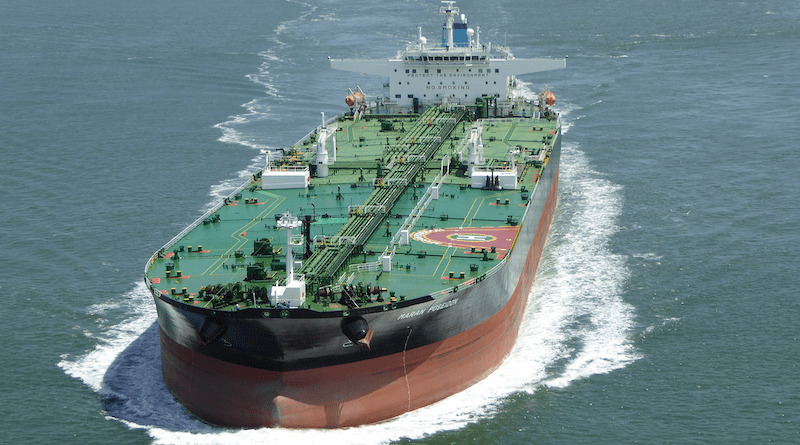
The global energy system has been undergoing rapid transformations in recent years, driven by rising concerns over climate change, accelerated technological innovation in clean energy, and mounting geopolitical tensions that have brought energy security back to the forefront of state priorities. In this context, critical minerals—such as lithium, cobalt, and rare earth elements—have emerged as key components of low-carbon energy systems, prompting some analysts to speak of a gradual shift from the “geography of oil” to the “geography of minerals.” However, the realities of global energy markets present a more complex picture, as oil demand continues to demonstrate notable resilience despite the growing global emphasis on critical minerals and clean energy technologies.
The continued centrality of oil in the global energy system is closely linked to several structural factors, foremost among them the concept of “path dependency.” This refers to the idea that energy systems evolve over long historical trajectories shaped by investments, infrastructure, and industrial patterns, making radical transitions to new systems both costly and difficult. The global energy infrastructure—including transportation networks, pipelines, refineries, and distribution systems—has been built over decades around hydrocarbons, granting oil a structural advantage that renders its complete replacement in the near term highly unlikely.
This reality is further reinforced by the fact that energy transitions typically reflect prevailing industrial and technological demands of a given historical period. While environmental concerns and long-term developmental goals are driving the transition toward cleaner energy sources, global economies remain heavily dependent on fossil fuels, particularly in sectors such as transportation, industry, and petrochemicals. In addition to their environmental impact, fossil fuels are also characterized by price volatility and strong integration into global markets, making supply security a central concern in national economic and strategic policymaking.
Recent geopolitical developments have underscored the enduring strategic importance of oil in global power dynamics. The Russia–Ukraine war in 2022 brought energy security back to the forefront of European and international policy agendas, as it triggered major disruptions in global energy markets and compelled European countries to seek alternative sources of supply. Similarly, tensions in the Gulf and West Asia, including threats to the Strait of Hormuz, highlight the vulnerability of the global energy system to geopolitical developments in key oil-producing regions.
This strategic importance is also reflected in international efforts to secure energy assets and maintain influence in major producing regions. Developments in regions such as Latin America, particularly in Venezuela, have been linked to attempts to safeguard the interests of major energy companies and reinforce geopolitical influence in areas central to global oil politics. This indicates that traditional hydrocarbon interests remain deeply embedded in international economic and strategic frameworks, despite the rising prominence of clean energy narratives.
From an economic perspective, statistical evidence points to a moderation in the growth of global oil demand rather than a collapse. Growth slowed to approximately 0.8 percent in 2024, down from 1.9 percent in 2023, reflecting structural shifts in energy consumption patterns and the gradual diversification of energy sources. However, these trends do not signal a sharp decline in oil’s role, but rather a gradual transformation in the global energy mix.
Data from the Organization of the Petroleum Exporting Countries (OPEC) further indicate that global oil demand continues to grow across most regions, particularly in emerging Asian economies such as China and India, as well as in West Asia, Africa, and Latin America. This reflects the strong correlation between energy demand and economic growth, as developing economies remain heavily reliant on oil to sustain their development trajectories.
On the supply side, global refining capacity has expanded significantly in recent years, driven by increased investments in countries such as China, India, and West Asia. These developments suggest that oil markets continue to exhibit dynamic investment and production patterns, reflecting sustained confidence in medium-term oil demand.
At the same time, the rapid advancement of clean energy technologies has led to a surge in demand for critical minerals used in batteries, magnets, and essential components of renewable energy infrastructure. Projections suggest that demand for these minerals could increase severalfold by 2040, driven by the expansion of electric vehicles, energy storage systems, solar power, and wind energy.
However, the relationship between oil and critical minerals should not be understood as a simple substitution of one energy source for another. Rather, it reflects a transitional phase characterized by overlap and accumulation. New energy systems do not immediately replace older ones but coexist with them over extended periods, resulting in what can be described as an “additive transition,” where multiple energy sources evolve simultaneously.
In this context, a range of technological, economic, and political factors—often referred to as “prime movers”—play a decisive role in shaping the trajectory of energy transitions. Oil retains significant advantages, including high energy density, reliability, ease of transport and storage, and compatibility with existing infrastructure, all of which reinforce its continued relevance. Moreover, entrenched global supply chains, large-scale capital investments, and the economic interests of states and corporations further underpin oil’s enduring position in the global economy.
Energy transitions are not driven solely by technological breakthroughs; they also require political will, regulatory and legal frameworks, and broad societal acceptance. The interaction of these factors often slows the pace of transition and results in uneven progress across regions and countries.
In light of these dynamics, the world is currently experiencing a complex and layered energy transition characterized by the coexistence of traditional and emerging energy sources. While demand for critical minerals is rising alongside the expansion of clean energy technologies, oil continues to occupy a central role in the global economy and in geopolitical calculations, particularly in key producing regions such as the Gulf, Russia, and South America.
Accordingly, the future of the global energy system is unlikely to be defined by a rapid and linear shift away from oil. Instead, it will be shaped by a gradual and multifaceted transition in which different energy systems overlap and interact. In this context, oil—given its unique properties and uneven geographical distribution—will remain a critical factor in global economic and geopolitical dynamics for the foreseeable future, even as the role of critical minerals and clean energy technologies continues to expand.
Most read



Read also