The New Cold War with Israel
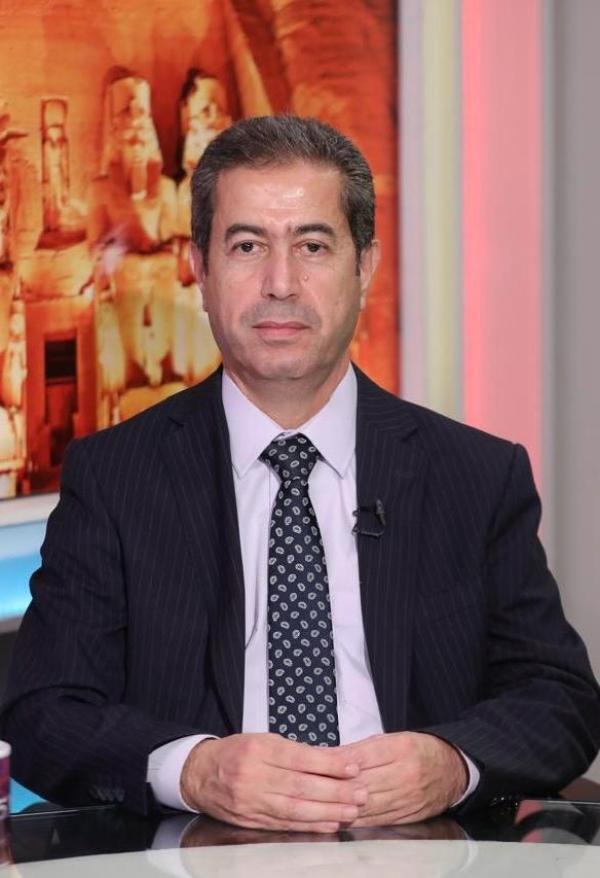
Dr: Theeb Qaralleh
Aggressive Israeli statements against Jordan in particular—and against several other Arab states more broadly—continue to multiply day after day. Their messages gradually seep into our ears, hearts, and minds through a systematic process. Officially, we condemn them in the strongest terms, as usual, while popular reactions oscillate between insults and occasional schadenfreude. Meanwhile, much of the world—states and international organizations alike—remains in a deep slumber, reflecting a disturbing state of indifference, as if acting as a “silent devil.”
From the standpoint of international law, statements that infringe upon the sovereignty of states—such as those issued by Israeli officials against Jordan and others—constitute precursors to war. They amount to indirect threats of force, incitement to conflict, and violations of the principle of non-intervention in internal affairs, particularly since they are issued by official government figures rather than irresponsible individuals on social media.
According to international relations theorists, persistent threatening rhetoric can pave the way for aggressive realities—military, security, or economic—thereby representing an early breach of legal norms. The renowned strategist Carl von Clausewitz famously argued that politics is the womb in which war grows, meaning that political actions—including rhetoric—lay the groundwork for conflict, define its objectives, guide its course, and bear responsibility for its consequences.
From this perspective, political statements targeting the sovereignty of states are not mere words; they are dangerous steps that signal hostile intentions and potentially serve as preludes to military confrontation. Political warfare begins with the use of words, images, maps, and ideas aimed at weakening the opponent’s will and altering behavior before resorting to force.
Even before we had finished analyzing international reactions to Netanyahu’s remarks about “Greater Israel”—which extended to Jordan and several Arab countries—we were confronted with the latest provocative statements by Israel’s Minister of Communications. The most striking aspect was the world’s near-total indifference to the gravity of Netanyahu’s rhetoric. Many influential states did not even comment, raising a critical question: Do those who ignore Tel Aviv’s words today intend to endorse its actions tomorrow? Or is what seems shocking to us merely familiar and accepted by others? Has Israel’s dominance—backed by Washington—compelled these states to swallow their tongues and remain silent, unable even to issue statements of condemnation or concern?
Frankly, it is unclear whether Arab foreign ministries in the countries targeted by Netanyahu’s remarks have thoroughly assessed international responses, analyzed their implications, and determined future courses of action. Have these ministries at least engaged with ambassadors of influential states to underscore the seriousness of these threats and request official positions? After all, we routinely express solidarity and condemnation when threats are made against other countries—even by terrorist cells rather than recognized governments. So why this unsettling silence when the statements come from the prime minister of a state that has enjoyed broad international support for seventy years?
For the record, thirty-one Arab and Islamic countries issued a joint statement condemning Netanyahu’s remarks as a “grave and blatant violation of international law.” This raises an obvious question: where are the remaining members of the fifty-seven-state Islamic world?
The joint statement was reinforced by endorsements from the Secretary-General of the Arab League, the Secretary-General of the Organization of Islamic Cooperation, and the Secretary-General of the Gulf Cooperation Council. Additionally, six countries—Jordan, Egypt, Saudi Arabia, Qatar, Iraq, and Lebanon—issued individual condemnations.
This prompts another pressing question: Did the weakness of our response and the world’s indifference encourage the Israeli Minister of Communications to issue further inflammatory statements? Will our failure to devise new strategies generate even more provocative Israeli behavior? Should we begin raising the level of response now—starting domestically with a carefully managed mobilization of public and elite opinion, rather than reactive emotionalism?
Internationally, we must seize the upcoming United Nations General Assembly meetings in New York to launch a coordinated Arab diplomatic and media campaign that reaches the global arena in all its languages and institutions. Our message must be delivered forcefully and clearly—to Israel and to the world. This confrontation should serve as a live rehearsal for what may lie ahead, before Israel surprises us—after the Gaza file closes—with unforeseen actions in the West Bank. It is also essential to demonstrate to our peoples and allies that every possible effort was made before reaching the conclusion that attempting to inflate the punctured balloon of the international community is ultimately futile.
Most read