The Implications of Al-Sharaa’s Visit to Washington
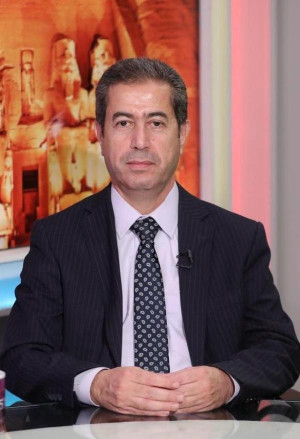
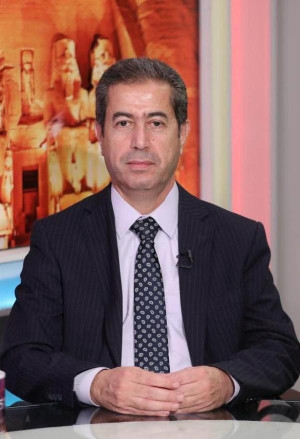
Dr: Theeb Qaralleh
A week from now, President Ahmad Al-Sharaa is expected to arrive in Washington, D.C. on a significant and pivotal visit—the first by a Syrian president to the capital of “Uncle Sam,” which, whether one likes it or not, still holds the primary keys of global decision-making in a world where true multipolarity remains absent.
This unprecedented visit is likely to lay the groundwork for a new phase in bilateral relations and to reposition Damascus within the American strategic orbit after more than five decades of alignment with the now-defunct Eastern bloc—whose revival has begun to take shape through frameworks such as BRICS and the geopolitical sphere of the Shanghai Cooperation Organisation.
The visit’s agenda appears to rest on two pillars. The first—publicly declared—will likely include the signing of agreements such as Syria’s accession to the international coalition against Islamic State, as well as discussions on the details of a security arrangement with Israel. The second pillar—confidential in nature—will involve understandings known only to Trump, Al-Sharaa, and their closest inner circles.
Expectations suggest that these private understandings may center on the role Damascus could play regionally, potentially including the utilization of Syria’s reservoir of foreign fighters and jihadist formations in any future confrontation—whether against Hezbollah in Lebanon, or against the Popular Mobilization Forces and allied factions in Iraq, should circumstances require.
Al-Sharaa’s political future as Syria’s president after the transitional period will also be part of these arrangements. Thus far, American support for him has been conditional on two key factors: first, safeguarding U.S. strategic interests and Israel’s security; and second, abandoning the path of ideological jihadism and political Islamization in favor of inclusive governance that integrates Syria’s diverse social components and consolidates national stability.
Notably, despite clear American backing to date, influential circles in Washington and Tel Aviv continue to view Al-Sharaa with skepticism. They question whether his ideological transformation is genuine or whether he is merely a highly pragmatic politician executing a sophisticated form of strategic deception. Many fear that granting him full international legitimacy could set a dangerous precedent—encouraging other extremist movements to seize power through violence and later seek global recognition.
Al-Sharaa’s post-transition future appears to hinge on two main scenarios.
The first envisions his successful international rehabilitation, accompanied by improved security and economic conditions that allow for genuinely competitive presidential elections under international supervision—elections he could win on the basis of real popular support among Syrians who see him as a victorious liberator, though others view him as a modified version of the former exclusionary Assad system.
The second scenario foresees a regional-international consensus forming against his continued rule after the transitional phase—particularly if he proves unwilling to reform, continues authoritarian practices, or fails to curb hardline elements within his system. In such a case, Washington and allied capitals may quietly push him aside and support an alternative figure—either a moderate Sunni leader or a personality with international standing and broad opposition backing.
A key question circulating in policy circles is whether Al-Sharaa would acquiesce if the United States and its partners decided to abandon him. Most assessments suggest he would not. A seasoned and determined fighter, removing him would come at high cost. He retains substantial internal leverage through a well-organized armed structure, as well as external alliances capable of obstructing any political transition that excludes him and his movement.
Nearly a year into his presidency, opinions about Al-Sharaa remain sharply divided. Some regard him as a historic opportunity to resolve Syria’s complex crisis, while others see him as a latent threat that may erupt in the future. What unfolds in the coming months—beginning with the outcomes of the Washington visit—will determine which of these interpretations proves closer to reality.
For now, Syria stands at a perilous crossroads: either it completes its transformation toward a stable, inclusive state under leadership capable of adaptation and evolution, or it slides once more into a power struggle should any actor feel destined to lose the political equation. In a region defined by volatility and surprise, no outcome remains guaranteed.
Most read