The European Union… Difference Is Strength
The European Union is a political entity born from the womb of an era unlike any that preceded it. Europe is a continent with a distinctive geography and a human composition that has moved throughout history and across geography, driven at times by gentle winds and at others by violent and bloody ones. Religious conflicts, wars of expansion, and empires unconstrained by borders and never satisfied with the wealth of those near or far have all shaped its history.
On this continent, with its distinctive character among the world’s continents, minds began to awaken early, giving rise to philosophy and science across its lands and through the centuries. It was there that the spark of reason was struck, and its light never ceased to shine throughout the ages. Meanwhile, peoples in other continents lived in darkness and became accustomed to it, enduring a life of profound ignorance, as their minds hardened and human capabilities weakened.
Europe paid a heavy price for its rise and progress. Clergymen, philosophers, and intellectuals rebelled against the ecclesiastical priesthood that constrained reason, thought, and creativity. Many of them paid with their lives for the Renaissance and progress, and bridges toward a new human age were built upon their bodies.
Europe’s peoples entered the world of industry, marking the beginning of their colonial era, during which they seized the territories of other countries whose agricultural and mineral resources were essential to industrialization. Industry became an additional source of human power. Yet wars among the countries of the continent itself never disappeared for long before erupting again and again.
The First and Second World Wars were the terrifying alarm bells that awakened Europe and set it on a path toward a new era. European intellectual and political voices began to proclaim: either unity or war.
When reason serves as humanity’s guide through the complexities of life—with all its greed and fear—realism prevails. Differences become a source of strength, while mutual concessions and compromises become a means of consolidating peace, cooperation, and coexistence in a world aspiring to achieve the joy of life.
After the Second World War, the United States emerged as a financial, military, and political power. On Europe’s western flank, meanwhile, a communist ideological power emerged, led by the Soviet Union, with its formidable military strength, vast geographical expanse, and expanding global influence.
The European political leaders who had led their countries through the Second World War against the Nazi-Fascist Axis came to realize that their only safeguard lay in unity. The journey toward European integration began in 1951 with the establishment of the European Coal and Steel Community. Cooperation among its members then expanded into the economic sphere through the creation of the European Common Market, based on shared principles: democracy, free trade, and economic cooperation. Communist and dictatorial states were excluded, and Greece, Portugal, and Spain were not permitted to join until their respective dictatorial regimes had fallen.
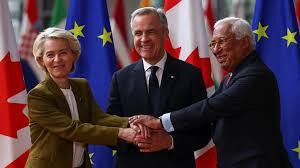
In 1993, following the signing of the Maastricht Treaty and the implementation of the Schengen Agreement, the European Union came into being. Today, it comprises 27 countries. It is a confederal entity with a government, parliament, federal central bank, and a single currency, the euro, while each member state retains its own government, national parliament, central bank, and national army.
It took 40 years to build this monumental entity, through reason, realism, transparency, and the political awareness of its peoples. It was not built through slogans of “European nationalism,” mobilizing speeches by leaders, or authoritarian violence.
In recent days, tens of thousands of Moroccans moved toward a part of their homeland under Spanish occupation, known as Ceuta. This prompted right-wing political voices in some European Union countries to warn against the possibility of these migrants moving onward into other EU countries by taking advantage of the freedom of movement guaranteed under the Schengen Agreement.
Among the loudest voices was that of Italian Prime Minister Giorgia Meloni, who called for a review of Italy’s relationship with Spain regarding the Schengen Agreement. Some believed that this development threatened the very existence of the European Union.
The phenomenon of irregular migration, through which thousands of people move from Africa to Europe via Spain, Italy, and Greece, is a source of concern across Europe. Yet there are facts that cannot be ignored. Europe needs foreign labor because of declining birth rates in most of its countries. Italy, which criticized what it described as Spain’s lenient approach toward irregular migration, received 500,000 migrants over the past five years—twice the number received by Spain, which took in 220,000.
In Italian cities today, we find that the majority of workers at gas stations, in street cleaning, cafés, restaurants, and other services are Asians and Africans. Some have even become part of the police system.
Those who believe that a dispute between two or more European leaders can destroy what their predecessors built over many decades—and what their peoples endorsed through transparent referendums—fail to understand the strength of what political minds can build and the awareness of educated peoples.
The four freedoms established by the European Union for its citizens—freedom of movement, residence, employment, and the movement of goods among its member states—have transformed this monumental entity into a broad and resilient space that is not easily weakened.
The enduring truth is that Europe’s political system places its disagreements on the negotiating table, where every idea can be put forward, ultimately leading to an understanding founded on mutual compromises and concessions. In this way, difference becomes a source of strength that serves the interests of peoples.
In other countries, wars have erupted because of a football match. Elsewhere, diplomatic relations have been severed because of an article in a newspaper, a song broadcast on the radio, or a speech delivered by a political leader.
Backwardness is a plague, and ignorance is the enemy of life and victory.
During the First World War, the Ottoman Sultan summoned members of the Chamber of Deputies and told them: “Send the religious scholars to recite the hadiths of Sahih al-Bukhari aboard the warships.”
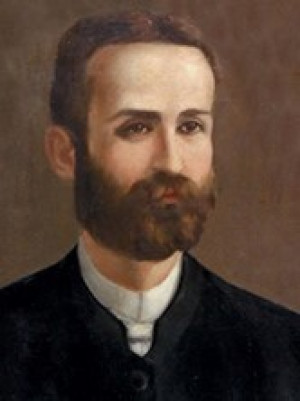
The Iraqi poet Ma'ruf al-Rusafi, who was a member of the chamber, replied: “Your Majesty, warships move by steam, not by Bukhari.”
The Sultan expelled him.
But defeat came nonetheless.
Most read