
Recent developments in the Middle East indicate a significant shift in the nature of military and technological alliances, particularly following Ukrainian President Volodymyr Zelensky’s announcement that Ukraine has sent a team of drone experts along with interceptor drones to help protect U.S. military bases in Jordan. Although official details remain limited, the move carries political and strategic implications that go beyond its immediate military dimension, revealing an increasing overlap between the war in Ukraine and the escalating tensions in the Gulf region.
Since the outbreak of the Russia–Ukraine war in 2022, Kyiv has relied heavily on Western military support, particularly from the United States. However, the prolonged conflict has pushed Ukraine to develop new technological capabilities, especially in the field of low-cost and effective drones designed to intercept hostile unmanned aerial vehicles.
In this sense, sending Ukrainian experts to the Middle East reflects Ukraine’s transition from being merely a recipient of military assistance to becoming a country capable of exporting combat expertise, particularly in asymmetric warfare and low-cost military technology. It also offers Kyiv an opportunity to strengthen its position as a security partner for the United States and its allies in other regions of the world.
This step cannot be understood in isolation from Kyiv’s strategic calculations. Zelensky has clearly indicated that Ukraine is seeking, in return, to obtain U.S.-made air defense missiles to strengthen its capabilities against Russian attacks.
Here, the logic of a “security exchange” emerges: Ukraine offers its expertise in countering Iranian-made drones—used extensively by Russia in the war—in exchange for enhanced defensive capabilities. In other words, Kyiv is attempting to turn its battlefield experience into a political lever to secure additional military support from the West.
Iran and the Regional Drone War
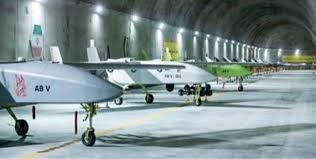
Meanwhile, the Gulf region is witnessing an unprecedented escalation, with Iranian attacks targeting oil and civilian facilities across several Gulf countries, including Bahrain, Saudi Arabia, the United Arab Emirates, Kuwait, and Qatar. These attacks reflect a growing reliance on drones and low-cost missile systems as instruments of military and political pressure.
Strikes on oil infrastructure—such as the Al-Maamir oil complex in Bahrain or the Shaybah oil field in Saudi Arabia—do not merely target infrastructure but also send a strategic message concerning global energy security. Continued attacks on such facilities threaten the stability of global oil markets, particularly amid ongoing tensions surrounding the Strait of Hormuz.
The Internationalization of a Regional Conflict
The involvement of Ukrainian experts in the Middle East security equation also reflects a growing trend toward the internationalization of regional conflicts. The confrontation between Iran and the Gulf states is no longer confined to regional actors or to the traditional U.S. military presence; it increasingly involves other international players with specialized combat expertise.
Moreover, the similarities in Iran’s use of drones in both the Russia–Ukraine war and regional conflicts provide Kyiv with practical knowledge about these weapons and how to counter them. This experience could position Ukraine as an important technical partner in developing new defensive systems against such threats.
Potential Implications for Regional Balance
If this cooperation develops further, it could open the door to a new pattern of military partnerships in the Middle East—one based on the exchange of technological and operational expertise rather than relying solely on traditional arms deals. It may also strengthen defense cooperation between the United States and its regional allies on one hand, and Ukraine on the other.
However, Iran may interpret this development as an additional escalation and a new form of external involvement in the conflict, potentially prompting it to expand the use of unconventional warfare tools, particularly drones.
in sum, these developments suggest that drone warfare is no longer merely a tactical tool on the battlefield but has become a central factor in reshaping military and political alliances at the international level. As Ukraine’s combat experience extends into the Middle East, the lines of conflict between regional and global powers appear increasingly intertwined—potentially ushering in a new phase of strategic competition driven by low-cost yet highly effective military technologies.
Most read



Read also