
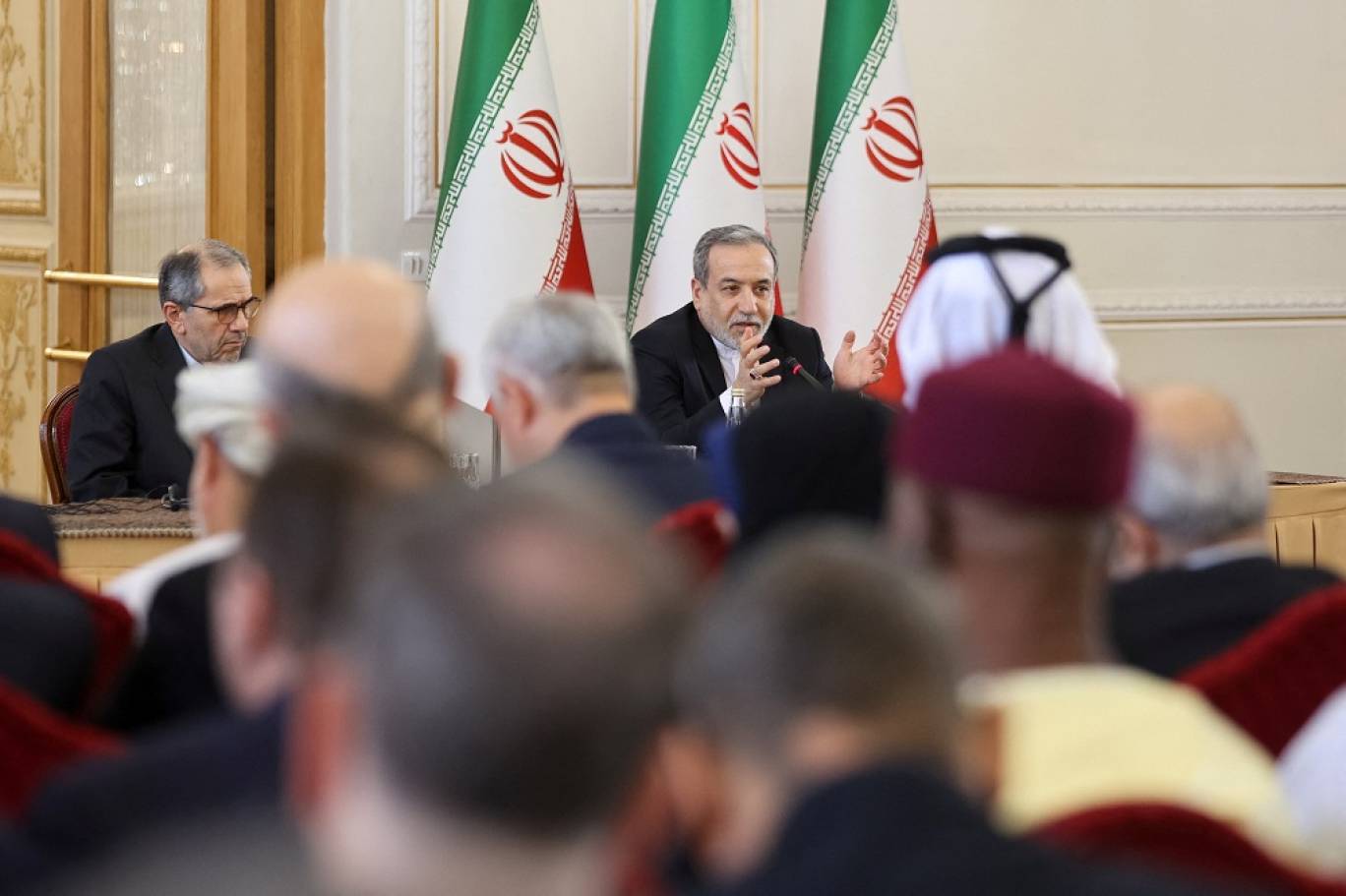
At a critical political moment—where internal crises intersect with mounting external pressures—Tehran has chosen to reshuffle the cards through a sudden move that has alarmed Western capitals and unsettled the fragile balance of de-escalation in the region. Iran’s announcement on October 5, 2025, that it was canceling the Cairo Agreement with the International Atomic Energy Agency (IAEA) came at an extremely sensitive time. The decision coincided with the reimposition of European sanctions on Iran and rising regional tensions linked to energy, nuclear, and maritime security issues.
These developments place Iran before a new test of its long-practiced “brinkmanship” strategy: to what extent can it transform escalation into a negotiating tool? And does it still possess the ability to maneuver without paying a heavy domestic price?
Tehran Between Escalation and Control
Through its latest announcement, Iran appears to be attempting to recalibrate the diplomatic tempo in a way that serves its strategic interests. The decision was not merely a reaction to European sanctions, but rather a calculated step aimed at testing international reactions and opening new channels for negotiations from a position of strength.
The Iranian equation is based on the principle of “controlled escalation”—applying pressure without sliding into direct confrontation. This approach provides Tehran with considerable room for maneuver in dealing with its adversaries.
The cancellation of the Cairo Agreement can therefore be understood as part of a broader strategy aimed at transforming every crisis into a tool of political and economic leverage. It also seeks to redefine Iran’s relationship with the International Atomic Energy Agency, placing the nuclear issue once again at the center of bargaining with the West.
This move reflects a carefully designed approach combining public diplomacy with behind-the-scenes negotiations, grounded in Tehran’s confidence in its ability to withstand external pressure.
The Regional Equation and Western Concerns
Tehran is well aware that its opponents in Europe and the United States lack a unified strategy toward Iran—an imbalance that offers Tehran greater space for political maneuvering.
European intelligence reports indicate growing concern about Iran’s capacity to manage simultaneous crises without collapsing, whether domestically or regionally. This concern has pushed some Western capitals to pursue quiet backchannel communications aimed at de-escalation, even as Tehran continues to send mixed signals—combining defiance with conditional openness.
At the same time, Iran’s parallel diplomatic and economic engagement with Russia, China, and Central Asian states suggests that Tehran is working to build an economic and political safety net that reduces the impact of sanctions while providing additional leverage in energy, trade, and maritime security affairs.
Conclusion and Assessment
What is unfolding today is not an isolated escalation but rather a comprehensive diplomatic test of the Islamic Republic’s ability to convert pressure into influence. Each move appears carefully calculated within a broader strategy of “managing parallel crises,” in which sanctions, domestic tensions, and external alliances are simultaneously used as negotiating instruments.
Based on current indicators, Iran seems determined to consolidate its position as a central regional actor that cannot be ignored—one capable of reshaping negotiating dynamics without engaging in a full-scale confrontation. Yet this path is fraught with risks: any miscalculation in escalation could transform a maneuver into a gamble, exposing Tehran to pressures it may struggle to contain.
The current situation therefore reveals a new phase of “Iranian diplomacy under pressure.” In this phase, Tehran is not merely seeking to survive sanctions, but to reshape the rules of the regional and international game in a way that secures its role as a key actor in the balance of power.
Most read



Read also