Songs That Stir the Sighs of Political Leaders
A sigh is a secret that resides in a special place within the heart. People sigh in moments of sorrow, pleasure, and yearning, and every sigh rises or falls in intensity according to the occasion and the strength of the emotion.
“Ah, to meet you on that very first day, and to see your gaze upon me with your eyes”—a song written by Bayram al-Tunisi, composed by Zakariya Ahmad, and sung by Umm Kulthum. The three shared a single sigh, yet that sigh became a tree with branches, leaves, and a colorful outpouring of emotions.
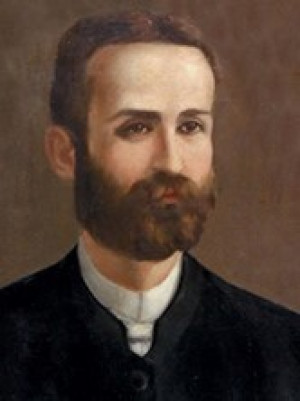
Bayram al-Tunisi was a poet with a unique social, linguistic, and cultural background. He fashioned his own poetic and lyrical vocabulary, and his words exuded fragrance, melancholy, passion, and longing. The sigh he wrote was transformed by Zakariya Ahmad’s composition into an emotional supplication, flowing through the heart like an evening breeze over a lover whose pulse paints the color of the eyes that have captivated him.
And when Bayram’s sigh, carried by Zakariya Ahmad’s melody, became a voice fluttering through the consciousness of lovers, it embraced love, yearning, and hope in their eyes, souls, and hearts. Zakariya Ahmad, the master of the Saba maqam, shaped his melodies in a way that transformed melancholy into sighs touching everything within the soul where lost emotions reside.
Ah, how much a sigh can carry—storms and tremors, speaking in silence and acting in stillness.
The great political leaders of our Arab countries have their own relationship with this natural human act of emotional expression. They do not lift the veil covering the feelings of sorrow, distress, and even joy that grow, expand, and take shape within each of them.
Singing, in all its forms, cannot be stopped by the fortresses of power or the gates of security from reaching the hearts of kings, presidents, and ministers. Yet those at the highest levels of power have secret curtains that conceal public expressions of whatever emotions stir within them.
The late Egyptian President Gamal Abdel Nasser plunged into a sea of sorrow and depression after the June 1967 defeat. He came to see everything in the world as storms carrying nothing but thick black ashes. How, then, could he listen to Umm Kulthum, Mohamed Abdel Wahab, Farid al-Atrash, or others?
In a Cairo evening gathering that brought together the poet Abdel Rahman al-Abnoudi, composer Baligh Hamdi, and singer Abdel Halim Hafez after the June defeat, Abdel Halim told them: “We must give the people something. Despite the pain of defeat, we cannot remain silent.”
Al-Abnoudi replied: “What can we say? What can we do? What can we sing when everyone is living in the darkness of defeat?”
Abdel Halim Hafez answered him: “You, Abdel Rahman, can speak to everyone at any time.”
Al-Abnoudi entered a side room in Abdel Halim Hafez’s home, carrying a notebook and a pen. Less than an hour later, he emerged with a poem titled “The Day Has Passed.”
Baligh Hamdi composed the melody, with Abdel Halim and al-Abnoudi joining him in the journey of creating the song.
The grieving President Gamal Abdel Nasser became deeply attached to the song, and it became a constant companion. He ordered that it be broadcast repeatedly on radio and television.
The song was the sigh that rose from the chest of a wounded leader, but it was also a burst of hope that touched the restrained and deeply burdened Egyptian soul.
The late King of Libya, Muhammad Idris al-Senussi, was a deeply spiritual and ascetic man who knew little of life’s pleasures in any of their forms or colors. He knew little about singing either. His exposure to music was largely limited to the traditional Libyan Malouf and Andalusian Muwashshahat, because they carried words and melodies imbued with the spirit of religious praise and Sufi devotion.
Before the age of television, the radio was the device around which Libyan families gathered. At 9:30 p.m., the main evening news bulletin was broadcast. Fifteen minutes before the bulletin began, Andalusian Muwashshahat and Libyan Malouf were played because the king would be waiting for the daily news broadcast.
He would enjoy listening to the Muwashshahat as he waited for the news. That was his evening sigh—from himself and back to himself, in the quiet of his solitude.
In Iraq, there is a distinctive style of melody and vocal performance known as Iraqi Maqam, characterized by deeply expressive melancholy. It moves from one sigh to another, each higher and more intense than the last. Among its most prominent singers were Hussein Al-Athami, Mohammed Al-Qubanchi, Yusuf Omar, and Rashid Al-Qundarji.
Senior Iraqi politicians during both the monarchy and republican eras celebrated Iraqi Maqam singers, applauding them and rewarding them generously.
The sighs, accompanied by the elaborate vocal embellishments of the Maqam and overflowing with melancholy, provided the Iraqi politician burdened by worries with a small window through which he could commune with himself.
The late Tunisian President Habib Bourguiba would sit in the evening listening to the songs of the great Tunisian singer Saliha.
Her voice carried the historic sighs of Tunisia, and with them the leader who carried the weight of an entire nation on his shoulders would spend hours freeing himself from the storms and burdens of politics.
Ah, the sigh—how much intimate communion with the self it can contain.
And bitter sighs, more often than not, possess a sweetness all their own.
Most read