

How can an air defense system be neutralized without being bombed? And how can the absence of visible military action itself become a sign of strategic superiority? These questions open the door to understanding a fundamental transformation in the nature of modern conflict.
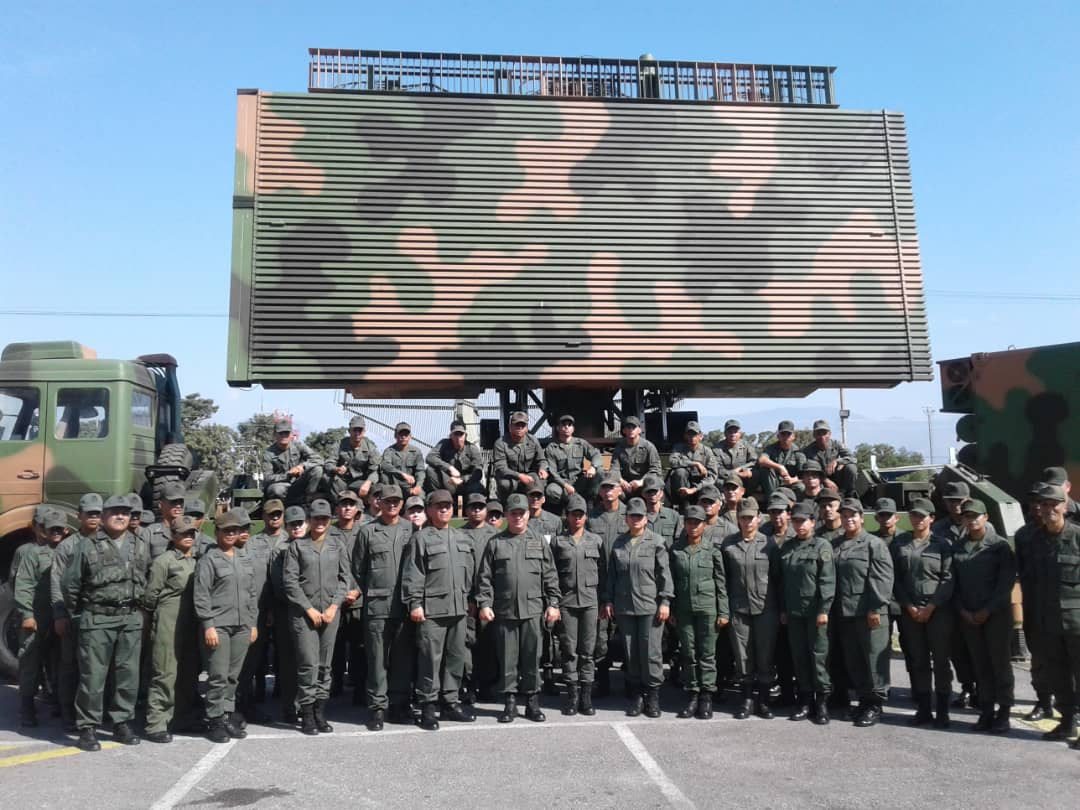
The lack of any meaningful response from Venezuela’s air defense systems during the American operation cannot be dismissed as a technical malfunction or a temporary military failure. Rather, it most likely reflects a new mode of warfare — one in which victory is no longer achieved by destroying an adversary’s military assets, but by disabling its decision-making capacity, disrupting command-and-control structures, and preemptively paralyzing escalation.
This shift signals a relocation of warfare’s center of gravity from weapons and platforms to the decision system itself. Superiority is no longer measured by targets destroyed, but by control over the informational and cognitive environment in which decisions are made. This explains the growing integration of command, control, intelligence, and reconnaissance tools with multi-domain warfare and cognitive warfare into a unified strategic framework now often described as decision-centric warfare.
In this model, victory does not stem from direct confrontation or force projection, but from creating conditions in which any counter-decision by the adversary becomes either operationally impossible, politically irrational, or prohibitively costly. Absence of engagement thus becomes a marker of success — not a sign of weakness or hesitation.
Strategic Paralysis as a New Form of Dominance
From this perspective, the arrest of Venezuelan President Nicolás Maduro in early January 2026 can be understood as the culmination of a coordinated political–security campaign preceded by a high-intensity American information operation. The campaign was officially framed as a revival of the Monroe Doctrine under what was termed the “Trump Addendum,” aimed at reasserting US strategic primacy in the Western Hemisphere in response to expanding Russian and Chinese influence.
This operation demonstrates how classical doctrines are no longer merely historical references but are being reengineered within modern strategic architectures that integrate technical and human intelligence, covert operations, and multi-agency coordination — including civilian enforcement bodies such as the US Drug Enforcement Administration.
Here, military force no longer serves as the primary political instrument, but rather as a last-resort guarantor of a balance of power already settled at the level of decision dominance.
From Firepower to Decision Control
Rather than representing traditional regime change or a simple show of force, the operation exemplifies a far more sophisticated strategy: systematically undermining an adversary’s sovereignty over its own decision-making process.
The Venezuelan case thus reflects a broader transformation in twenty-first-century warfare — where conflict is no longer a symmetrical clash of forces, but an asymmetric competition between decision architectures themselves.
From Information Superiority to Systemic Dominance
War has never been purely material. Sun Tzu captured this long ago when he argued that supreme excellence lies in breaking the enemy’s resistance without fighting. What distinguishes contemporary conflict is that this principle now has a fully technological and systemic expression, far beyond traditional battlefield logic.
Modern military operations no longer follow a linear chain of detection, engagement, and destruction. Instead, they rely on complex architectures in which intelligence collection, fusion, and exploitation constitute the true center of gravity.
Command, control, communications, intelligence, surveillance, and reconnaissance (C4ISR) systems have ceased to be auxiliary tools; they now shape the entire operational environment and determine what actions are possible.
Accordingly, military superiority is no longer defined by platform numbers or firepower volume, but by mastery of information flows, cross-domain synchronization, and the imposition of a strategic tempo the adversary cannot process or match.
Previous campaigns — such as Kosovo (1999), Iraq (2003), and Libya (2011) — illustrated this trajectory, where collapse of command structures often preceded large-scale physical destruction, sometimes rendering it almost unnecessary.
From Controlling Terrain to Controlling Decision Nodes
This evolution echoes the strategic thinking of Antoine-Henri Jomini, who emphasized decisive points as the core of warfare. Today, however, those decisive points are no longer primarily geographic or kinetic — they are informational and cognitive.
The battlespace has expanded beyond land, air, and sea into the realm of perception, coordination, and timely decision-making. Disabling the decision system itself — not destroying physical assets — has become the supreme strategic objective.
The New Hierarchy of Military Superiority
Modern conflicts reveal a new functional hierarchy of power:
At the base lies C4ISR — making the strategic environment legible and exploitable.
Above it stands multi-domain warfare — integrating land, sea, air, space, cyber, and electromagnetic effects into synchronized action.
At the apex sits cognitive warfare — targeting perception, judgment, and mental frameworks of leadership.
Here the insight of Carl von Clausewitz regarding the moral dimension of war becomes more relevant than ever.
Disruption, deception, information saturation, and cyber–electromagnetic operations aim not necessarily to blind the adversary completely, but to generate sustained ambiguity and doubt — leading ultimately to hesitation, paralysis, and failure to act at decisive moments.
Conclusion
What we are witnessing today is not merely a tactical evolution in warfare tools, but a structural transformation in the very meaning of war itself.
Conflict is no longer primarily a clash of armies, but a struggle between systems of thought, decision architectures, and capacities for perception, coordination, and control.
Victory increasingly means depriving the adversary of sovereign decision-making power — before force even becomes an option.
Most read



Read also