Massad Boulos: From the Business World to America’s Deal-Driven Diplomacy in Africa

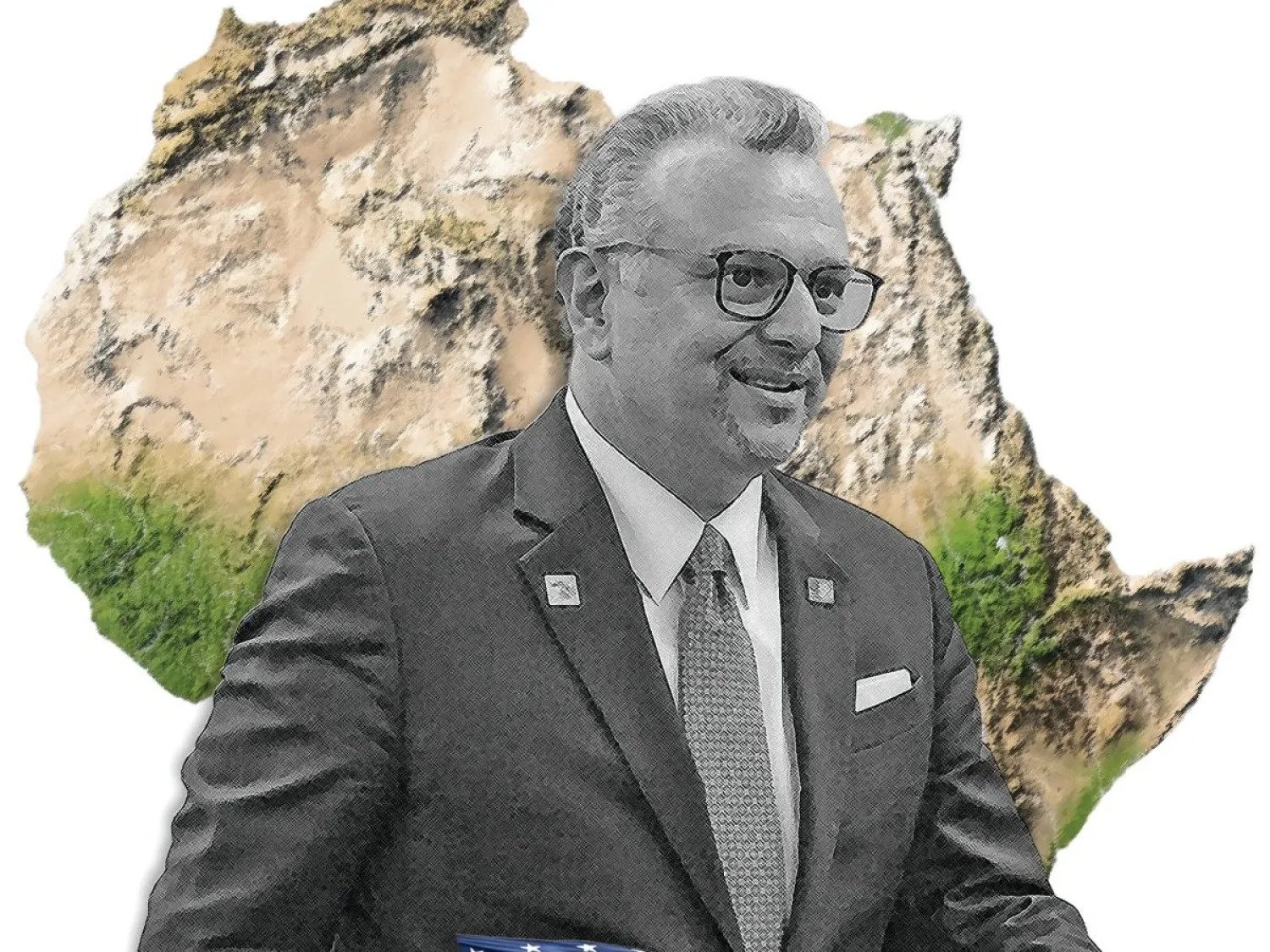
From courting Arab American voters to mediating conflicts in Sudan, Libya, and the Democratic Republic of the Congo, Massad Boulos’s rise within Washington’s decision-making circles reflects an unconventional model of American diplomacy, in which family ties, economic interests, and political and strategic calculations intersect. Yet the ability to establish direct channels of communication with world leaders does not necessarily translate into sustainable settlements, particularly amid the complexities of African conflicts and the competing interests of their stakeholders.
Until recently, Massad Boulos, a Lebanese American businessman, was not a prominent figure in international diplomatic circles. He had spent much of his professional life moving between the United States, Lebanon, and Nigeria, away from Washington’s principal centers of policymaking. However, his son Michael’s marriage to Tiffany Trump, daughter of US President Donald Trump, in 2022 brought him into the president’s extended family circle. His political profile subsequently expanded during the 2024 presidential election campaign, eventually leading to advisory responsibilities involving Arab and African affairs.
Since then, Boulos has become associated with several complex political and security challenges, ranging from efforts to end the war in Sudan to attempts to contain the conflict in eastern Democratic Republic of the Congo, as well as negotiations aimed at unifying Libya’s divided institutions. His trajectory raises important questions about the role a businessman with extensive family and political connections can play in managing crises whose underlying causes extend beyond immediate economic considerations and involve intricate domestic, regional, and international power dynamics.
From Lebanese Roots to African Business Networks
Massad Fares Boulos was born in 1971 into a Greek Orthodox Christian family from Kfarakka, in the Koura district of northern Lebanon. Politics was already part of his family environment. His father served as the town’s mayor, while other family members were involved in Lebanese parliamentary and political life, most notably Philippe Boulos, who held parliamentary and ministerial positions.
This environment exposed Boulos at an early age to the relationship between social influence, political affiliations, and local power balances. During his adolescence, he moved to Texas, where he studied business administration at the University of Houston–Downtown before obtaining a law degree from Texas Southern University. He subsequently became a US citizen.
During his early years in the United States, Boulos developed an interest in Republican politics and volunteered for George W. Bush’s 1994 campaign for governor of Texas. Nevertheless, his political activities remained relatively limited compared with his business career, which later became closely associated with Africa.
Nigeria: Wealth, Relationships, and Business Interests
After completing his studies, Boulos moved to Nigeria to participate in his family’s business activities. He assumed an executive position at SCOA Nigeria, a group operating in vehicle distribution and assembly across West Africa. His years in Nigeria were instrumental in developing his commercial relationships and familiarizing him with the African business environment and its economic networks. This experience may help explain the Trump administration’s subsequent interest in involving him in African affairs.
In Nigeria, Boulos married Sarah Fadoul, the daughter of a Lebanese businessman with investments across Africa. The couple have four children. Their family and commercial connections helped expand his network, but they also became the subject of media scrutiny concerning his personal wealth and his precise position within companies associated with his wife’s family.
In a report published in late 2024, The New York Times raised questions about Boulos’s wealth and his direct stake in SCOA Nigeria, indicating that control of the company rested with his father-in-law. Trump’s team, by contrast, defended his professional record, emphasizing his extensive executive experience in family businesses in West Africa. Boulos also clarified that his reference to a valuation exceeding $1 billion concerned his wife’s family business group rather than the company he managed alone.
Media descriptions of Boulos as a prominent lawyer also prompted questions about his professional status in Texas, following reports that questioned whether he held a license to practice law in the state. In this context, it is important to distinguish between obtaining an academic law degree and securing the professional authorization required to practice law.
Despite living in the United States and working in Nigeria, Boulos maintained his ties to Lebanon, regularly visiting Kfarakka and remaining connected to his family and social environment. He also developed relationships with Lebanese political actors across opposing political camps, which some observers interpreted as evidence of his ability to engage across traditional divisions. Nevertheless, an extensive personal network alone cannot fully explain political influence unless it is accompanied by the institutional capacity to translate contacts into measurable outcomes.
Marriage and Entry into America’s Political Inner Circle
The marriage of Michael Boulos and Tiffany Trump marked a turning point in his father’s public trajectory. The couple began their relationship in 2018, announced their engagement in January 2021, and married in November 2022. Massad Boulos thereby became part of the US president’s extended family circle, a position that opened broader opportunities for political engagement.
According to reports published by the Associated Press in June 2024, Boulos had already participated in activities supporting Trump before his role expanded during the presidential campaign. At that stage, he emerged as a potential intermediary with segments of the Arab American and Muslim American communities, particularly in Michigan, a pivotal battleground state in presidential elections.
Boulos capitalized on discontent among sections of Arab and Muslim American voters over the administration of former President Joe Biden’s support for Israel during the Gaza war. He worked to mobilize support for Trump, drawing on the latter’s promises to end the war and change US policy in the Middle East.
The task, however, was far from straightforward. Trump’s previous positions on Muslims and Palestinians, along with objections to his policies and political rhetoric, presented significant obstacles. Any assessment of Boulos’s electoral role must therefore distinguish between his contribution to outreach efforts and the extent to which he actually influenced voter choices and election outcomes.
In December 2024, Trump announced his selection of Boulos as a senior adviser on Arab and Middle Eastern affairs, drawing on his business experience, personal connections, and ability to engage with segments of the Arab American community. On April 1, 2025, the US Department of State announced his appointment as a senior adviser on African affairs, broadening his responsibilities from Middle Eastern issues to conflicts and economic partnerships across Africa.
With these responsibilities, Boulos entered an environment substantially different from the business world in which he had built his career. Diplomatic negotiations require more than relationship-building and the conclusion of agreements. They also demand engagement with state institutions, competing interests, power balances, implementation mechanisms, and safeguards to ensure that agreements endure.
“Deal-Driven Diplomacy” and the Limits of an Economic Approach
Boulos’s approach aligns with a broader feature of Trump’s foreign policy: linking political settlements to economic and investment opportunities. In the African context, this approach has been framed around three interconnected priorities: peace, partnerships, and prosperity.
The strategy is particularly evident in the Democratic Republic of the Congo–Rwanda file, where Boulos engaged in discussions with the two countries’ leaders to contain the conflict in eastern Congo. The region is rich in strategic minerals, including cobalt, copper, and lithium, which are increasingly important to technology industries and the energy transition.
On June 27, 2025, the two countries signed a US-brokered peace agreement in Washington. The accord included security arrangements and provisions for expanding economic cooperation and attracting investment. It reflected Washington’s attempt to combine political mediation with economic interests, based on the premise that commercial and investment incentives could help reduce the drivers of conflict and improve the prospects for stability.
This approach, however, faces a fundamental difficulty: natural resources can encourage cooperation, but they can also fuel competition and conflict. Moreover, signing a political agreement does not necessarily ensure that the parties will comply with its provisions, particularly when multiple armed groups are involved, territorial control remains contested, and mutual security concerns persist.
Indeed, the agreement did not decisively end the violence. Clashes continued in eastern Congo, leaving the implementation of its provisions in doubt. Subsequent developments in the crisis, including political and military maneuvers involving Joseph Kabila and the M23 movement, underscore the complexity of the situation and the difficulty of reducing it to an agreement between two states.
The success of deal-driven diplomacy should therefore not be measured solely by the number of agreements signed or the volume of announced investments. It must also be assessed in terms of reductions in violence, improvements in civilian security, stronger state institutions, and the parties’ ability to honor settlements over the long term.
Sudan and Libya: Testing the Ability to Turn Contacts into Settlements
While the Congo file offered Boulos an opportunity to present himself as a mediator in a regional conflict, Sudan and Libya pose more complex tests of his diplomatic approach. Both involve numerous domestic, regional, and international actors, as well as political, security, and economic dynamics that are difficult to disentangle.
In Sudan, Boulos became involved in efforts associated with the international Quad mechanism, comprising the United States, Egypt, Saudi Arabia, and the United Arab Emirates. The initiative seeks to bring the Sudanese Armed Forces and the Rapid Support Forces toward a ceasefire that could pave the way for a political settlement.
Proposals included a 90-day humanitarian truce intended to facilitate the delivery of aid and create conditions for broader negotiations to end the war and restore a civilian-led political process. These efforts, however, encountered objections and disagreements over the terms of a ceasefire, security guarantees, transitional arrangements, and the role of military actors in Sudan’s future political order.
The Sudanese case illustrates the limitations of an approach based primarily on reaching understandings among political and military leaders. Ending the war requires more than a negotiated formula. It also demands addressing the underlying causes of the conflict, ensuring humanitarian access, protecting civilians, and establishing political and security arrangements that enjoy sufficient acceptance among the relevant parties to prevent renewed fighting.
In Libya, Boulos’s efforts have been associated with attempts to unify institutions divided between the east and west and support a political process capable of producing stable arrangements for elections. Yet institutional fragmentation, multiple centers of armed power, and competing domestic and foreign interests continue to obstruct a settlement.
Libya’s crisis extends beyond disagreements over the composition of the government or the organization of elections. It also encompasses the distribution of resources, control over sovereign institutions, security arrangements, and competition among domestic and international actors. Effective mediation therefore requires an approach that goes beyond agreements among political elites to include the development of institutions capable of implementing settlements and providing guarantees for their durability.
Personal Influence versus the Complexities of the State
Boulos’s rise to an influential advisory position reflects a broader shift in how some US administrations select foreign-policy envoys and advisers. Rather than relying exclusively on career diplomats or officials with extensive experience in security and research institutions, an administration may turn to figures from the business world who have direct personal access to political leaders and cross-border networks.
The advantages of this model include rapid access to certain leaders, flexibility in opening communication channels, and the possibility of linking political negotiations to economic incentives. Boulos’s Lebanese background, experience in Nigeria, and relationships with segments of the Arab American community give him a distinctive combination of connections that may prove useful in files where regional, commercial, and political considerations overlap.
These advantages, however, come with clear challenges. Personal relationships cannot replace institutional expertise, and direct communication does not guarantee compliance with agreements. Linking peace to economic interests may also raise questions about whether local stability takes precedence over the investment and strategic gains sought by external powers.
These concerns become particularly pronounced in countries where state institutions are weak, decision-making authority is fragmented, and armed groups remain influential. In such environments, mediation may succeed in bringing parties together or securing initial commitments, but sustained progress requires monitoring mechanisms, oversight, and political and security guarantees capable of turning agreements into lasting settlements.
Conclusion: Between the Potential for Influence and the Limits of Results
Massad Boulos does not fit the traditional profile of an American diplomat who has risen through the Department of State or the security and research establishments. He entered the political inner circle from the business world, drawing on family and political connections, commercial experience in Africa, familiarity with Lebanon’s political landscape, and an ability to communicate with actors whose interests and positions often diverge.
This background may help him open negotiating channels that are difficult to establish through conventional diplomatic methods. It also enables the US administration to connect certain political initiatives with economic and investment interests. Yet these advantages alone are insufficient to establish the effectiveness of his role.
In the Congo, continued violence raises questions about whether diplomatic agreements can produce meaningful changes on the ground. In Sudan, efforts remain constrained by fundamental disagreements over ending the war and determining the country’s future political order. In Libya, institutional and security divisions continue to impede a sustainable settlement.
Ultimately, the real test of Boulos’s role lies neither in his proximity to the US president nor in the number of leaders with whom he can communicate. It lies in his ability to transform personal influence and economic interests into tangible political outcomes that reduce violence, strengthen state institutions, and deliver sustainable peace.
Diplomacy may begin with a personal contact or an economic bargain, but its ultimate success depends on its capacity to address the underlying causes of conflict rather than merely manage their visible symptoms.
Most read

Read also