Land and Identity in Amazigh Thought

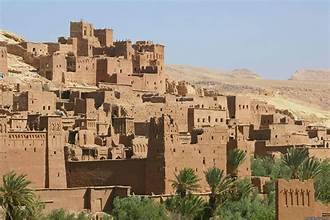
The relationship between identity and place is among the most enduring themes in contemporary political and cultural thought. It is difficult to conceive of a stable collective identity detached from the geographical space within which it historically emerged and evolved. In this context, the Amazigh question offers a compelling example of how geography, history, and culture interact to shape a collective identity that extends across a vast expanse of North Africa. Throughout history, this region has been known by various names, including Numidia, Mauretania, Ancient Libya, and the Land of the Berbers, culminating in the concept of “Tamazgha,” which has become one of the most prominent terms in contemporary Amazigh discourse.
The significance of place within Amazigh identity extends beyond its role as a mere geographical setting for human existence. It functions as a foundational element of collective consciousness, historical memory, and cultural distinctiveness. Amazigh communities historically developed in diverse mountain, desert, and coastal environments, which directly influenced their patterns of life, social and economic organization, and cultural traditions. These environments contributed to the formation of a unique cultural system rooted in the tribe, family, land, language, and local customs.
One of the most influential intellectual currents within the Amazigh movement views land as the primary source of identity. According to this perspective, identity is not defined by race or ethnicity but rather by belonging to the Amazigh geographical space that stretches across North Africa.
Advocates of this approach argue that Amazigh identity is fundamentally territorial in nature. In other words, anyone who lives permanently within Tamazgha and is historically connected to this space becomes part of the Amazigh identity, regardless of ethnic, religious, or cultural origins.
From this standpoint, ethnic and racial diversity is not seen as a plurality of identities but rather as diversity within a single territorial identity that derives its legitimacy from the land itself. Under this conception, identity is not simultaneously Arab, Amazigh, or African; instead, it is a unified territorial identity, while diversity remains expressed through culture, language, religion, and social origins.
This vision closely resembles certain modern conceptions of citizenship that associate belonging with the state and territory more than with ethnicity or ancestral origin.
However, the significance of this approach extends beyond its cultural dimension to its political implications.
If land constitutes the foundation of identity, then the state becomes the natural political expression of that identity. Consequently, part of contemporary Amazigh discourse has moved beyond demands for cultural and linguistic recognition toward calls for reimagining the state in North Africa on the basis of the Amazigh identity of the land.
Within this framework, some Amazigh thinkers distinguish between cultural demands—such as the official recognition of the Amazigh language or the preservation of cultural heritage—and the broader strategic objective of restoring the Amazigh character of the state and political sphere.
This evolution reflects a shift, within some circles of the Amazigh movement, from the realm of cultural rights to broader debates concerning national identity, the nature of the state, and the sources of political legitimacy.
The State Dilemma in Amazigh History
One of the central questions raised in contemporary Amazigh thought concerns the relationship between political authority and cultural identity.
The historical experience of North Africa reveals that many states that ruled the region during the Islamic era were Amazigh in terms of their ruling elites or the social bases upon which they relied. Yet this reality did not necessarily translate into a stronger position for the Amazigh language or its adoption as an official language of administration and governance.
Some Amazigh intellectuals argue that successive states gradually adopted Arabic as the language of administration, religion, and scholarship, contributing to the decline of written Amazigh despite its continued use as a spoken language among large segments of the population.
From this perspective, the challenges facing the Amazigh language are not explained solely by cultural factors but also by political choices made by successive states throughout history.
Language Between Unity and Diversity
Language constitutes one of the most important pillars of Amazigh identity, yet it simultaneously reflects its complexity.
Amazigh is not a single standardized language in the conventional sense but rather encompasses a wide range of dialects and local variations extending from the Siwa Oasis in Egypt to the Canary Islands, and from the Mediterranean coast deep into the Sahara.
Despite this diversity, scholars emphasize the existence of a common linguistic and cultural structure that provides Amazigh with its overall unity. Tuareg communities in the Sahara, Kabyle populations in Algeria, Shilha-speaking communities in Morocco, and the inhabitants of Djerba in Tunisia all belong to a broader linguistic and cultural sphere despite local differences.
Here lies one of the central paradoxes of Amazigh identity: it is geographically expansive yet internally diverse, making the construction of a unified Amazigh discourse a complex undertaking.
Tamazgha: Imagined Geography and Political Reality
The concept of “Tamazgha” occupies a central place in contemporary Amazigh discourse. It refers not merely to a geographical territory but to a shared civilizational and cultural space linking Amazigh communities across North Africa.
At the same time, the concept remains the subject of considerable academic and political debate. While proponents of Amazigh nationalism view it as a unifying framework for the historical identity of the region’s peoples, critics argue that it transcends existing political realities and conflicts with the national identities that emerged during the modern era in states such as Morocco, Algeria, Tunisia, and Libya.
This raises a fundamental question: how can a transnational Amazigh identity be reconciled with the modern national identities that have become integral components of contemporary state structures and legal systems?
Amazigh Identity Between Particularism and Integration
Current debates surrounding Amazigh identity reveal that the issue is no longer merely linguistic or cultural. Rather, it has become part of a broader discussion about the nature of national identity in North Africa.
While some currents emphasize Amazigh particularism as the region’s original historical foundation, others advocate a more inclusive perspective that views North African identity as the product of a long historical interaction among Amazigh, Arab, African, Mediterranean, and Islamic components.
This debate reflects a deeper challenge confronting most pluralistic societies: how to construct a shared national identity capable of accommodating cultural diversity without erasing distinct historical experiences and collective memories.
Conclusion
The relationship between land and identity in Amazigh thought illuminates one of the most complex questions in contemporary North Africa. For many Amazigh thinkers, land is not simply a geographical space; it is the foundation of collective belonging and a source of cultural and political legitimacy. From this perspective, Amazigh identity has evolved from an expression of local language and culture into a broader intellectual project aimed at reinterpreting the region’s history and redefining the relationship between state, society, and identity.
The future of this project, however, will depend on its ability to reconcile Amazigh particularity with the requirements of the modern nation-state and the cultural pluralism that characterizes North African societies. The real challenge is not merely to affirm the historical presence of Amazigh identity, but to develop an inclusive understanding of identity that transforms cultural diversity into a source of strength and integration rather than a catalyst for conflict and polarization.
Most read


Read also