Jihadist Groups and the Battle of Disarmament
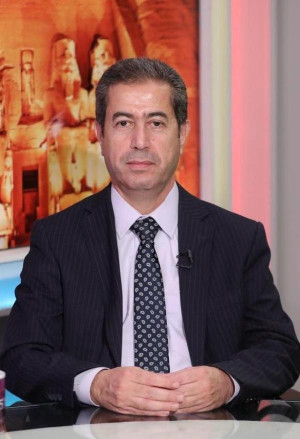
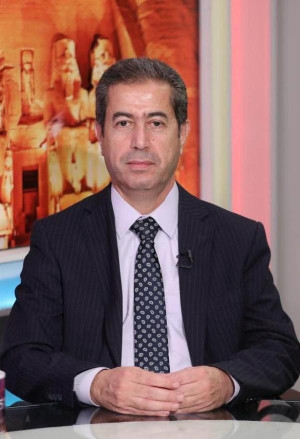
Dr: Theeb Qaralleh
The armed clash that recently occurred between Iraqi security forces and members of Hezbollah-affiliated factions linked to the Popular Mobilization Forces (PMF) has once again brought the issue of disarmament to the forefront—specifically the question of stripping weapons from armed actors operating outside the authority of the state. This comes in parallel with growing local, regional, and international calls to disarm Hezbollah in Lebanon.
These confrontations have strengthened the political and media momentum behind the disarmament narrative, both domestically and internationally, after the idea had long circulated quietly within policy and decision-making circles in several capitals. The renewed urgency has been amplified in particular by the increasing drone attacks—carried out by “unknown actors”—on oil fields in northern Iraq operated by American and Western companies, some of which have withdrawn entirely while others have frozen operations.
It should not be forgotten that disarming the PMF and Iraqi armed factions is not a new objective for the United States and Israel. These forces are widely viewed as extensions of Iranian influence in the region—arms that must eventually be severed as part of the ongoing confrontation with Tehran.
From the perspective of many states, including several Arab countries, the issue goes beyond merely “cutting off Iran’s arms.” It is seen as a gateway to dismantling Iranian dominance in Iraq, a dominance rooted in the political leverage of the PMF and its affiliated factions in Baghdad, as well as their military control over large swaths of Iraqi territory.
However, the current reality in Iraq makes this mission far more complex than many proponents assume.
First, the PMF has evolved into a massive force in terms of manpower. Its ranks have grown from 122,000 fighters to 238,000, while its budget increased from $2.16 billion in 2022 to $3.4 billion in last year’s national budget.
Second, the PMF was formally integrated into Iraq’s official security apparatus in 2016, granting it legal legitimacy as part of the armed forces.
Third, it wields substantial political power through the “Coordination Framework” and other Shiite blocs that participate directly in government and parliament.
Fourth, any attempt to forcibly disarm the PMF risks triggering internal conflict or creating a dangerous security vacuum—particularly in areas where it maintains territorial control or where it claims to be countering threats from ISIS.
Given these realities, the most feasible short-term path appears to be retaining the PMF within the official security structure while tightening institutional oversight and gradually curbing the influence of undisciplined factions. This approach is the most realistic, as it satisfies Shiite political forces while partially reassuring external actors.
Should Iraq’s upcoming elections produce a significantly altered political landscape, or should regional power balances shift dramatically, it may become possible to weaken the PMF incrementally—through early retirement programs, or by transferring fighters into civilian ministries and institutions—thereby avoiding a violent forced disarmament that could plunge Iraq into armed conflict with severe humanitarian and regional repercussions.
However, if future developments render dismantling these forces unavoidable—despite the high security costs—one likely scenario would involve confronting the PMF and armed factions indirectly through newly activated jihadist groups operating from desert areas and the Syrian-Iraqi border regions. Such a strategy could ignite a Sunni–Shiite confrontation that would ultimately reshape Iraq’s internal balance of power, producing a new equilibrium aimed at preventing one sect from dominating the other.
As for Hezbollah in Lebanon, it is increasingly clear that the Lebanese Army will not be tasked with disarming the group. Instead, the coming period is likely to witness the emergence of new Sunni jihadist organizations whose primary mission will be to fight Hezbollah and exhaust it internally, supported by logistical and operational backing from Syria—while Israel continues carrying out targeted military strikes.
Most likely, the strategic ambiguity practiced by the United States regarding disarmament in both Iraq and Lebanon—occasionally suggesting the issue is merely an internal matter—forms part of a calculated plan aimed at pushing Hezbollah and the PMF toward greater rigidity and escalation. This, in turn, would set the stage for their entrapment, much as Washington previously lured Iraq into the Kuwait invasion by implying indifference before springing the trap.
(30 July 2025)
Most read