
From Yemen’s Front Lines to the Skies over the Red Sea: The Houthis Expand the Scope of the Threat

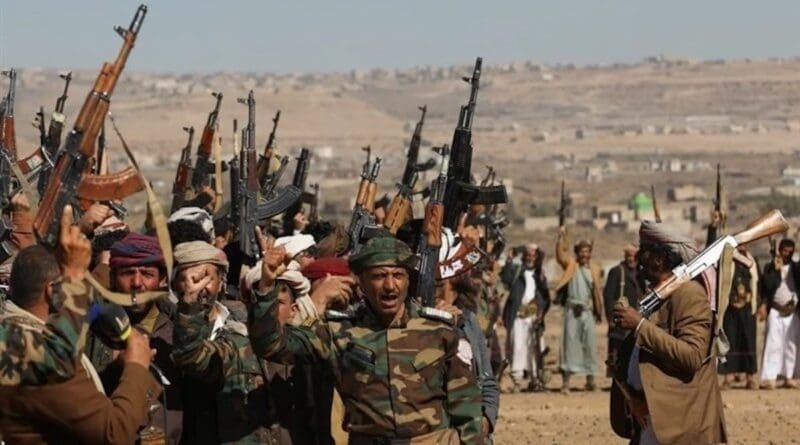
The military development recently highlighted by Yemeni authorities appears to be more than just another addition to the list of weapons being used in Yemen’s war. It carries implications that extend beyond the battlefield to one of the region’s most sensitive domains: the safety of civilian aviation and international air traffic over the Red Sea.
The warning issued by the Yemeni armed forces regarding the alleged use by the Houthi group of Iranian air-defense weapons that have reportedly been converted into cruise missiles points to a potentially different phase in the nature of the risks facing the region. According to the Yemeni military account, the danger lies not only in the nature of the weapons themselves, but also in how and where they are being deployed, particularly their reported launch toward international air corridors.
This changes the nature of the equation. The airspace itself could become an additional theater of conflict, exposing civilian aircraft and passengers to risks that go beyond conventional military operations.
Air-Defense Weapons Turned Against Civilian Aviation
The significance of the Yemeni warning lies in the reported repurposing of weapons originally designed for defensive purposes.
According to Yemeni military spokesperson Colonel Majid Al-Nazili, the weapons can reportedly remain in a loitering mode for up to 25 minutes and use a thermal-tracking system to target heat sources. More significantly, according to the military account, these weapons lack a reliable ability to distinguish between military and civilian targets.
If these claims are accurate, the danger lies not merely in the existence of a new weapon, but in the environment in which it is being deployed. The airspace over the southern Red Sea is not a closed military theater. It is used by civilian and international aviation, including flights operated by international, humanitarian, and relief organizations.
Consequently, launching a weapon capable of searching for a heat source in the direction of an area used by civilian aircraft creates a fundamentally different risk from that posed by an attack against a clearly identified military aircraft or a fixed ground target.
The Real Risk Lies in the Flight Path, Not Just the Weapon
The Yemeni military's warning derives much of its significance from its assertion that the weapons are being launched from Houthi-controlled areas of Hudaydah Governorate toward international air routes south of the Red Sea.
This detail is particularly sensitive. Airspace risks are determined not only by a weapon's range or technical capabilities, but also by its launch point, trajectory, and the density of civilian air traffic in the area in which it may operate.
From this perspective, the expanded use of anti-aircraft or missile systems in an environment where military targets overlap with civilian aviation routes could increase the level of risk for airlines even in the absence of an actual incident.
The broader consequence could be pressure on airlines and civil aviation authorities to reassess routes crossing the Red Sea and surrounding areas. Such reassessments could result in rerouting flights, higher operating costs, or the expansion of avoidance zones around areas considered high-risk.
The war in Yemen would thus become not merely a security crisis with regional consequences, but an additional factor in the reshaping of air traffic patterns in a region already affected by security concerns and risks to maritime navigation.
The Memory of the Downing of the Ukrainian Airliner
The reference by Yemeni Information Minister Moammar Al-Eryani to the 2020 downing of Ukraine International Airlines Flight PS752 in Tehran was not incidental.
The incident, which killed all 176 people on board, became a stark example of the risks associated with operating or deploying air-defense systems in an environment where military operations intersect with civilian air traffic.
However, any comparison between the two situations should remain limited. The circumstances surrounding the Ukrainian airliner incident differ from the situation in Yemen in terms of the nature of military operations, the geographic environment, the rules governing the use of weapons, and the pattern of civilian air traffic.
The broader lesson, however, remains relevant: separating military activity from civilian aviation becomes increasingly difficult and dangerous when weapons systems operate in proximity to civilian air corridors.
Against this backdrop, the Yemeni authorities' call on the International Civil Aviation Organization, the International Air Transport Association, and aviation safety authorities to address the reported development represents an attempt to elevate the issue from the level of Yemen's internal conflict to that of international aviation safety.
Escalation on the Ground and in the Air
The warning concerning the reported use of air-defense weapons cannot be separated from the latest military developments in Taiz, Lahj, and areas surrounding the Bab el-Mandeb Strait.
In recent days, Yemeni government forces have intensified air and artillery strikes against Houthi positions, gatherings, and reinforcements, alongside reported infiltration attempts and clashes across several fronts.
The nature of the targets reportedly struck suggests an effort to disrupt the Houthi military mobility and supply network, rather than simply attack units positioned on the front lines. According to government and local sources, the strikes have extended to supply routes, weapons depots, troop concentrations, military camps, and vehicles.
This reflects an important shift in the pattern of operations. Rather than waiting for Houthi forces to reach the front lines, government forces appear to be seeking to strike them while they are moving or before they reach the battlefield.
Such a strategy is particularly significant in Taiz and areas near Bab el-Mandeb, where control of supply routes, high ground, and strategic corridors plays an important role in the ability of the opposing sides to maintain their positions or exert pressure on one another.
Taiz and Lahj: Front Lines Connected to the Red Sea
The strategic significance of the Taiz and Lahj fronts extends beyond the boundaries of the two governorates because of their geographic links to routes leading toward the western coast and the Bab el-Mandeb Strait.
For this reason, continued military operations in these areas are not simply about gaining or losing local territory. They are also connected to efforts to influence the routes used to move forces and supplies between Yemen's interior and its western coastline.
The pattern of recent strikes indicates that the conflict is increasingly focused on a network of military movement and logistics, rather than solely on individual geographic positions.
Control of high ground remains important, but the ability to transport fighters, ammunition, missiles, and equipment to those positions is no less significant.
Rising Casualties and Mounting Pressure on the Houthis
The escalation comes amid reports from Yemeni sources of increasing human losses among Houthi forces.
The group announced the death of Majd al-Din Hamid al-Hamzi, whom military sources described as the head of operations for the group's Third Missile Brigade, along with several of his associates. Local monitoring reports also referred to the funeral processions of hundreds of Houthi fighters during September.
Such figures, however, should be treated cautiously. There is no independent and transparent mechanism for verifying the total number of casualties across the various fronts. Funeral announcements do not necessarily correspond directly to the number of fighters killed during the same period.
Nevertheless, continued reports of casualties among field and senior commanders, combined with intensified strikes on supply and support infrastructure, suggest that recent operations are aimed at weakening the Houthis' ability to sustain the tempo of their military operations rather than simply inflicting tactical losses on units deployed along the front lines.
From Ground Warfare to the Internationalization of Airspace Risks
Perhaps the most significant feature of the latest developments is that Yemen's war, which initially centered primarily on political control and the struggle over state institutions, is increasingly generating consequences that extend beyond the country's borders.
Attacks on maritime traffic have already elevated international concern over Red Sea security. The latest warning concerning civilian aviation adds another dimension to the crisis.
If weapons capable of loitering or tracking thermal targets continue to be deployed near international aviation routes, the issue will no longer be confined to the ability of Yemeni forces or the Houthis to manage the conflict inside Yemen. It will also concern the international community's ability to protect a civilian air corridor located close to an active conflict zone.
This could increase pressure on airlines to reassess their risk calculations and on international aviation bodies to issue more specific guidance concerning flights in the region.
A New Test for Red Sea Security
The latest developments demonstrate the gradual expansion of the risks associated with Yemen's conflict. The confrontation is no longer limited to the control of cities, mountains, and roads; it is increasingly affecting critical infrastructure underpinning regional and international transportation.
Airspace security, alongside maritime security, is a fundamental component of stability in the Red Sea. As the use of missiles, drones, and air-defense systems expands around international transportation corridors, it becomes increasingly difficult to separate military risks from those threatening civilians and international transport.
From this perspective, the latest Yemeni warning represents more than a military announcement about a new weapons capability. It signals that the airspace over the southern Red Sea could become another theater of conflict, requiring international aviation institutions to treat developments in Yemen as part of an interconnected regional risk environment.
The ultimate test, however, will not be determined by statements and warnings alone. The key question will be how the reported weapons are actually used and whether their deployment remains confined to military fronts or begins to affect the airspace through which international civilian aircraft operate.
In the latter scenario, the consequences would extend far beyond Yemen, becoming a direct issue for international aviation security in one of the world's most strategically sensitive regions.
Most read




Read also