
Egypt and China: From Project-Based Cooperation to Building a Strategic Position in the Economy of the Future

Egyptian-Chinese relations can no longer be measured solely by the volume of investment, the number of agreements signed, or the projects implemented by Chinese companies in Egypt. After seven decades of diplomatic relations and a decade since the two countries established a comprehensive strategic partnership, the relationship appears to be entering a more complex phase—one that goes beyond traditional cooperation in infrastructure and trade toward building deeper links in manufacturing, technology, energy, data, and supply chains.
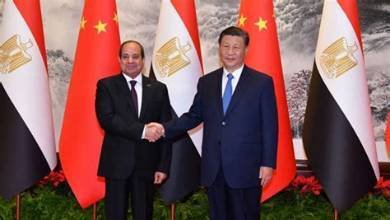
This is the strategic significance of Chinese President Xi Jinping’s visit to Cairo in September 2026. The visit coincided with the 70th anniversary of the establishment of diplomatic relations between the two countries, but it was not merely an occasion to celebrate a long history of political ties. It also offered indications of a new direction in the partnership itself, both in terms of the sectors targeted for cooperation and the position Egypt could occupy in China’s economic calculations.
The key question after the visit, therefore, is no longer simply: What will China add to the Egyptian economy? Rather, it is: What position can Egypt build for itself within the Chinese partnership, and can it move from being a market and a geographically strategic location to becoming a regional base for production, technology, and exports?
If this transition materializes, it would be more consequential than any individual project, because it would shift the relationship from a model based on implementing projects in Egypt toward one in which Egypt becomes part of regional and international production chains linked to China.
From Infrastructure to the Knowledge Economy
Over the past several years, Chinese engagement in Egypt has been associated primarily with major projects: the China-Egypt Economic and Trade Cooperation Zone along the Suez Canal, projects in the New Administrative Capital, transportation and energy projects, telecommunications, and others. These projects have helped establish a practical foundation for the relationship and demonstrated that cooperation between the two countries extends beyond political convergence into tangible economic interests.
What is new, however, is that the nature of the sectors themselves is beginning to change.
The documents and discussions surrounding the visit covered areas such as electric vehicles, green energy, artificial intelligence, the digital economy, space, modern agriculture, as well as cooperation in supply chains, industry, and trade.
These sectors should not be viewed as a disconnected list of projects. They are interconnected components of the emerging global economy: clean energy requires technology and manufacturing; electric vehicles require batteries, components, and supply chains; data centers require digital infrastructure and energy; artificial intelligence requires computing power, data, and skilled personnel; and advanced industries require research and development as well as technical education.
From this perspective, the evolution of Egyptian-Chinese relations can be understood as a gradual shift from cooperation in physical assets toward cooperation in productive and knowledge-based assets.
That is a major strategic distinction.
A project that ends when construction is completed adds an asset to the economy. By contrast, a project that creates industrial or technological capabilities can generate value for many years, while creating networks of suppliers, skills, expertise, and exportable products.
The Real Test: Can Egypt Move from Assembly to Production?
Yet discussions about manufacturing and technology do not automatically mean that technology will be transferred or that domestic industrial capacity will deepen. This is where one of the most important questions about the future of the partnership arises.
The strategic value of foreign investment is determined not only by its financial size, but also by the productive and knowledge capabilities it leaves behind.
A factory can operate for years while remaining heavily dependent on imported components. Alternatively, that same factory can gradually become a hub that attracts local suppliers, trains workers and engineers, develops new products, participates in research and development, and eventually uses Egypt as an export base.
The difference between these two models is the difference between investment being present in Egypt and investment becoming embedded in the Egyptian economy.
This is why references to electric vehicles, semiconductors, data centers, and artificial intelligence are particularly significant. These sectors will not provide Egypt with strategic value merely because they are physically located on Egyptian territory. Their significance will depend on whether they contribute to increasing local content, developing skills, transferring knowledge, integrating Egyptian companies into supply chains, and creating opportunities for joint research and development.
From this perspective, the success of the Egyptian-Chinese partnership in the coming years should not be measured simply by the number of new factories, but by the amount of value added that remains within the Egyptian economy.
The Suez Canal: From Trade Corridor to Production Platform
The Suez Canal provides another dimension to this equation.
Egypt’s geographic position is one of its major attractions for China, but the strategic value of geography does not lie merely in the passage of ships. A country that controls a major trade corridor derives revenues from transit and related services. A country that connects that corridor to an industrial, logistics, and technological base, however, can benefit from multiple stages of the trade cycle.
This is where one of the most important potential changes in Egypt’s role becomes visible.
The objective is no longer necessarily for the Suez Canal to serve merely as a route through which Chinese goods pass on their way to European, African, and Arab markets. Instead, the areas surrounding the canal could become part of a broader ecosystem of production, storage, assembly, exports, logistics, and digital services.
The China-Egypt TEDA Economic and Trade Cooperation Zone offers an early example of this direction. According to the source material, the zone includes around 200 companies and provides approximately 10,000 jobs, while cumulative investment has exceeded $4.7 billion.
More important than the figures, however, is the potential change in the zone’s economic function.
If investments initially targeted the Egyptian market, the more significant direction is to use Egypt as a production and export base serving Arab, African, and European markets, benefiting from its geographic position, ports, and trade networks.
At that point, the Suez Canal shifts from being a geographic advantage into a productive advantage.
That transformation is one of the keys to understanding the strategic dimension of the Egyptian-Chinese partnership.
Geography Alone Is Not Enough
Yet geography, however important, does not by itself create a global economic hub.
For Egypt to become a regional production and distribution center, it needs an integrated set of conditions: efficient ports, transportation networks, flexible customs systems, reliable and competitive energy, an industrial base capable of supplying inputs, a business environment that facilitates the movement of capital and goods, and—most importantly—a human and technological ecosystem capable of supporting emerging industries.
This intersects with a broader challenge facing the Egyptian economy: How can geographic location be transformed from a source of revenue into a source of competitive advantage?
The answer does not lie simply in attracting more factories. It requires building an ecosystem in which the presence of a factory becomes part of a wider network of suppliers, logistics centers, financial services, technology providers, educational institutions, and research organizations.
For this reason, linking China’s Belt and Road Initiative with Egypt’s Vision 2030 becomes more significant when it moves beyond broad political alignment toward specific industrial planning that connects Chinese investment to Egyptian production priorities.
Technology Is Redefining the Partnership
Perhaps the clearest indicator of the emerging phase is the shift toward technology.
Artificial intelligence, cloud computing, data centers, cybersecurity, and space are not ordinary economic sectors. They are directly connected to a country’s ability to control the tools of production, knowledge, and communication in the global economy.
The entry of technology into the core of Egyptian-Chinese cooperation therefore creates an opportunity while also raising a number of strategic questions.
Who owns the data?
Where is it stored and processed?
What are the limits of technology transfer?
How are local capabilities developed?
And will Egypt remain a user of imported technology, or become a developer and participant in producing it?
These questions become increasingly important as artificial intelligence, data centers, and cloud-computing projects expand.
Investment in a data center, for example, does not necessarily create a domestic technological ecosystem unless it is accompanied by investment in skills, software, cybersecurity, research, and start-ups.
This is where universities and research institutions become crucial.
Technology is not fully transferred through equipment-purchasing contracts. It is transferred through people who know how to design, operate, adapt, and develop technology.
Academic and scientific cooperation with China could therefore become one of the most influential components of the relationship over the long term, provided that it is connected to actual industrial needs. Students, researchers, engineers, and innovation centers can become the most sustainable channels for knowledge transfer.
Trade Is Growing—but What Are the Two Countries Trading?
Bilateral trade figures provide evidence of the growing strength of the economic relationship. According to the source material, merchandise trade between China and Egypt reached approximately 95.19 billion yuan, or about $14.16 billion, during the first seven months of 2026, an increase of 18.7 percent compared with the same period of the previous year. Chinese exports to Egypt increased by 17.5 percent, while Chinese imports from Egypt rose by 49.4 percent, with Chinese imports of Egyptian agricultural products increasing by 82.6 percent.
These figures carry a dual significance.
On the one hand, they confirm that bilateral trade is expanding rapidly. On the other, they raise a deeper question concerning the structure of trade rather than simply its volume.
Trade becomes more balanced and sustainable when the weaker side expands its ability to export products with higher value added, rather than merely increasing exports of raw materials or less processed goods.
This is why efforts to increase Egyptian exports to the Chinese market should be linked to a broader strategy for developing Egyptian products with export potential, improving their standards, connecting them to international market requirements, and integrating Egyptian producers into supply chains.
If Egypt succeeds in using Chinese investment to expand its productive and export capacity, the trade relationship could gradually evolve from one dominated by the exchange of goods into a broader relationship encompassing trade, investment, joint production, and technology.
That is the transition with the greatest strategic significance.
The Political Dimension: A Partnership of Interests, Not Only Positions
The economic transformation cannot be understood separately from the political dimension.
Egyptian-Chinese relations have for years been characterized by a high level of political coordination, and Xi’s visit reinforced this trajectory, including cooperation within the United Nations, BRICS, and other multilateral frameworks. During the visit, the two sides also reaffirmed positions on sovereignty and non-interference and discussed regional and international issues including Palestine, the Red Sea, Sudan, and regional security.
This is particularly important because Egyptian and Chinese interests intersect on several issues, even though they are not necessarily identical on every question.
For Egypt, regional stability, Red Sea security, the Suez Canal, and freedom of navigation are directly connected to both national security and the national economy.
For China, the continuity of international trade routes and the security of maritime corridors are important conditions for the stability of global supply chains and trade.
This creates an objective convergence of interests between the two countries.
The Chinese side has emphasized the importance of the security of international navigation routes and linked regional security to development, while advocating dialogue and development as mechanisms for addressing regional challenges.
Thus, the relationship does not need to become a traditional military alliance to acquire strategic significance. Its importance can instead lie in the convergence of perspectives on sovereignty, non-interference, regional stability, and multilateral coordination.
The Nile, Palestine, and the Red Sea: Geography in the Service of Geopolitics
The strategic dimension of the partnership is also visible in issues that extend beyond direct economic cooperation.
According to the source material, the Egyptian-Chinese joint statement addressed Egypt’s water security and the Nile, as well as the Palestinian issue, the Red Sea, Sudan, and the Horn of Africa.
This matters because Egypt does not view its foreign-policy issues as isolated files. Water security is connected to regional stability; the Red Sea is directly connected to the Suez Canal; Red Sea security is linked to developments in Yemen, Sudan, and the Horn of Africa; while the Palestinian issue is directly connected to the wider security and political balance of the Middle East.
For China, expanding its economic presence in Egypt also increases its interest in the stability of the environment surrounding the trade corridors and logistics networks linked to its investments.
Consequently, geopolitical and geoeconomic considerations are increasingly converging within the Egyptian-Chinese relationship.
Egypt as a Link between China, the Arab World, and Africa
One of the most important long-term dimensions of the partnership may be Egypt’s ability to play a role beyond the bilateral relationship.
If Cairo succeeds in developing an industrial and technological base linked to Chinese investment, Egypt would no longer be merely a market for Chinese products. It could become a platform for exporting Chinese-linked products with local value added to other markets.
Egypt’s geography allows it, in principle, to connect these three circles. But turning this potential into reality depends on the development of a genuine productive base.
This is what makes joint manufacturing more strategically significant than simply increasing bilateral trade.
If a product is manufactured in Egypt using Chinese capital and technology, with rising local content, and then exported to third markets, the relationship becomes more complex and deeper because the interests of producers, suppliers, exporters, and consumers become interconnected across borders.
From Interdependence to Strategic Embeddedness
The trajectory of Egyptian-Chinese relations can be viewed as a transition through three broad stages.
The first was the stage of political trust, established with the creation of diplomatic relations in 1956.
This was followed by the stage of major projects, investment, and infrastructure, which consolidated China’s economic presence in Egypt.
The emerging third stage is one of industrial and technological embeddedness.
This stage is the most consequential because it is not simply about the number of projects, but about the degree to which the two economies become integrated into one another’s value chains.
As relations move from trade to joint production, from production to research and development, and from research to technology, disengagement between the two economies becomes increasingly costly.
Yet interdependence does not necessarily mean dependency if the host country develops its own capabilities alongside foreign investment.
This is the central question for Egypt: How can it benefit from China’s industrial and technological capabilities without remaining merely a consumer or an assembly platform?
Egypt’s Challenge: Managing the Partnership, Not Simply Attracting It
Egypt possesses clear advantages: a large market, strategic geography, the Suez Canal, access to Arab and African markets, a broad human-resource base, and significant investment needs in industry, energy, transportation, and technology.
But possessing these advantages does not automatically guarantee that Egypt will capture the maximum strategic value from the partnership.
That requires a clear policy for identifying the sectors in which Egypt seeks to build national capabilities, and then directing foreign investment toward those sectors.
In other words, the question should not simply be:
How can Egypt attract Chinese investment?
It should increasingly become:
What kind of investment does Egypt need? What value should it leave behind? What skills should be transferred? Which Egyptian companies should enter the supply chain? What markets can products manufactured in Egypt reach?
These are the questions that will determine whether the partnership produces long-term strategic value or remains a collection of separate projects.
Toward a More Balanced and Deeper Partnership
This does not mean that Egyptian-Chinese relations are without challenges. The gap in industrial and technological capabilities between the two sides remains significant. The trade balance continues to favor China, while sectors such as semiconductors, artificial intelligence, and data centers require substantial investment and an advanced knowledge ecosystem.
At the same time, the global economy is undergoing a restructuring of supply chains, accompanied by intensifying competition over technology, energy, and markets.
In this environment, Egypt cannot rely on geographic location alone, just as China cannot achieve all of its regional objectives through infrastructure investment alone.
The shared interest lies in building Egyptian productive capabilities connected to Chinese industrial and technological networks.
Only then can the concept of “mutual benefit” become more than a diplomatic slogan.
After Xi’s Visit: The Implementation Test
Perhaps the most important outcome of Xi Jinping’s visit to Cairo is that it moved Egyptian-Chinese relations into a new space of expectations.
The visit’s documents covered advanced fields such as artificial intelligence, the digital economy, industrial cooperation, and supply chains, alongside continued cooperation in infrastructure, energy, and transportation.
But documents, however important politically, are not sufficient to produce transformation.
The real test begins after the visit:
How many of these agreements will become actual investments? How many investments will become productive capacity? How much of that production will rely on local components? How much knowledge will reach Egyptian universities and companies? And how many products will find their way into foreign markets?
These are the indicators that should be monitored in the years ahead.
The success of the partnership should therefore not be measured solely by the volume of Chinese capital entering Egypt, but by the amount of Egyptian capacity that is built as a result of that investment.
Conclusion: From a Geographic Bridge to a Production Hub
After seventy years of Egyptian-Chinese relations, the partnership appears to be entering a phase distinct from those that preceded it.
Egypt is no longer simply an Arab and African country with a large market in China’s calculations, just as China is no longer merely a trading partner or infrastructure investor for Egypt.
The relationship is moving toward a more complex model combining industry, technology, energy, logistics, trade, and geopolitics.
At the heart of this model lies the Suez Canal and Egypt’s geographic position. But the future value of that position will not be determined by the number of ships passing through it. It will increasingly depend on Egypt’s ability to become part of the value chains that pass through it.
The broader strategic objective, therefore, is to move from Egypt as a bridge between markets to Egypt as a production, services, and technology hub connecting those markets.
China, for its part, finds in Egypt a partner with a difficult-to-replicate geographic position, a large market, and connections to Arab, African, and European economies.
The intersection of these interests could shape the next phase of the relationship.
But the future of the partnership will not be determined by political declarations or the celebration of agreements alone. It will depend on the ability of both sides to transform partnership from a list of projects into a production ecosystem, from trade into value added, from technology transfer into knowledge creation, and from geographic advantage into sustainable economic influence.
That, ultimately, is the most important strategic question raised by Xi Jinping’s visit to Cairo: not simply what China can build in Egypt, but what Egypt can become through this partnership.
Most read



Read also