Damascus – SDF – Sweida: An Escalation on the Horizon
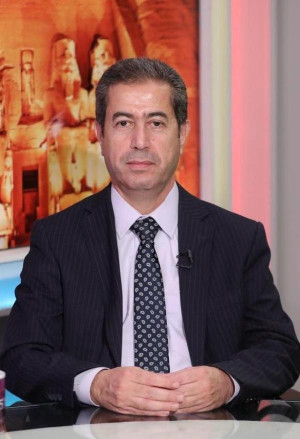
Dr: Theeb Qaralleh
Developments across the region appear to be moving toward escalation on multiple fronts — from Prime Minister Netanyahu’s plans to occupy Gaza, with all that entails in terms of continued war, destruction, starvation, and displacement, to the simmering tensions in Lebanon surrounding the push to disarm Hezbollah, and now to the Syrian arena, which in recent days has witnessed a striking rise in both the pace and character of confrontation.
At a moment when attention had been focused on the anticipated Paris meeting between the Syrian government and the Syrian Democratic Council — the political umbrella of the Syrian Democratic Forces (SDF) — the “Hasakah Conference” abruptly reshuffled the political deck. Damascus announced the cancellation of the Paris talks, sharply criticized the conference and its participants, questioned their objectives and affiliations, and labeled some of them “separatists.”
The significance of the Hasakah Conference lay in the breadth and diversity of those involved. Participants came from across Syria’s geographic and social spectrum: alongside Kurdish representatives were Arab tribal figures, Armenians, Turkmen, Circassians, Christians, Alawites from the coast, and Druze from Sweida. For this reason, some observers described it as a form of “minorities alliance.”
Following the conference, bridging the gap between Damascus and the SDF has become even more difficult. Whereas the SDF had previously negotiated with Damascus from its territorial base in northeastern Syria, it now appears to enjoy — at least politically — backing from actors stretching from the coast to the desert, with some reportedly operating from within the capital itself, according to an unsigned statement endorsing the conference’s outcomes.
Shared Rhetoric, Diverging Visions
Publicly, both Damascus and the SDF speak of the importance of a unified Syrian state, Syrian–Syrian dialogue, and stability. Yet beneath these broad slogans, deep mistrust prevails.
While both sides acknowledge the need to integrate SDF forces into the Ministry of Defense, they fundamentally disagree on how this should occur. And although both stress the importance of the Kurdish component of Syrian society, they diverge sharply on the scope of political autonomy and constitutional recognition that should be granted.
For the SDF, its experience of decentralization represents a successful model that could be extended to other parts of Syria. Damascus, by contrast, views this experiment as the first brick in a partition project — accepting only administrative decentralization, not political autonomy.
Sweida Enters the International Arena
Only hours after the Hasakah Conference ended, a new political shock erupted. Simultaneous statements issued by Druze spiritual leaders — Sheikh al-Hijri and Sheikh al-Hannawi — criticized Damascus and called for an international investigation into events in Sweida. This coincided with the issue reaching the agenda of the United Nations Security Council, effectively internationalizing the crisis and signaling a major erosion of Damascus’s Druze support base.
External Pressures Multiply
Foreign actors continue to shape the Damascus–SDF file.
Israel’s influence remains evident in the Sweida crisis. Meanwhile, Turkey is pressing Damascus not to make concessions to the Kurds — whom Ankara views as adversaries. Several European states, particularly France, have adopted a “gray-zone” posture that positions them as potential mediators between the autonomous administration and the central government.
The United States continues to walk a careful line — supporting Damascus diplomatically while simultaneously backing the Kurds and allocating financial assistance to SDF forces in the coming year.
The Missing Arab Role
Notably absent from the Damascus–SDF crisis — as well as from the earlier coastal and Sweida crises — is an effective Arab role. This absence is striking given that Arab states, individually or through the Arab League, are theoretically positioned to serve as a balancing force.
An Open-Ended Trajectory
With regional and international rivalries playing out on Syrian soil, deep mistrust between the central state and key communities (Druze, Kurds, Alawites, Christians), a lack of coordinated Arab engagement, severe economic deterioration, and an estimated 20 million weapons in circulation across the country, Syria’s future remains dangerously open-ended.
The risks extend well beyond Syria itself — threatening neighboring states and the broader concept of Arab national security.
Most read