Blair’s Attempt to Save Labour
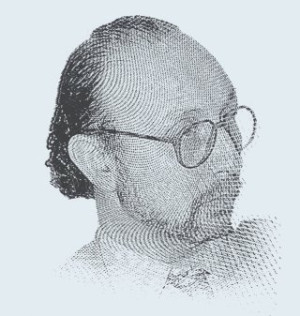
The lengthy paper recently published by former British Prime Minister Tony Blair has sparked a political storm within the governing Labour Party.
As is often the case, commentators and politicians in Westminster chose the easiest question to ask: Is Blair’s criticism of Keir Starmer paving the way for a potential successor? Is he backing one faction against another within the party?
Yet such interpretations miss the essence of Blair’s message.
The man who led Labour to its largest electoral victory in modern British history in 1997 does not appear overly concerned with who might succeed Starmer. Instead, he is focused on a far more important question: What political project does Labour intend to govern Britain with?
Here lies the central paradox. When Blair came to power in 1997, voters were not simply electing a leader; they were endorsing a comprehensive political vision known as “New Labour.”
The party had spent years developing, refining, and presenting that vision to the electorate. It offered a clear approach to the economy, public services, relations with business, and institutional reform. People could agree or disagree with it, but they understood what it stood for.
The picture in the 2024 election was markedly different.
There is no doubt that Labour returned to power after years in opposition. Yet many voters were motivated less by enthusiasm for a new Labour vision than by a desire to remove a Conservative government that had been in office for fourteen years.
The question facing voters was often: “Do you want the Conservatives to remain in power?” rather than “Do you support a new and clearly defined Labour project?”
This is the source of Blair’s uncomfortable observation about his party.
In his view, Labour spent its years in opposition debating personalities more than ideas, and arguing about factions and ideological tendencies more than constructing a coherent governing agenda. The party moved from Jeremy Corbyn’s radical left to Starmer’s centrist approach, but it has yet to produce anything comparable to the political project that preceded Blair’s rise to power in the 1990s.
For this reason, Blair rejects attempts to reduce the current debate to a leadership contest.
From his perspective, questions such as whether former Health Secretary Wes Streeting could replace Starmer, whether Greater Manchester Mayor Andy Burnham might return to Westminster, or whether another figure could emerge from within the party are of secondary importance. The more significant question is: What program would any future leader actually represent?
That is why the issues emphasized in Blair’s paper matter so much.
He calls for a serious debate about economic growth, energy policy, immigration, artificial intelligence, and Britain’s future relationship with Europe. He also urges the party to re-examine assumptions that have increasingly become political orthodoxies within sections of Labour.
Notably, Blair—once one of the strongest advocates of Britain’s membership in the European Union—is not calling for a renewed Brexit battle. He has also criticized aspects of net-zero policies when they come at the expense of economic growth and energy security.
At the same time, he argues that Britain must prepare seriously for the artificial intelligence revolution, which he views as the most significant economic transformation since the Industrial Revolution.
These positions have angered parts of Labour’s left wing, many of whom continue to view Blair through the lens of the Iraq War. Such criticism is understandable; Iraq will remain an inseparable part of his political legacy.
What is striking, however, is that many reactions focused more on attacking Blair himself than on engaging with the question he was asking.
Perhaps the most important message in Blair’s paper is his warning against turning politics into nothing more than a reaction to political opponents.
Just as “defeating the Conservatives” was not a governing project in itself, “stopping Nigel Farage” is not a political project either.
Here Blair touches on one of Labour’s most sensitive concerns. The rapid rise of Reform UK under Farage has generated growing anxiety within the governing party.
An increasing share of political debate now revolves around how to prevent Farage from gaining power or expanding his electoral influence. Yet Blair implicitly warns against this way of thinking.
Political parties do not win in the long run by frightening voters about their opponents. They succeed when they persuade voters of their own vision.
The voter who cast a ballot against the Conservatives yesterday will not automatically vote against Farage tomorrow if no clear program is offered to address concerns about living standards, energy, economic growth, and employment opportunities.
That is why the real question Blair poses is not about the identity of Labour’s next leader. It is about the nature of the political project that will be presented to voters in the 2029 election.
Parties can change leaders relatively easily. Building a political vision capable of winning public confidence—and retaining it—is far more difficult.
In the end, Blair is not warning primarily about Nigel Farage. He is warning against a future in which Nigel Farage himself becomes Labour’s political program.
Most read